Tamarix, Genus, spp., Multiple species,
- Genus
- Multiple species
tamarisks
Mediterranean, Africa, and temperate Asia
Overview
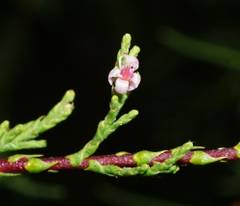
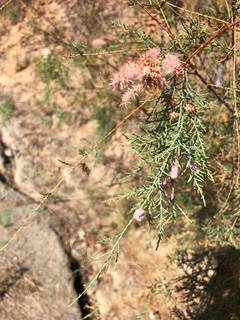
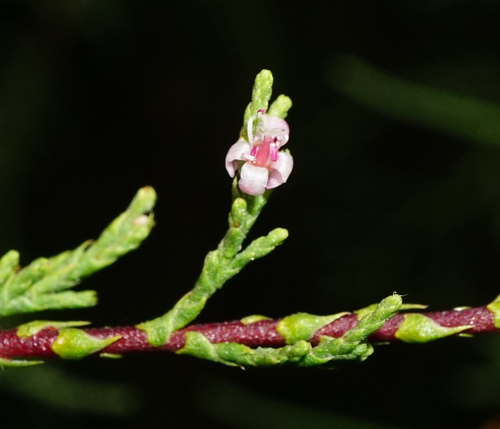
Tamarix is a genus of about 50 to 60 species of deciduous and evergreen shrubs and small trees in the family Tamaricaceae, native to dry and saline regions of Eurasia and Africa, from the Mediterranean east to China. Plants grow 5-20 feet (1.5-6 m) tall with slender, arching reddish-brown branches clothed in tiny, scale-like, blue-green to grey-green leaves that resemble those of junipers or cypress. From spring into late summer the branch tips carry feathery plumes of very small pink or white flowers, massed so densely that a plant in bloom appears clouded in soft color. The leaves and stems secrete salt, allowing the plants to grow in saline and alkaline soils, and the deep, wide root systems reach groundwater and let the plants survive severe drought. Several species, especially the saltcedars, have become aggressive invaders of riverbanks, floodplains, and wetlands in the southwestern United States, where they crowd out native vegetation, raise soil salinity, and draw down water tables. T. ramosissima and T. chinensis are the species most often involved. The plants resprout strongly from roots and stumps. Many regions regulate or prohibit their planting because of this invasive behavior.
Native Range
Tamarix species are native to the Mediterranean Basin, North and East Africa, and across temperate and subtropical Asia to China and India, in deserts, steppes, salt flats, and riverbanks. Introduced as ornamentals and windbreaks, several species have naturalized and become invasive in North America, Australia, and southern Africa.Suggested Uses
Where they are not invasive, Tamarix species are grown as windbreaks, screens, and seaside shrubs for their salt tolerance and feathery bloom, spaced 6-10 feet (1.8-3 m) apart. The arching plumed branches are sometimes cut for arrangements. In many regions, planting is restricted or banned because of the invasive saltcedars.How to Identify
Appearance
Size & Dimensions
Height5' - 20'
Width/Spread5' - 15'
Colors
Bloom Information
Tamarix flowers from spring into late summer, generally April to August, with some species blooming on the previous year's wood early in the season and others on new growth later. The tiny pink or white flowers are massed in dense plumes that can cover the plant. Flowering may continue in flushes through the warm months.
Detailed Descriptions
Foliage Description
blue-green to grey-greenGrowing Conditions
Sun Requirements
Requires 6-12 hours of direct sunlight daily
• Full Sun: 6+ hours of direct sunlight
• Partial Shade: 3-6 hours of direct sunlight
• Full Shade: Less than 3 hours of direct sunlight