Image 1 of 9
Plant Reference
1 / 9
Syngonium, Genus, podophyllum, Species,
- Genus & species
arrowhead plant
Central and South America — Mexico south to Bolivia
Overview
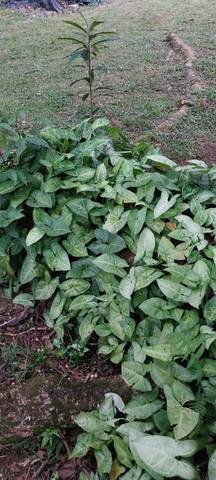
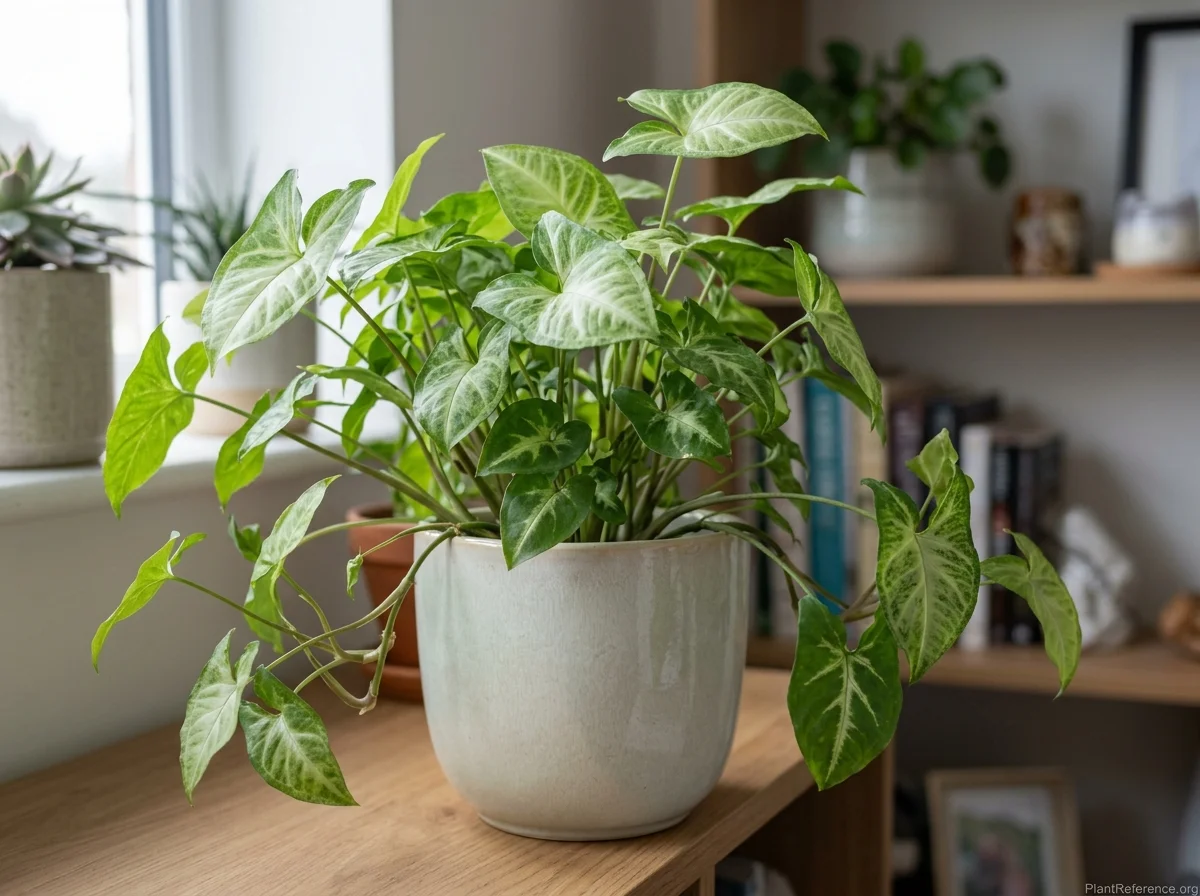
Syngonium podophyllum is an arrowhead-leaved aroid, growing 12–36 inches (30–90 cm) compact or climbing to 120 inches (300 cm) on a support. Juvenile leaves are simple, sagittate (arrow-shaped), 5–7 inches (12–18 cm) long. As stems elongate and the plant climbs, leaves transition to palmately compound forms with 5–11 segments, each 4–6 inches (10–15 cm) long — a pronounced heteroblastic leaf change. Pruning removes climbing stems and maintains the compact juvenile arrowhead form typically sold in retail. The species name 'podophyllum' means 'foot-leaved,' referring to the mature segmented form. Stems root at nodes on contact with moist surfaces and propagate readily from single-node cuttings in water. Numerous cultivars exist in pink, white, and cream variegation patterns. Native to Central and South American rainforests where it climbs tree trunks via aerial roots. All parts contain calcium oxalate raphides that cause oral and gastrointestinal irritation if ingested — toxic to cats and dogs. Leaf variegation fades in low light, and spider mites are a common indoor pest in dry conditions.
Native Range
Syngonium podophyllum is native to Central and South America, from Mexico south through Bolivia, where it grows as an epiphytic climber on rainforest trees.Suggested Uses
Grown as a compact tabletop plant when pruned to maintain juvenile form, or trained on a moss pole or trellis where it develops larger, segmented mature foliage. Suitable for containers as small as 1 gallon (4 liters) in the juvenile phase.How to Identify
Appearance
Size & Dimensions
Height1' - 3'
Width/Spread1' - 2'
Bloom Information
Spathe-and-spadix inflorescence typical of aroids; rarely produced indoors. Blooms are green to cream, 3–4 inches (7–10 cm), on mature climbing plants only.
Detailed Descriptions
Flower Description
Green-white spadix with green spathe (rare indoors)Foliage Description
Medium green, arrowhead-shaped when young — leaves become deeply lobed (5-11 segments) as the plant matures and climbsGrowing Conditions
Sun Requirements
Requires 2-6 hours of direct sunlight daily
• Full Sun: 6+ hours of direct sunlight
• Partial Shade: 3-6 hours of direct sunlight
• Full Shade: Less than 3 hours of direct sunlight
Care & Maintenance
Care Guide
Grows in bright indirect to low light; variegated cultivars require brighter conditions to maintain color. Keep soil evenly moist but not waterlogged — overwatering causes root rot. Average household humidity is sufficient, though brown leaf tips may appear below 40% humidity. Fertilize monthly during the growing season with a balanced liquid fertilizer at half strength. Pruning controls form: cut stems redirect energy into compact juvenile growth. All parts are toxic to pets and humans if ingested.Pruning
Cut climbing stems back to a lower node to maintain the compact arrowhead-leaved juvenile form. Unpruned plants develop elongated climbing stems with progressively more segmented mature leaves. Prune at any time during the growing season.Container Growing
Suitable for container growing
Minimum container size: 3 gallons