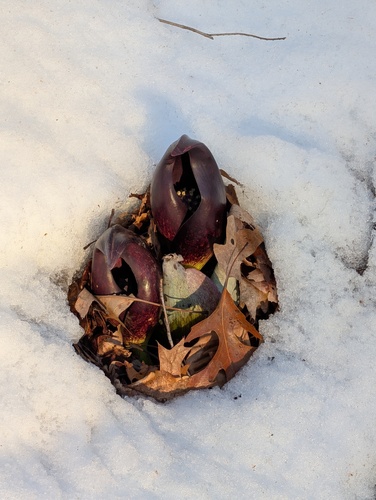
Symplocarpus, Genus, spp., Multiple species,
- Genus
- Multiple species
skunk cabbage
Eastern North America and temperate East Asia
Overview
Symplocarpus is a small genus of about three to five species of perennial herbs in the arum family (Araceae), native to wet ground in eastern North America and temperate eastern Asia. Plants grow from a stout vertical rhizome and produce a low rosette of large, simple leaves that can reach 16-22 inches (40-55 cm) long after flowering. The inflorescence is a fleshy spathe, mottled purple-brown to green, that hoods a rounded spadix bearing many small flowers. Several species generate metabolic heat, raising the spadix as much as 36°F (20°C) above the surrounding air, which melts nearby snow and aids early pollination by flies and beetles. Flowering occurs very early, from late winter, before the leaves expand. Crushed foliage releases a pungent, skunk-like odour that gives the group its common name. All parts contain calcium oxalate crystals, which cause intense burning and irritation of the mouth and throat if eaten raw. Plants occur in swamps, seeps, and streamsides and are deep-rooted, so established clumps are difficult to transplant and decline in dry soils.
Native Range
Symplocarpus occurs in two widely separated regions: eastern North America from Quebec and Ontario south to North Carolina and Tennessee, and temperate eastern Asia in Japan, Korea, north-eastern China, and far-eastern Russia.Suggested Uses
Grown in bog gardens, pond margins, and wet woodland plantings for early-season interest and bold foliage. Suited to rain gardens and other consistently wet, shaded sites where few other plants establish.How to Identify
Appearance
Size & Dimensions
Height1'4" - 1'10"
Width/Spread2' - 3'
Bloom Information
Detailed Descriptions
Foliage Description
greenGrowing Conditions
Sun Requirements
Requires 3-8 hours of direct sunlight daily
• Full Sun: 6+ hours of direct sunlight
• Partial Shade: 3-6 hours of direct sunlight
• Full Shade: Less than 3 hours of direct sunlight
