Suaeda, Genus, spp., Multiple species,
- Genus
- Multiple species
seepweeds
Cosmopolitan; coastal and inland saline habitats worldwide
Overview
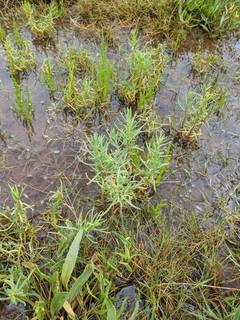
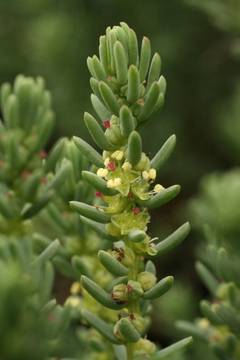
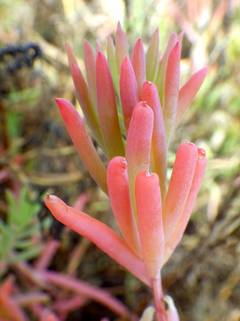
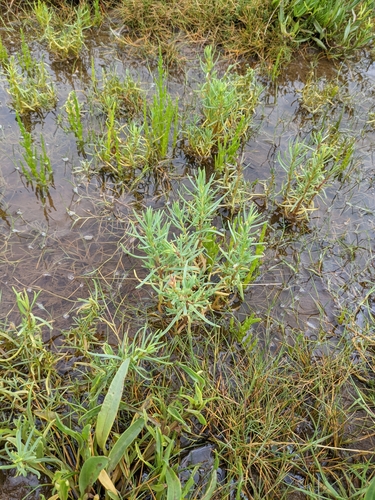
Suaeda is a genus of roughly 80-110 species of salt-tolerant (halophytic) herbs and low shrubs in the amaranth family (Amaranthaceae). Habit ranges from sprawling annuals a few inches tall to woody perennials reaching 3-6 ft (0.9-1.8 m), depending on species. The leaves are alternate, narrow, and succulent, cylindrical to half-cylindrical, 0.2-1.2 in (5-30 mm) long, and store water as an adaptation to saline soils; foliage is often blue-green or grey-green and flushes red or purple in autumn or under stress. Flowers are small, greenish, and inconspicuous, borne singly or in clusters in the leaf axils, lacking petals and pollinated by wind. The dry one-seeded fruits are enclosed by the persistent flower parts. The genus occurs nearly worldwide along seashores, salt marshes, tidal flats, and inland salt pans and alkaline deserts across temperate and subtropical zones. Plants accumulate sodium in their tissues and need saline or alkaline conditions to grow well; in ordinary garden soil they grow weakly. Several species are edible and harvested as a vegetable, though others concentrate enough salt and oxalates to be unpalatable raw.
Native Range
The genus is cosmopolitan, found on every continent except Antarctica. Species concentrate along coastlines, salt marshes, and inland saline or alkaline flats, including those of Europe, Asia, Africa, Australia, and the Americas.Suggested Uses
Grown in coastal and saline gardens, salt-marsh restoration, and as edible greens harvested from S. maritima and related species. The succulent foliage and autumn colour fit naturalistic plantings on difficult salty ground where few other plants establish.How to Identify
Appearance
Size & Dimensions
Height3" - 6'
Width/Spread1' - 4'
Colors
Bloom Information
Flowering runs through summer and into autumn across most of the genus, with the small green axillary flowers easily overlooked. Wind carries the pollen, and dry single-seeded fruits ripen from late summer onward. The strongest visual change of the season comes from autumn leaf colour rather than the flowers.
Detailed Descriptions
Foliage Description
blue-green to grey-green, reddening in autumnGrowing Conditions
Sun Requirements
Requires 6-12 hours of direct sunlight daily
• Full Sun: 6+ hours of direct sunlight
• Partial Shade: 3-6 hours of direct sunlight
• Full Shade: Less than 3 hours of direct sunlight
Water & Climate
Water Needs
Drought Tolerance
Drought tolerant when established
Care & Maintenance
Care Guide
Plants grow in full sun and need saline, alkaline, or otherwise mineral-rich soils that ordinary garden plants cannot tolerate. Drainage ranges from sharply drained sand to seasonally waterlogged salt flats, depending on species. Established plants are drought- and salt-tolerant, drawing on succulent foliage to buffer dry spells. Growth in non-saline soil is weak and short-lived, and freshwater-only irrigation reduces vigour. Annual species self-seed where conditions suit and need no feeding. Cold tolerance varies widely, from frost-tender subtropical shrubs to annuals that complete their cycle before winter.Pruning
Woody perennial species can be trimmed in early spring to remove dead stems and shape the framework before new growth begins. Annual species need no pruning and die back after seeding.Pruning Schedule
Prune: March
early spring