Stylosanthes, Genus, biflora, Species,
- Genus & species
sidebeak pencilflower
Eastern and southeastern United States
Overview
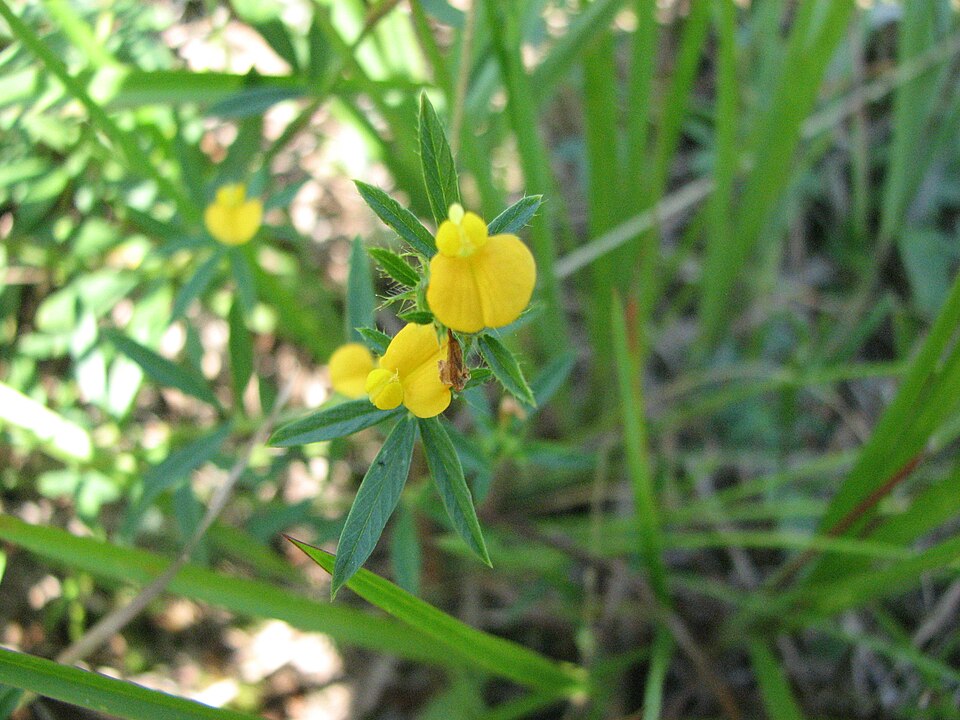
Stylosanthes biflora is a low, wiry perennial legume of the eastern and southeastern United States, forming sprawling to ascending stems 4-16 inches (10-40 cm) long and spreading 8-16 inches (20-40 cm) wide from a woody base and taproot. The leaves are trifoliate, with three narrow, pointed leaflets 0.3-1 inch (8-25 mm) long, often edged with short bristles. From June to September it bears small yellow to orange-yellow pea-like flowers about 0.25 inch (6 mm) wide, borne singly or in pairs in the leaf axils, which give the common name sidebeak pencilflower. As a legume it fixes nitrogen and grows on poor, sandy soils. S. biflora occupies dry open woods, sandy prairies, glades, roadsides, and pine flatwoods, often on acidic ground. It tolerates heat and drought but needs full sun and good drainage and grows poorly in shade or heavy wet soil. Bees pollinate the flowers, and bobwhite quail and other birds eat the seeds. The low, wiry habit and small flowers make it more common in restorations and wild plantings than in formal beds. Plants are hardy through USDA zones 6-9 and die back to the base in winter.
Native Range
Stylosanthes biflora is native to the eastern and southeastern United States, from the Mid-Atlantic and lower Midwest south to Florida and Texas. It grows in dry open woodlands, sandy prairies, glades, pine flatwoods, and along roadsides, usually on acidic, well-drained soils.Suggested Uses
Used in native grassland and pine-savanna restorations, sandy wildflower meadows, and erosion plantings on dry, infertile slopes. It is spaced 8-16 inches (20-40 cm) apart and combines with warm-season grasses and other prairie legumes. The seeds support quail and other ground-feeding birds.How to Identify
Appearance
Size & Dimensions
Height4" - 1'4"
Width/Spread8" - 1'4"
Bloom Information
Flowering continues from June to September. The small yellow to orange-yellow pea flowers open singly or in pairs in the leaf axils and last only a day or two each, with new flowers opening over a long period. Bees visit the flowers for pollen and nectar.
Detailed Descriptions
Flower Description
yellow to orange-yellowFoliage Description
greenGrowing Conditions
Sun Requirements
Requires 6-12 hours of direct sunlight daily
• Full Sun: 6+ hours of direct sunlight
• Partial Shade: 3-6 hours of direct sunlight
• Full Shade: Less than 3 hours of direct sunlight
Care & Maintenance
Care Guide
Stylosanthes biflora grows in full sun with 6 or more hours of direct light and well-drained sandy, loamy, or rocky soil at pH 5.0 to 7.0. As a nitrogen-fixing legume it tolerates poor, infertile ground and drought once established and needs little or no added fertilizer. The species is semi-hardy, persisting in USDA zones 6-9 and dying back to a woody base each winter. It grows poorly in shade or heavy, wet soil, where it thins and rots. Plants are usually grown from seed, as the taproot makes transplanting difficult.Pruning
No pruning is required. Plants can be mowed or trimmed after flowering in plantings managed for a tidy appearance, and they regrow from the woody base. Dead stems are cleared in late winter before new spring growth.Pruning Schedule
Prune: February
winter