Image 1 of 3
1 / 3
© Mick Stanic from Melbourne, Australia, some rights reserved (CC-BY) · Wikimedia Commons
Stylidium, Genus, spp., Multiple species,
- Genus
- Multiple species
Triggerplants
Australia (mainly southwest), with species in SE Asia and South America
Overview
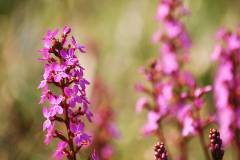
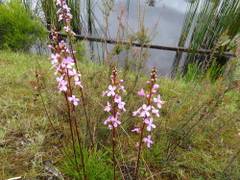
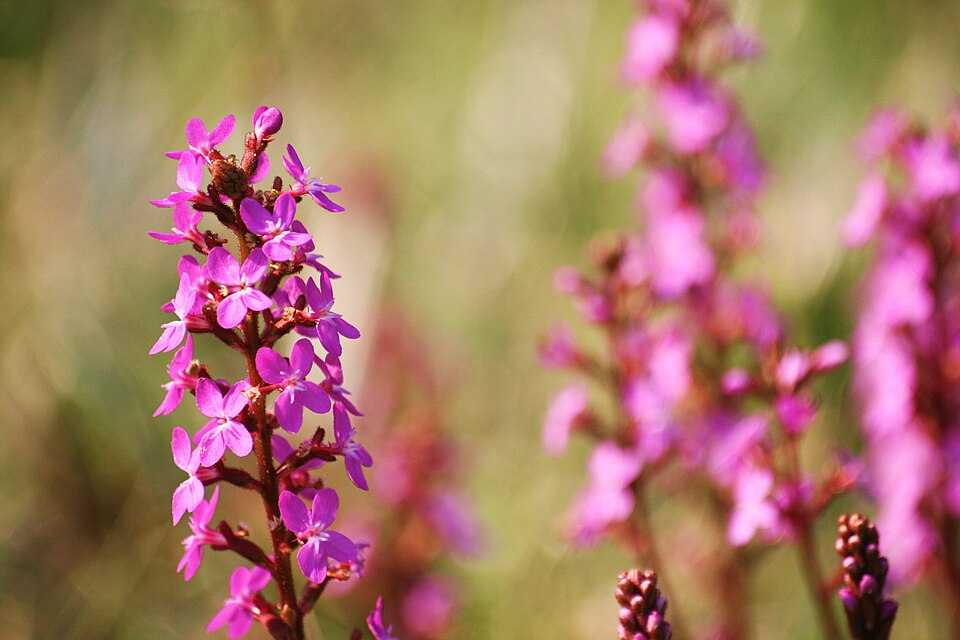
Stylidium is a genus of about 300 small herbaceous plants in the family Stylidiaceae, the triggerplants, with the great majority native to Australia and a few species in Southeast Asia and southern South America. Most are tufted annuals or perennials a few inches to about 3 ft (0.9 m) tall, with narrow, grass-like or rosette-forming leaves and slender flowering stems. The flowers, usually pink, white, or yellow and 0.2–0.8 in (5–20 mm) across, have four spreading petals and a fused column of stamens and style known as the trigger. When an insect lands, the touch-sensitive column flips over in a fraction of a second, dabbing pollen onto the visitor and then resetting, a movement that gives the genus its common name. Many species carry sticky glandular hairs on the stems and flower stalks that trap small insects, and several are considered protocarnivorous, drawing nutrients from the captured prey. Stylidium grows mostly in seasonally wet, sandy, nutrient-poor soils in full sun, often in heath and open woodland. Most species are frost-tender and suited to USDA zones 9–11, and the small annual kinds complete their cycle in a single wet season.
Native Range
Stylidium is centred in Australia, especially the southwest of Western Australia, which holds hundreds of species, with smaller numbers in eastern Australia, Southeast Asia, and one species in southern South America. The plants grow in seasonally wet sand plains, heath, granite outcrops, and open woodland, often where competition is low after fire or in winter-wet flats.Suggested Uses
Stylidium is grown by collectors of Australian native and carnivorous plants, in sandy rockeries, seasonal bog gardens, and pots in frost-free climates. The compact species suit terrariums and container culture where their trigger flowers can be watched closely. In their native range the plants add seasonal colour to heath and sand-plain gardens.How to Identify
Appearance
Size & Dimensions
Height2" - 3'
Width/Spread2" - 1'
Bloom Information
Flowering is concentrated in spring and early summer, roughly September to December in the Australian range, and after seasonal rains elsewhere. The flowers open in succession along the stem over several weeks, each resetting its trigger between insect visits. Annual species bloom and set seed within one wet season.
Detailed Descriptions
Flower Description
pink, white, and yellowFoliage Description
greenGrowing Conditions
Sun Requirements
Requires 6-12 hours of direct sunlight daily
• Full Sun: 6+ hours of direct sunlight
• Partial Shade: 3-6 hours of direct sunlight
• Full Shade: Less than 3 hours of direct sunlight
Care & Maintenance
Care Guide
Stylidium grows in full sun on moist, sandy, low-nutrient soil with sharp drainage, kept wet during the growing season and drier as plants rest. The perennial species form clumps or rosettes, while annual kinds rely on fresh seed each year. Rich soil and phosphate fertiliser can harm the plants, as with many Australian natives. Most are frost-tender and grown outdoors only in mild climates or under glass elsewhere, often in pots of sandy, peat-based mix. Propagation is by seed, sometimes aided by smoke treatment, or by division of perennial clumps. Good light and air movement reduce the fungal problems that affect plants kept too wet and still.Pruning
Little pruning is needed beyond removing spent flower stems to tidy the plant and limit unwanted seeding. Dead foliage is cleared from perennial clumps between growing seasons. Annual species are left to set seed where self-sowing is wanted.Pruning Schedule
Prune: January
summer
Container Growing
Suitable for container growing
Minimum container size: 1 gallons