Streptopus, Genus, lanceolatus, Species,
- Genus & species
rose twisted-stalk
Canada and northern and eastern United States
Overview
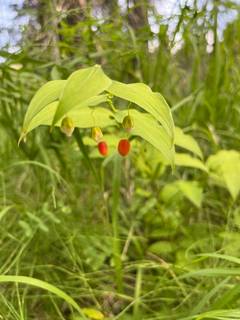
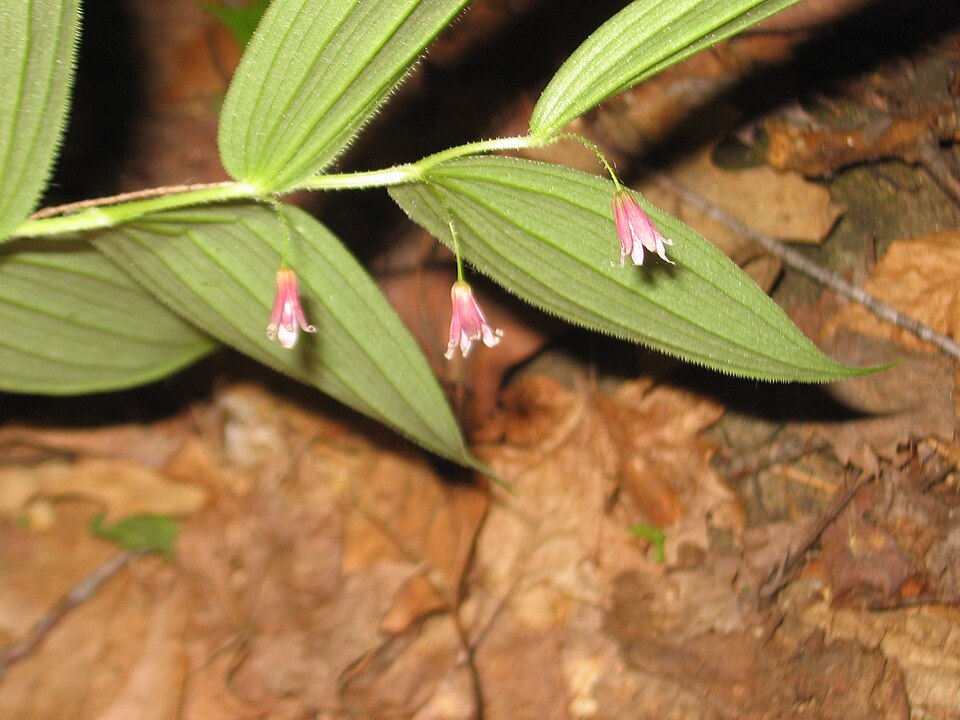
Streptopus lanceolatus is a woodland perennial 8-20 inches (20-50 cm) tall, growing from creeping rhizomes with slender, arching, sometimes forked stems. The lance-shaped to oval leaves are 1.5-4 inches (4-10 cm) long, alternate, stalkless, and clasp the stem, with parallel veins and fringed margins. Small bell-shaped flowers about 0.25-0.4 inch (6-10 mm) long, rose-pink to purple with darker mottling, hang singly beneath the leaves on thread-like stalks that are sharply bent or twisted partway along, giving the plant its common name. Flowering occurs in late spring and early summer. The flowers give way to round red berries 0.25-0.4 inch (6-10 mm) wide in late summer. Plants spread slowly into loose colonies by rhizome. Native to cool, moist forests, it needs shade, consistent moisture, and humus-rich soil, and does poorly in heat, drought, or full sun. The berries can cause stomach upset if eaten in quantity.
Native Range
Native to North America across Canada and the northern and eastern United States, south in the mountains to Georgia. Grows in cool, moist deciduous and coniferous forests, on stream banks, and in shaded ravines in humus-rich soils.Suggested Uses
Used in woodland and shade gardens, native plant collections, and naturalized plantings under deciduous trees. Spaced 12-18 inches (30-45 cm) apart in moist, shaded soil. Suited to cool, humus-rich sites rather than open or dry borders.How to Identify
Appearance
Size & Dimensions
Height8" - 1'8"
Width/Spread8" - 1'6"
Bloom Information
Rose-purple flowers open in late spring and early summer, roughly May through June, later at higher elevations and in the north. Bloom lasts two to three weeks. The flowers are partly hidden beneath the leaves and are followed by red berries by late summer.
Detailed Descriptions
Flower Description
Rose-pink to purpleFoliage Description
GreenGrowing Conditions
Sun Requirements
Tolerates up to 3 hours of direct sunlight daily
• Full Sun: 6+ hours of direct sunlight
• Partial Shade: 3-6 hours of direct sunlight
• Full Shade: Less than 3 hours of direct sunlight