Stephania, Genus, japonica, Species,
- Genus & species
Tapevine
Overview
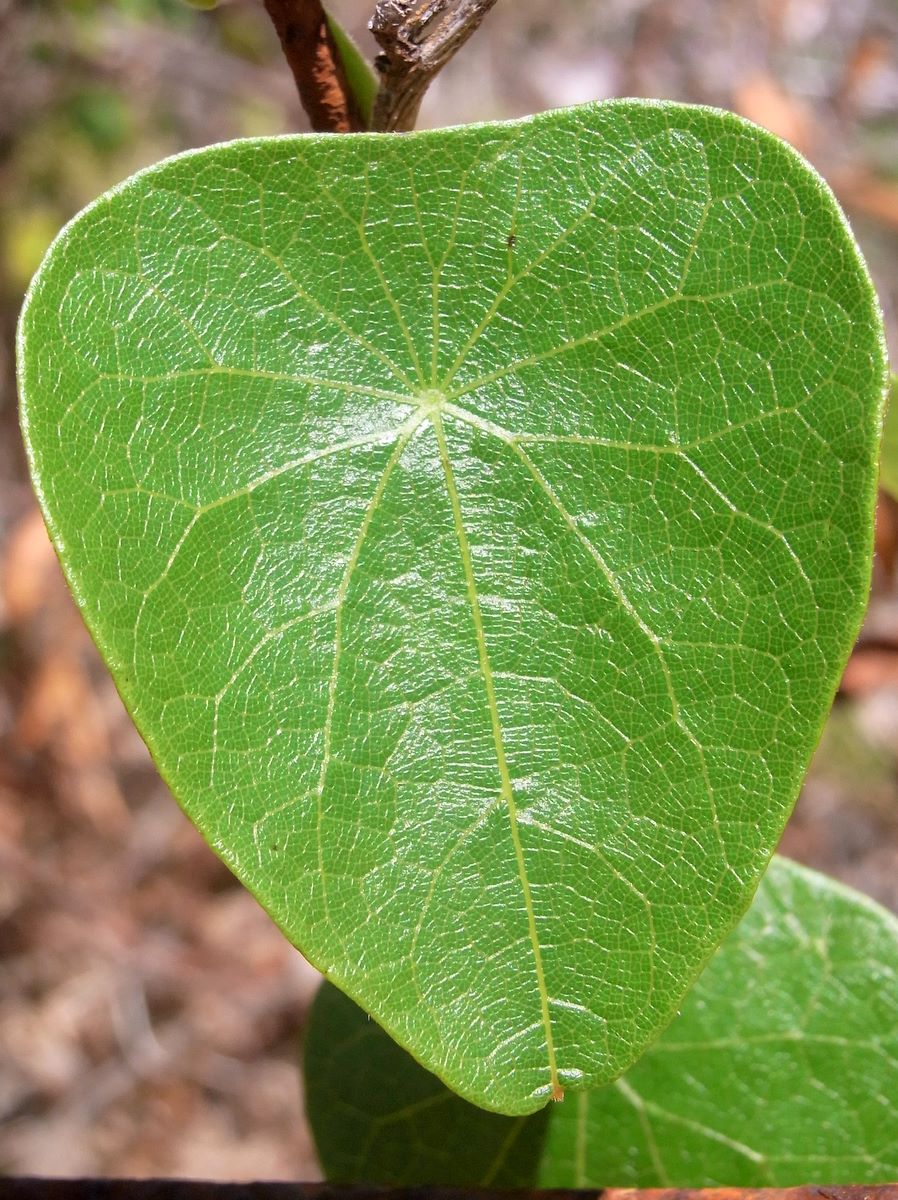
Stephania japonica, known as tapevine or snake vine, is a slender, twining perennial climber in the family Menispermaceae. Thin stems wind through shrubs and small trees to 10-20 feet (3-6 m), rising each season from a thickened rootstock. The hairless leaves are triangular to broadly oval, 1.5-4 inches (4-10 cm) long, and peltate, with the stalk joining the blade just inside the margin rather than at the edge, giving the foliage a shield-like poise. Small pale green to yellow-green flowers gather in branched, umbrella-shaped clusters in summer, the male and female flowers borne on separate plants. Fertilised flowers ripen to rounded berries about 0.3 inch (8 mm) wide that turn orange-red to near black, drawing fruit-eating birds. The species is widespread from Australia through South-East Asia and the Pacific, growing along rainforest margins, in open woodland, and in coastal scrub. Like many in its family it contains bitter alkaloids in its tissues. Frost cuts back the top growth, though established tubers can reshoot in spring.
Native Range
Stephania japonica is native to a broad region spanning eastern and northern Australia, South-East Asia, India, and the Pacific Islands. In Australia it grows along rainforest edges, in moist open forest, and in coastal scrub, often climbing over shrubs and fences.Suggested Uses
Grown on trellises, fences, and screens in subtropical and frost-free gardens, and in rainforest-edge and habitat plantings for fruit-eating birds. Suited to shaded courtyards and naturalistic screens. Spaced 3-6 feet (0.9-1.8 m) apart along a support.How to Identify
Appearance
Size & Dimensions
Height10' - 20'
Width/Spread3' - 6'
Bloom Information
Flowering occurs through summer, mainly November to February, with loose clusters of small green flowers that are easy to overlook. Male and female flowers grow on separate plants, so only female vines set the orange-red to black berries. Insects carry pollen between the inconspicuous blooms.
Detailed Descriptions
Flower Description
pale green to yellow-greenFoliage Description
greenGrowing Conditions
Sun Requirements
Requires 4-8 hours of direct sunlight daily
• Full Sun: 6+ hours of direct sunlight
• Partial Shade: 3-6 hours of direct sunlight
• Full Shade: Less than 3 hours of direct sunlight
Care & Maintenance
Care Guide
Grows in part sun to dappled shade on moist, freely draining loamy soils with added organic matter. Even moisture during the warmer months supports steady growth, while the vine tolerates short dry spells once the tuber is established. Frost burns the soft top growth, and in cool districts the stems die back and reshoot from the rootstock in spring. A trellis, fence, or host shrub gives the twining stems support. Light feeding in spring and a layer of mulch over the root zone sustain the foliage. All parts contain bitter alkaloids, and the berries are not eaten by people.Pruning
Stems can be thinned or shortened at any time during active growth to control spread and keep the vine within its support. Cutting back to the rootstock in late winter renews tangled or frost-damaged growth. The vine reshoots readily from the tuber after hard pruning.Pruning Schedule
Prune: July–August
winter
Container Growing
Suitable for container growing
Minimum container size: 10 gallons