Staphylea, Genus, spp., Multiple species,
- Genus
- Multiple species
bladdernut
Northern Hemisphere (North America, Europe, Asia)
Overview
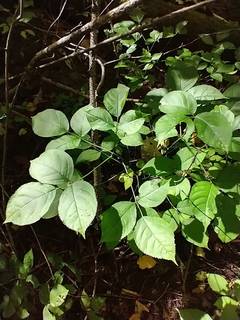
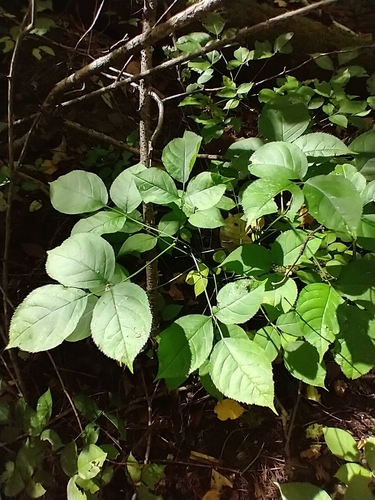
Staphylea is a genus of about ten species of deciduous shrubs and small trees in the family Staphyleaceae, distributed across the temperate Northern Hemisphere in North America, Europe, and Asia. Plants grow 6-15 feet (1.8-4.6 m) tall, with some Asian species reaching 25-30 feet (7.5-9 m) as multi-stemmed small trees. The opposite leaves are compound, divided into three to seven toothed leaflets. In mid to late spring, pendulous panicles of white to pale pink bell-shaped flowers hang from the branch tips. The flowers are followed by inflated, papery seed capsules 1-2.5 inches (2.5-6 cm) long that resemble small bladders, splitting at maturity to release hard, glossy seeds; these capsules give the group its common name, bladdernut. Bark is smooth and gray, often with pale striations on young stems. Staphylea grows in moist woodland, streambanks, and thickets, favoring part shade and consistently moist, well-drained soil. It spreads slowly by suckers to form colonies. The genus is slow to reach flowering size and can become open or leggy in deep shade, though it tolerates a range of soils where moisture stays steady.
Native Range
Staphylea is distributed across the temperate Northern Hemisphere. S. trifolia grows in eastern North America, S. pinnata and S. colchica in Europe and the Caucasus, and several species including S. holocarpa and S. bumalda in China, Japan, and the Himalaya. Typical habitats are moist woodland, streambanks, and shaded thickets.Suggested Uses
Staphylea is used in woodland gardens, shaded shrub borders, and naturalized plantings along streams and woodland edges. Its suckering habit suits informal screening and bank stabilization in moist ground. The inflated capsules are used in dried arrangements.How to Identify
Appearance
Size & Dimensions
Height6' - 15'
Width/Spread6' - 12'
Bloom Information
Flowering occurs in mid to late spring, generally April to May, as or just after the leaves expand. The drooping clusters of bell-shaped flowers last about two to three weeks. Inflated seed capsules develop through summer and persist on the plant into autumn.
Detailed Descriptions
Flower Description
white to pale pinkFoliage Description
greenGrowing Conditions
Sun Requirements
Requires 3-8 hours of direct sunlight daily
• Full Sun: 6+ hours of direct sunlight
• Partial Shade: 3-6 hours of direct sunlight
• Full Shade: Less than 3 hours of direct sunlight