Spinulum, Genus, spp., Multiple species,
- Genus
- Multiple species
bristly clubmoss
Northern Hemisphere (boreal and cool temperate)
Overview
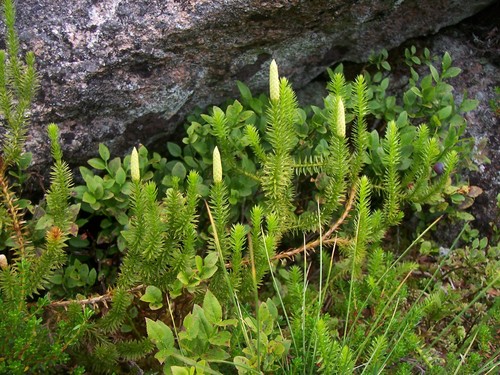
Spinulum is a small genus of evergreen clubmosses in the family Lycopodiaceae, native to cool temperate and boreal regions of the Northern Hemisphere. These are low, spore-bearing plants rather than flowering ones. Horizontal stems creep along or just under the ground, sending up unbranched to sparsely branched leafy shoots 4-10 inches (10-25 cm) tall. The small, stiff, needle-like leaves spread out from the shoots and end in a sharp point, giving a bristly look; in S. annotinum the leaves are arranged in distinct annual tiers along the stem. Spores are produced in narrow cones, or strobili, borne singly at the shoot tips in late summer. The genus grows on acidic, humus-rich soils in coniferous and mixed woodland, often among mosses, in cool shade with steady moisture. It spreads slowly and is hard to transplant, since it depends on soil fungi. Foliage stays green through winter.
Native Range
Spinulum is native to the cool temperate and boreal Northern Hemisphere, across North America, Europe, and northern Asia. The clubmosses grow in coniferous and mixed forests, on heaths, and in mossy, acidic ground, from lowland to mountain elevations.Suggested Uses
Spinulum is rarely cultivated and is encountered mainly in woodland, native, and conservation settings on acidic ground. Where it occurs naturally, it is left in place as a slow-spreading evergreen groundcover among mosses and conifers. It has little use as a planted ornamental.How to Identify
Appearance
Size & Dimensions
Height4" - 10"
Width/Spread1' - 3'
Bloom Information
Spinulum is a clubmoss and does not flower. It reproduces by spores released from narrow cones, or strobili, at the shoot tips, mainly in late summer and autumn. Spores are wind-borne and very slow to develop into new plants.
Detailed Descriptions
Foliage Description
GreenGrowing Conditions
Sun Requirements
Tolerates up to 4 hours of direct sunlight daily
• Full Sun: 6+ hours of direct sunlight
• Partial Shade: 3-6 hours of direct sunlight
• Full Shade: Less than 3 hours of direct sunlight
