Spinifex, Genus, sericeus, Species,
- Genus & species
beach spinifex
Overview
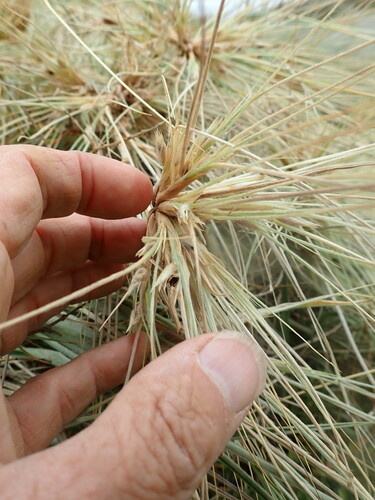
Spinifex sericeus is a spreading, mat-forming perennial grass of coastal sand dunes, sending out long surface and buried runners that root at the nodes and bind loose sand. The arching leaves are 4-12 inches (10-30 cm) long, rolled and silvery grey-green, covered in silky hairs that reduce water loss and reflect sunlight. Flowering stems rise 12-24 inches (30-60 cm) above the foliage. Male and female flowers occur on separate plants: male heads are clustered spikes, while female heads form spiky, spherical clusters 4-8 inches (10-20 cm) across that break free at maturity and roll along the beach in the wind, scattering seed. Growth is fast on open sand, with runners extending 3 feet (90 cm) or more per season. The plant withstands salt spray, sand burial, and drought, but does not persist in shaded, rich, or poorly drained inland soils.
Native Range
Native to coastal Australia and New Zealand, growing along sandy beaches and foredunes of the eastern, southern, and southwestern coasts. It occupies the active, wind-blown sand of the seaward dune face, often as the first colonising plant above the high-tide line.Suggested Uses
Planted for dune stabilisation and erosion control on coastal foreshores and in beachside revegetation, spaced 24-36 inches (60-90 cm) apart to let runners knit the sand. Suits exposed, salt-laden, sandy sites where few other plants establish. Also grown in coastal gardens as a silver-foliaged groundcover on sandy soil.How to Identify
Appearance
Size & Dimensions
Height1' - 2'
Width/Spread3' - 6'
Bloom Information
Flowers in spring and early summer, mainly October to January. Male and female plants flower at the same time, and the spherical female heads ripen and break away from late summer into autumn. Wind disperses the rolling seed heads along the shore.
Detailed Descriptions
Flower Description
cream to strawFoliage Description
silvery grey-greenGrowing Conditions
Sun Requirements
Requires 8-12 hours of direct sunlight daily
• Full Sun: 6+ hours of direct sunlight
• Partial Shade: 3-6 hours of direct sunlight
• Full Shade: Less than 3 hours of direct sunlight
Care & Maintenance
Care Guide
Grows in full sun in deep, freely draining sand and tolerates salt spray, sand burial, and prolonged drought once established. Water new plantings until runners take hold, after which the plant survives on rainfall in coastal conditions. It needs open, sunny, sandy sites and declines in shade, heavy soil, or constantly wet ground. No fertiliser is required, as it grows in nutrient-poor sand. It spreads by runners to stabilise mobile sand and is propagated from rooted runner sections or seed. Few pests affect it, though rabbits may graze young growth on accessible dunes.Pruning
No routine pruning is needed. Old flowering stems and spent seed heads can be removed once seed has dispersed. Runners are trimmed only where the grass spreads beyond a planted dune area.Pruning Schedule
Prune: March–April
fall