Sphaerolobium, Genus, spp., Multiple species,
- Genus
- Multiple species
Globe-pea
Overview
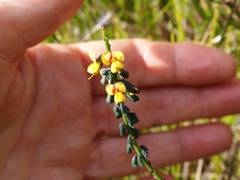
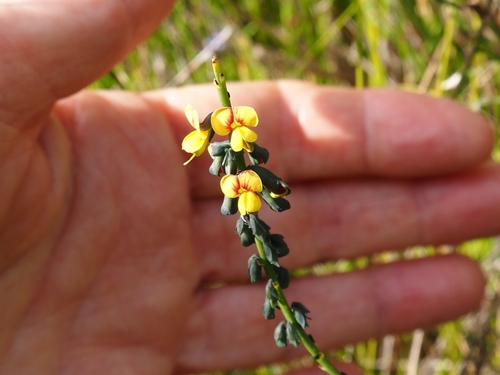
Sphaerolobium is a genus of small, wiry shrubs in the family Fabaceae, native to Australia and known as the globe-peas. Most species are nearly leafless, carrying out photosynthesis through slender, rush-like green stems 1-3 feet (0.3-0.9 m) tall, with any leaves reduced to tiny scales. From late winter into spring the stems bear small pea flowers about 0.3 inch (8 mm) long in yellow to orange, often marked red. Each flower is followed by a small, rounded pod that gives the genus its common name. The globe-peas grow in heath, woodland, and seasonally wet flats, usually on sandy or gravelly, low-fertility soils. They tolerate poor ground and seasonal moisture but are short-lived and resent rich soils and summer wet. Plants suit native and water-wise gardens in mild, frost-free to light-frost climates, roughly USDA zones 9 to 10.
Native Range
Sphaerolobium is native to Australia, with most species in the south-west and south-east of the continent. The shrubs grow in heathland, open woodland, and seasonally wet sandplains on sandy and gravelly soils.Suggested Uses
Used in native, heath, and water-wise gardens, on banks, and in containers in mild climates. Spaced 18-24 inches (45-60 cm) apart, the wiry stems add a slender vertical texture. The spring pea flowers also draw native bees.How to Identify
Appearance
Size & Dimensions
Height1' - 3'
Width/Spread1' - 2'
Bloom Information
Detailed Descriptions
Flower Description
Yellow to orange, often red-markedFoliage Description
GreenGrowing Conditions
Sun Requirements
Requires 5-8 hours of direct sunlight daily
• Full Sun: 6+ hours of direct sunlight
• Partial Shade: 3-6 hours of direct sunlight
• Full Shade: Less than 3 hours of direct sunlight
Care & Maintenance
Care Guide
Plants grow in full sun to light shade on sandy, gravelly, sharply drained soils at an acid to neutral pH from about 5.0 to 6.5. They tolerate seasonal wetness while in growth and drier conditions once flowering ends. Low-fertility soil suits them, and rich or heavily fertilized ground shortens their life. Light, infrequent watering supports young plants, while established shrubs need little once settled. As legumes they fix nitrogen and grow on poor soils where many shrubs struggle. Hardiness suits frost-free to light-frost regions, roughly USDA zones 9 to 10.Pruning
A light trim after flowering keeps plants compact and slows the open, leggy growth common with age. Hard cutting into bare old stems is avoided, since the wiry growth resprouts poorly. Spent plants are usually replaced rather than rejuvenated.Pruning Schedule
Prune: November–December
late spring
Container Growing
Suitable for container growing
Minimum container size: 3 gallons