Sparganium, Genus, spp., Multiple species,
- Genus
- Multiple species
Bur-reeds
Temperate and boreal Northern Hemisphere
Overview
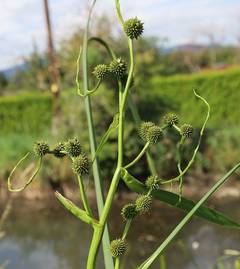
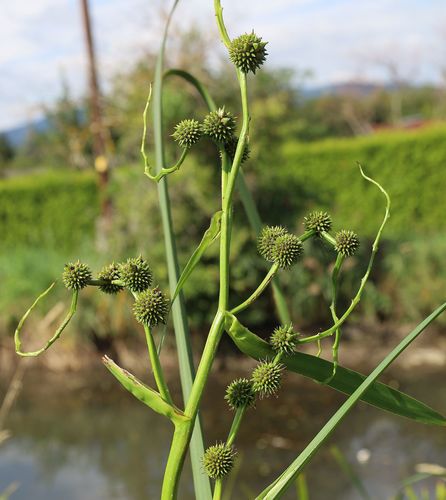
Sparganium is a genus of about 20 aquatic and wetland perennials in the cattail family (Typhaceae), native to wet habitats across the temperate and cold Northern Hemisphere, with a few in the Southern Hemisphere. Plants grow from creeping rhizomes rooted in mud and send up long, narrow, grass-like leaves that may stand erect above the water or float on the surface. Stems reach 1-5 ft (0.3-1.5 m) tall in robust species and only a few inches in dwarf ones. The flowers are packed into separate male and female globe-shaped heads strung along the upper stem: small upper male heads shed pollen, while larger lower female heads ripen into spiky, bur-like clusters of beaked fruits, giving the bur-reeds their name. Wind moves the pollen, and the floating fruits and rhizomes spread plants along watercourses and pond margins. Members of the genus form dense stands in shallow water and slow streams and can choke ditches and small ponds. The plants tolerate seasonal drying but need wet ground or standing water for much of the year.
Native Range
Native to ponds, lakes, marshes, ditches, and slow streams across the temperate and boreal Northern Hemisphere, with scattered species in the Southern Hemisphere. Several species are widespread through North America, Europe, and northern Asia.Suggested Uses
Used in wildlife ponds, wetland and bog gardens, and stream and lake margins for marginal cover and bank stabilization. The dense stands give shelter and nesting cover for waterfowl and the seeds feed marsh birds. Because of its spread, the genus is placed in larger natural ponds or contained in baskets rather than small formal pools.How to Identify
Appearance
Size & Dimensions
Height6" - 5'
Width/Spread1' - 4'
Bloom Information
Flowering occurs in summer (June-August), with the small male heads above and the larger female heads below on the same stem. Pollination is by wind, and the spiky fruiting heads develop through late summer. The bur-like fruits float and drift to colonize new water margins.
Detailed Descriptions
Foliage Description
GreenGrowing Conditions
Sun Requirements
Requires 4-12 hours of direct sunlight daily
• Full Sun: 6+ hours of direct sunlight
• Partial Shade: 3-6 hours of direct sunlight
• Full Shade: Less than 3 hours of direct sunlight
Care & Maintenance
Care Guide
Grow in full sun to part shade in shallow standing water or permanently wet soil at pond and stream edges; many species grow in water up to 1-2 ft (30-60 cm) deep. Plants spread by rhizome into broad colonies, so they are often confined to baskets or contained pond margins. Most species are hardy in USDA zones 3-9 and die back to the rhizome over winter. Drying out for long periods checks growth, though some species tolerate seasonal mud. The vigorous spread can crowd smaller marginal plants and clog narrow channels. Thinning the colony and removing excess rhizome keeps it in bounds.Pruning
Old foliage and spent fruiting stems are cut back in late autumn or late winter as the plant dies down. Spreading rhizomes are thinned and lifted each year to stop the colony from overtaking a small pond. Removing the bur-like fruiting heads before they ripen limits spread by floating seed.Container Growing
Suitable for container growing
Minimum container size: 3 gallons