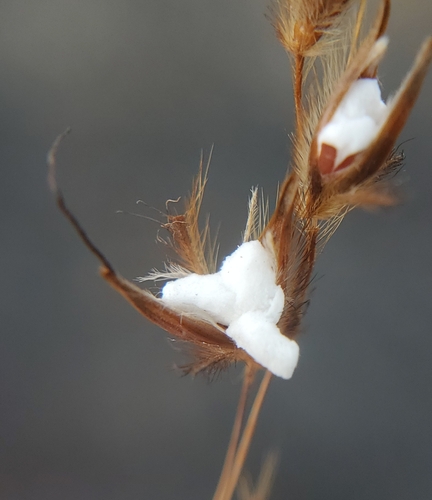
Sorghastrum, Genus, spp., Multiple species,
- Genus
- Multiple species
indiangrass
The Americas, with some species in Africa
Overview
Sorghastrum is a genus of warm-season perennial grasses in the family Poaceae, native mainly to the Americas with some species in Africa. Plants form upright clumps of narrow blades 2-7 feet (0.6-2.1 m) tall, the foliage blue-green to gray-green through summer and turning shades of yellow, orange, and bronze in autumn. In late summer and autumn, slender stems rise above the foliage to carry narrow, plume-like panicles 6-12 inches (15-30 cm) long, golden-bronze with small yellow anthers and silky hairs. The North American S. nutans, called Indiangrass, is grown widely and forms a component of tallgrass prairie. The genus grows in full sun on a wide range of soils and tolerates heat and drought once established. In rich soil or shade the tall stems can lean and flop. Clumps spread slowly by short rhizomes rather than running. Foliage fades to tan and stands through winter.
Native Range
Sorghastrum is native mainly to the Americas, from Canada through the United States to South America, with a few species in Africa. The grasses grow in prairies, open woodlands, savannas, and along roadsides and meadows.Suggested Uses
Used in prairie and meadow plantings, naturalized grasslands, rain gardens, and mixed borders with late perennials. Spaced 18-36 inches (45-90 cm) apart, plants form vertical accents and erosion-binding cover. The seed heads also draw seed-eating birds in autumn and winter.How to Identify
Appearance
Size & Dimensions
Height2' - 7'
Width/Spread1' - 3'
Bloom Information
Detailed Descriptions
Flower Description
Golden-bronze with yellow anthersFoliage Description
Blue-green to gray-greenGrowing Conditions
Sun Requirements
Requires 6-10 hours of direct sunlight daily
• Full Sun: 6+ hours of direct sunlight
• Partial Shade: 3-6 hours of direct sunlight
• Full Shade: Less than 3 hours of direct sunlight
Care & Maintenance
Care Guide
Plants grow in full sun on a wide range of soils, from sand to clay, at a pH from about 5.0 to 7.5. They tolerate heat, humidity, and drought once established, and need little feeding; rich soil produces taller, weaker stems that may lean. Even moisture in the first season helps clumps root in, after which watering can be reduced. As warm-season grasses, they green up late in spring and grow most actively in summer heat. Clumps are long-lived and seldom need division. Hardiness covers USDA zones 4 to 9.Pruning
Stems and foliage are cut back to a few inches above the ground in late winter or early spring, before new growth begins. The dried seed heads can be left standing through winter for structure. Clumps that open out in the centre can be lifted and divided in spring.Pruning Schedule
Prune: February–March
late winterearly spring
Container Growing
Suitable for container growing
Minimum container size: 5 gallons
