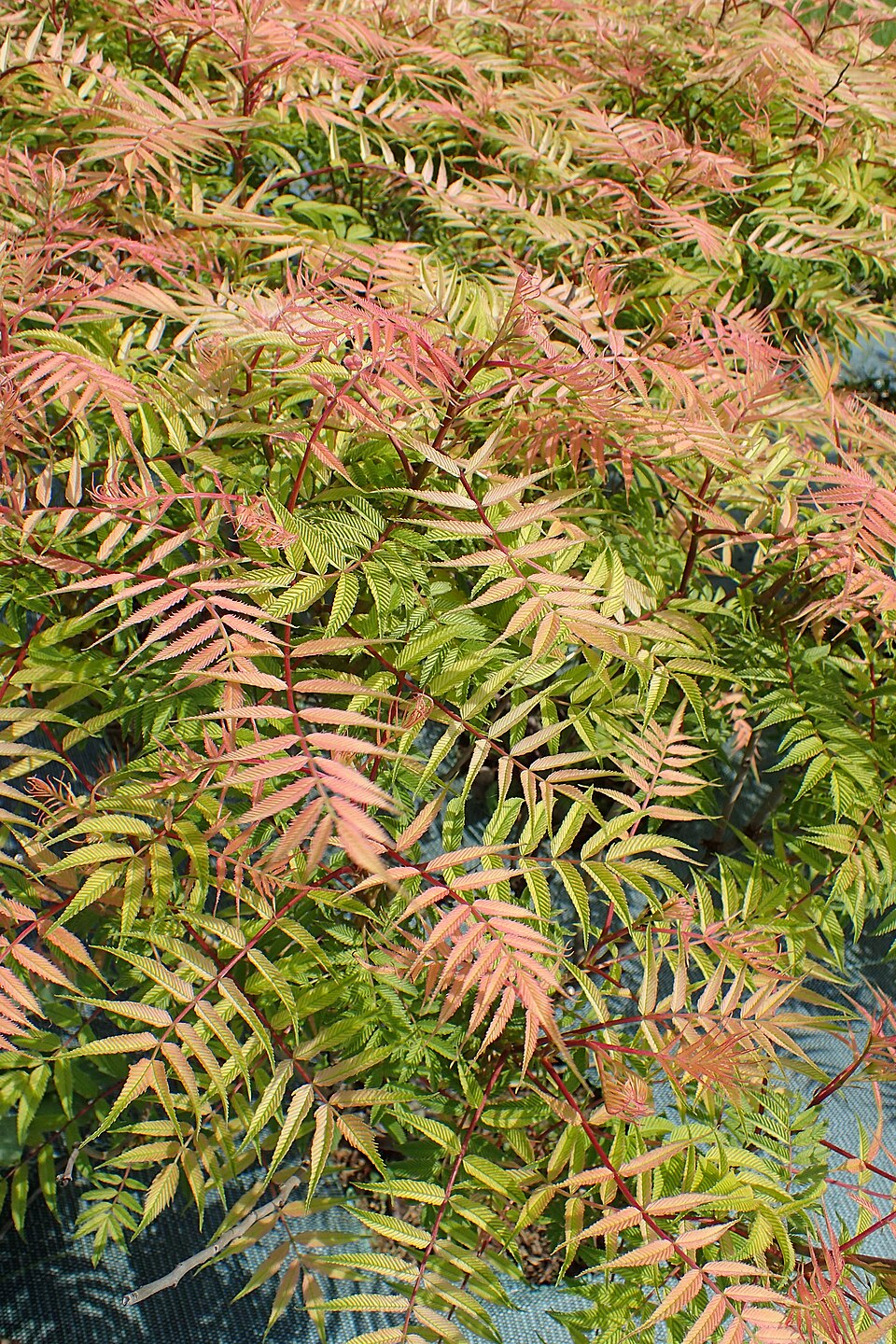
Sorbaria, Genus, sorbifolia, Species, 'Sem', Cultivar,
- Genus & species
- Cultivar
false spiraea
Garden origin; species native to northern Asia
Overview
Sorbaria sorbifolia 'Sem' is a compact, suckering deciduous shrub reaching 3-4 feet (0.9-1.2 m) tall and wide, smaller than the 6-10 foot (1.8-3 m) species. The pinnate leaves have 13-23 toothed leaflets and emerge bright red to pink and orange in spring, fading through bronze to green by midsummer; a second flush of colored growth follows pruning. White flowers appear in upright plumed panicles 4-10 inches (10-25 cm) long in early to midsummer. The plant spreads by suckers and can form a wide colony over time, sending up new stems beyond the original clump. New shoots carry the spring color, while older foliage is plain green. Autumn color is limited. Wind and full sun can scorch the soft new leaves.
Native Range
A cultivar of Sorbaria sorbifolia, a species native to northern Asia from the Ural Mountains across Siberia to Japan and Korea, where it grows in moist thickets and along stream banks. The cultivar arose in cultivation.Suggested Uses
Grown in shrub borders, mixed plantings, and as low informal hedging or massed groundcover on banks, spaced 3-4 feet (0.9-1.2 m) apart. The suckering habit suits erosion control on slopes. Less suited to small formal beds, where the spreading roots are hard to contain.How to Identify
Appearance
Size & Dimensions
Height3' - 4'
Width/Spread3' - 4'
Bloom Information
Blooms in early to midsummer, June to July, with white panicles lasting 2-3 weeks. The flower plumes fade to brown and can be cut for a repeat flush of colored foliage. Bloom is heaviest on plants in full sun.
Detailed Descriptions
Foliage Description
Red and orange aging to greenGrowing Conditions
Sun Requirements
Requires 4-9 hours of direct sunlight daily
• Full Sun: 6+ hours of direct sunlight
• Partial Shade: 3-6 hours of direct sunlight
• Full Shade: Less than 3 hours of direct sunlight
Care & Maintenance
Care Guide
Grows in full sun to part shade in moist, well-drained soil and tolerates a range of soil types. Watering in dry spells keeps the foliage from scorching, as the soft leaves brown at the edges in drought and wind. The plant suckers freely and spreads beyond its planting space, so a barrier or regular removal of suckers limits its spread. Cutting stems back in late winter encourages bright new growth and keeps the shrub compact. Few pests or diseases are common. Plants are vigorous and recover quickly from hard pruning.Pruning
Cut all stems back hard to 6-12 inches (15-30 cm) in late winter to promote new foliage color and a dense habit. Remove suckers through the season to contain spread. Deadheading faded panicles can prompt a second flush of colored growth.Pruning Schedule
Prune: February–March
winterearly spring
Container Growing
Suitable for container growing
Minimum container size: 7 gallons