Smallanthus, Genus, uvedalia, Species,
- Genus & species
bear's foot
Overview
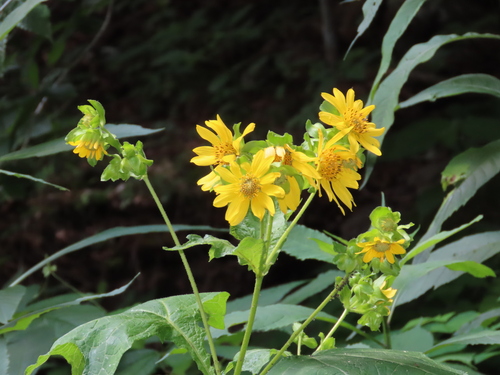
Smallanthus uvedalia is a coarse herbaceous perennial in the aster family, reaching 3-10 feet (0.9-3 m) tall and 2-4 feet (60-120 cm) wide on a thick taproot. The opposite leaves measure up to 12 inches (30 cm) long, with 3-5 palmate lobes and toothed margins, the lower surface bearing short hairs. Stems are stout, hollow, and branch in the upper portion. Flower heads appear from July to September, each 1-1.5 inches (2.5-4 cm) across with 7-13 pale yellow ray florets surrounding a yellow disc; heads cluster in open branched arrays at the stem tips. The fruit is a small dark achene without a pappus. The plant grows from a stout rootstock and self-seeds in open ground. It occupies moist woodland edges, stream banks, thickets, and roadsides across eastern North America. Mature clumps take up considerable room, and the soft stems can lean in exposed positions or rich soil, so the species suits informal and naturalized plantings more than tight borders. Foliage dies back to the rootstock after frost and regrows in spring.
Native Range
Smallanthus uvedalia is native to eastern North America, from southern Ontario and New York south to Florida and west to Texas and Kansas. It grows in moist woodlands, stream banks, and disturbed open ground.Suggested Uses
Used in naturalized plantings, woodland edges, rain gardens, and pollinator borders where its height and spread match the space. The summer flower heads draw bees and other insects. Spacing of 3-4 feet (0.9-1.2 m) accommodates mature clumps.How to Identify
Appearance
Size & Dimensions
Height3' - 10'
Width/Spread2' - 4'
Bloom Information
Detailed Descriptions
Foliage Description
greenGrowing Conditions
Sun Requirements
Requires 4-8 hours of direct sunlight daily
• Full Sun: 6+ hours of direct sunlight
• Partial Shade: 3-6 hours of direct sunlight
• Full Shade: Less than 3 hours of direct sunlight
Care & Maintenance
Care Guide
Grows in full sun to part shade in moist, fertile soil with a pH near 5.5-7.0. Consistent moisture produces growth at the upper end of the height range; the species tolerates short dry spells once the taproot is established but wilts in prolonged drought. Plants in rich soil or shade tend to grow taller and lean. No routine feeding is needed in average garden soil. The rootstock spreads slowly, and self-sown seed can form colonies in open ground. Stems die back after the first hard frost.Pruning
Cut spent stems to the ground after frost or in late winter before new shoots emerge. Removing flower heads before seed set limits self-sowing. No other pruning is required.Pruning Schedule
Prune: March
winterearly spring