Sibbaldiopsis, Genus, spp., Multiple species,
- Genus
- Multiple species
Overview
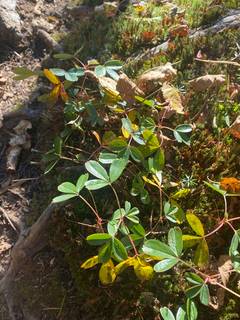
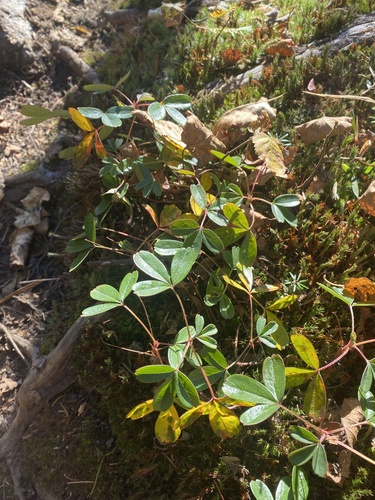
Sibbaldiopsis is a genus in the rose family represented mainly by three-toothed cinquefoil (Sibbaldiopsis tridentata), a low, mat-forming evergreen subshrub of North America. Plants spread by woody rhizomes to form mats 2-6 inches (5-15 cm) tall and 8-12 inches (20-30 cm) wide. Leaves are divided into three leathery, wedge-shaped leaflets, each 0.4-1 inch (1-2.5 cm) long with three teeth at the blunt tip, glossy dark green in summer and turning wine-red to bronze in fall and winter. Small white five-petaled flowers, 0.2-0.4 inch (5-10 mm) across, are carried in loose clusters on wiry stems above the foliage from early to mid summer. The fruit is a cluster of small dry achenes with hairy styles. Plants grow slowly and form tight, ground-hugging colonies. They need lean, acidic, sharply drained soil and decline in rich or wet ground. The evergreen leaves take on red tones through the cold months.
Native Range
Three-toothed cinquefoil is native to North America, from Greenland and eastern Canada south through the Appalachian Mountains, and west across Canada to the northern United States. It grows on rocky summits, ledges, gravelly barrens, and sandy acidic soils, often in exposed alpine and subalpine sites.Suggested Uses
Grown in rock gardens, trough gardens, alpine collections, and as a small-scale ground cover on lean, acidic soils, spaced 8-12 inches (20-30 cm) apart. The need for sharp drainage and cool conditions leaves it poorly suited to rich borders or hot, humid sites. The evergreen mats hold red color through winter.How to Identify
Appearance
Size & Dimensions
Height2" - 6"
Width/Spread8" - 1'
Bloom Information
Flowering occurs from early to mid summer, generally June through July, and into August at high elevations and northern latitudes. Individual flowers last about a week, and a colony blooms over three to five weeks. Cool mountain conditions extend the flowering period.
Detailed Descriptions
Foliage Description
glossy dark green, turning wine-red in winterGrowing Conditions
Sun Requirements
Requires 6-10 hours of direct sunlight daily
• Full Sun: 6+ hours of direct sunlight
• Partial Shade: 3-6 hours of direct sunlight
• Full Shade: Less than 3 hours of direct sunlight
Care & Maintenance
Care Guide
Grows in full sun to light shade on lean, acidic, sharply drained sandy or gravelly soils, and declines in rich, fertile, or wet ground. Established mats tolerate drought, wind, and cold. Hardy in USDA zones 2-6, withstanding temperatures well below -30°F (-34°C). Poor drainage and summer heat in humid lowlands cause thinning and rot. Propagation is by division of rooted rhizome pieces or by seed. The genus has few pests and diseases in open, airy sites.Pruning
No routine pruning is needed. Dead foliage and spent flower stems can be trimmed in spring to tidy the mat. Sections that outgrow their space can be lifted and divided in spring or early fall.Container Growing
Suitable for container growing
Minimum container size: 2 gallons