Image 1 of 9
1 / 9
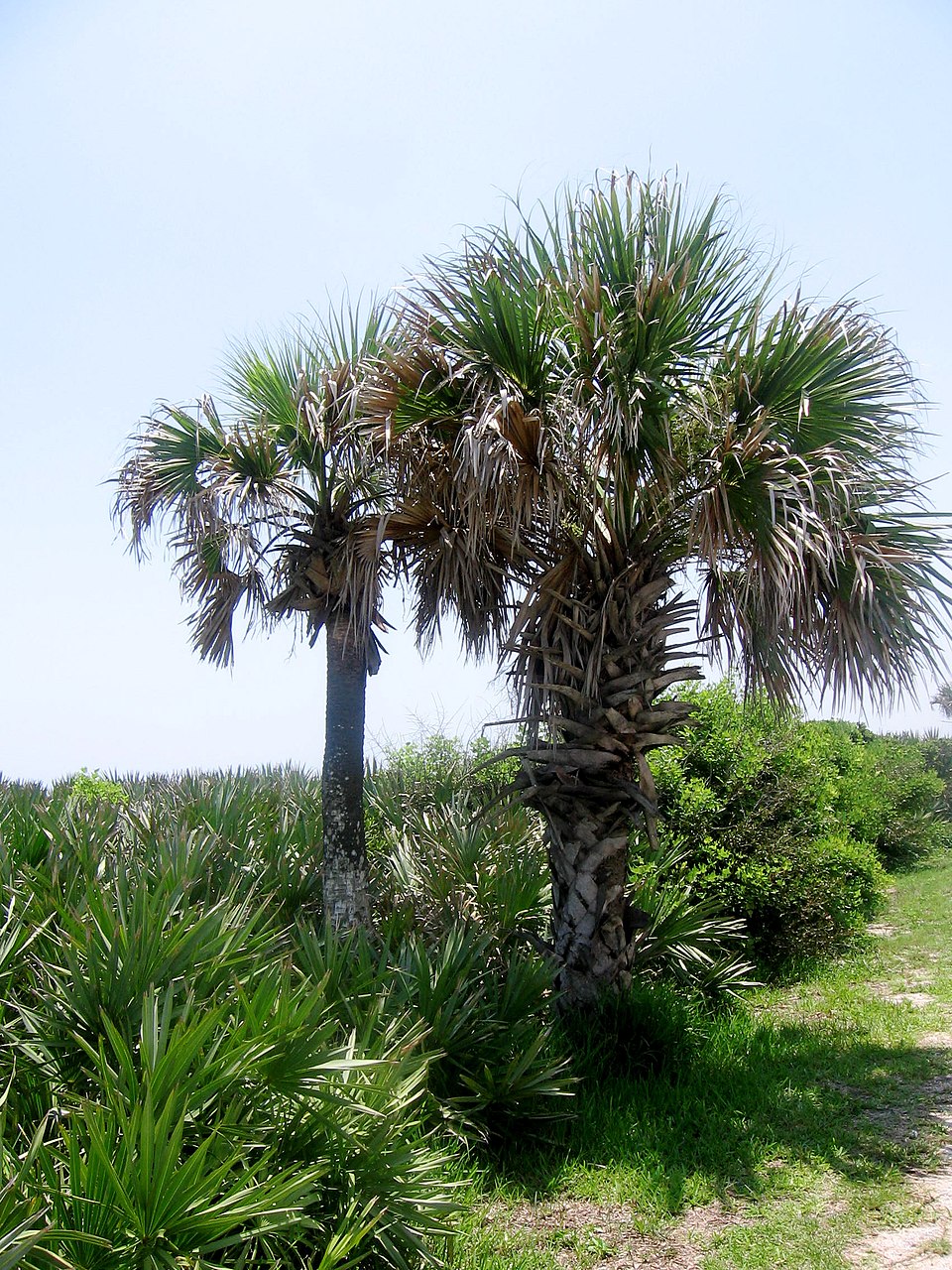
© https://www.flickr.com/photos/varresa/, some rights reserved (CC-BY-SA) · Wikimedia Commons
Serenoa, Genus, repens, Species,
- Genus & species
saw palmetto
Overview
Serenoa repens is an evergreen fan palm that grows as a clumping shrub rather than a single-trunked tree, typically 3-7 feet (0.9-2.1 m) tall and spreading by branching horizontal stems. The fan-shaped palmate leaves measure 2-3 feet (60-90 cm) across and are divided into stiff, pointed segments, ranging from green to silvery blue-green depending on the population. Leaf stalks are armed along both edges with sharp teeth that give the plant its common name. In late spring and summer it produces branched panicles of small, creamy-white fragrant flowers, followed by oblong drupes about 0.5-1 inch (1.2-2.5 cm) long that ripen from green through orange to blue-black. The species forms extensive colonies in pine flatwoods, coastal dunes, and scrub across the southeastern United States, and individual stems can live for decades to more than a century. It tolerates drought, salt spray, and fire, resprouting from its protected stems after burns. Growth is slow, so plants take many years to reach full size. The toothed leaf stalks make handling difficult and can cut skin. It is hardy in USDA zones 8 through 11.
Native Range
Native to the southeastern United States, along the coastal plain from South Carolina south through Florida and west to Louisiana and Texas. It dominates the understory of pine flatwoods, sand pine scrub, and coastal dunes.Suggested Uses
Used in native and coastal landscapes, dune stabilization, and low-water plantings across the southeastern United States. It also serves as wildlife cover and a nectar source in naturalized and restoration settings.How to Identify
Appearance
Size & Dimensions
Height3' - 7'
Width/Spread6' - 10'
Bloom Information
Creamy-white flowers appear in branched, spreading panicles from April through July. The flowers are fragrant and draw large numbers of bees, making the plant a major nectar source within its range. Fruits ripen from late summer into autumn, turning from green to orange and finally blue-black.
Detailed Descriptions
Foliage Description
Green to silvery blue-greenGrowing Conditions
Sun Requirements
Requires 6-10 hours of direct sunlight daily
• Full Sun: 6+ hours of direct sunlight
• Partial Shade: 3-6 hours of direct sunlight
• Full Shade: Less than 3 hours of direct sunlight