Image 1 of 9
Plant Reference
1 / 9
Scindapsus, Genus, pictus, Species,
- Genus & species
satin pothos
Southeast Asia from Bangladesh and the eastern Himalayan foothills through Myanmar, Thailand, and the Malay Peninsula to Sumatra, Borneo, and the Philippines
Overview
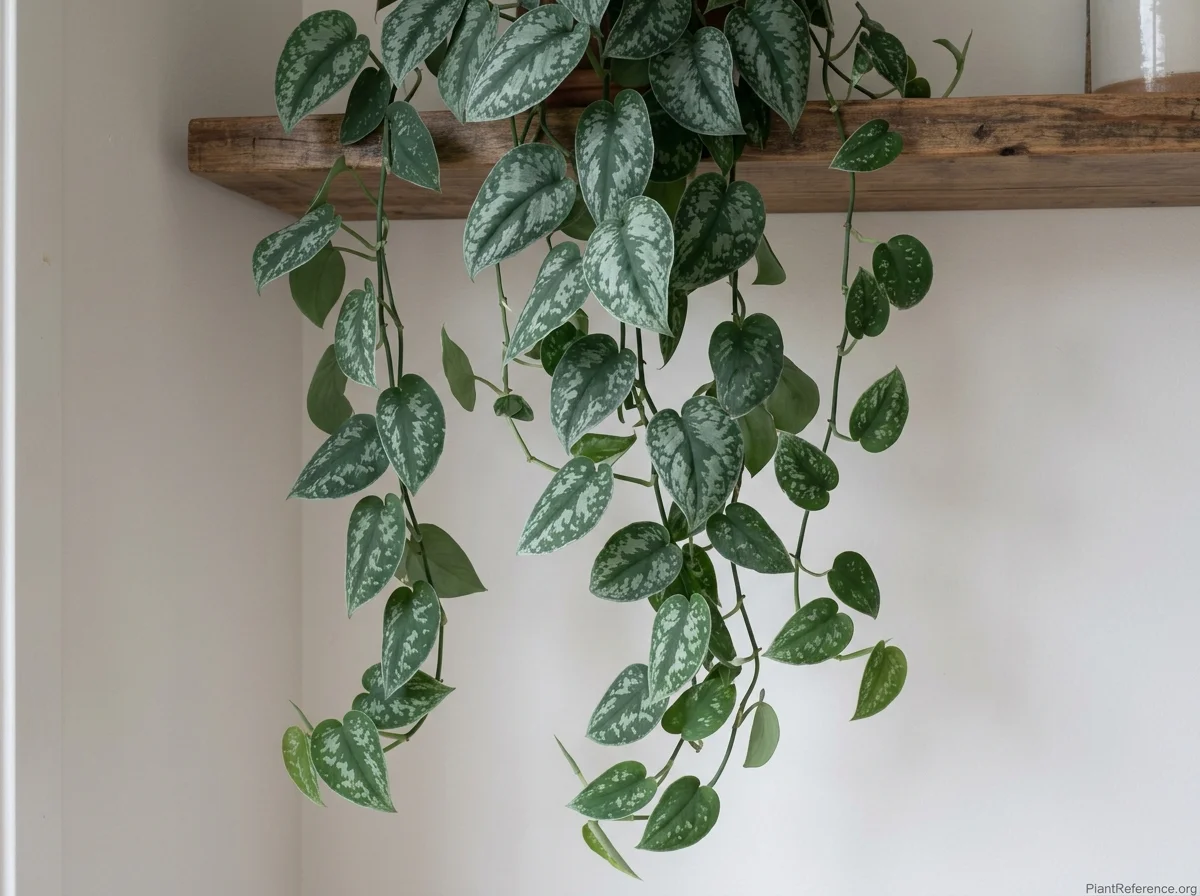
Scindapsus pictus is the satin pothos — a trailing or climbing aroid grown almost exclusively as an indoor specimen, with vines reaching 36–96 inches (90–240 cm) long in container culture. The species is not a true pothos despite the common name; it sits in the related genus Scindapsus, which separates it from Epipremnum aureum (the actual golden pothos) on flower and fruit characters. Each leaf is heart-shaped to broadly oval, 2.5–4 inches (6–10 cm) long and 2–3 inches (5–7.5 cm) wide on juvenile container plants, and reaches 6–12 inches (15–30 cm) on mature climbing specimens. The leaf surface carries a matte velvety texture and bears irregular silver-gray spots and patches that cover 20–60 percent of each blade, with the silver markings forming a pattern that varies leaf to leaf within the same plant. The species epithet 'pictus' translates as 'painted' and refers to this silver mottled marking. The cultivar 'Argyraeus' carries the heaviest silver mottling and is the form most often sold in retail; 'Exotica' carries elongated silver patches in a teardrop pattern; and the species form has lighter, more scattered silver marks. The plant climbs by aerial roots and benefits from a moss pole or wood plank for vertical support; mature climbing leaves are 50–100 percent larger than juvenile trailing leaves. Cultural failure modes are over-watering (root rot from soil that stays wet, the leading cause of decline), insufficient light (silver markings fade toward solid green below 100 foot-candles), and brown leaf edges from chronically dry indoor air below 30 percent humidity. All parts contain insoluble calcium oxalate crystals toxic to dogs, cats, and humans on ingestion; ingestion causes oral pain, drooling, and swelling.
Native Range
Scindapsus pictus is native to Southeast Asia, with a range from Bangladesh and the eastern Himalayan foothills through Myanmar, Thailand, and the Malay Peninsula to Sumatra, Borneo, and the Philippines, where it grows as a climbing hemiepiphyte on tree trunks in tropical lowland and lower montane rainforest.Suggested Uses
Used as a trailing or climbing indoor specimen for shelves, hanging baskets, mantels, and high cabinets in containers of 2 gallons (8 liters) or larger. Vines can be trained up moss poles or trellises for vertical interest, where mature climbing leaves develop 50–100 percent larger than juvenile trailing leaves. Combines with smaller foliage houseplants such as Hoya carnosa and Philodendron hederaceum for layered indoor plantings. Less suited to households with cats and dogs that browse foliage due to calcium oxalate toxicity.How to Identify
Appearance
Size & Dimensions
Height3' - 8'
Width/Spread1' - 2'
Colors
Foliage Colors
Fall Foliage Colors
Bloom Information
Does not flower in container culture. The mottled velvety foliage is the year-round display.
Detailed Descriptions
Flower Description
Does not flower in container cultureFoliage Description
Heart-shaped to broadly oval matte velvety leaves 2.5-4 inches (6-10 cm) long with irregular silver-gray spots and patches covering 20-60 percent of each bladeGrowing Conditions
Sun Requirements
Requires 3-6 hours of direct sunlight daily
• Full Sun: 6+ hours of direct sunlight
• Partial Shade: 3-6 hours of direct sunlight
• Full Shade: Less than 3 hours of direct sunlight
Care & Maintenance
Care Guide
Place in bright indirect light at 200–500 foot-candles for the strongest silver markings; markings fade toward solid green below 100 foot-candles. Direct sun above 4 hours scorches the velvety leaf surface. Water when the top one-third to one-half of the soil volume has dried; the plant tolerates short dry periods better than over-watering. Soil mix should be free-draining (peat-based potting mix amended with 25–30 percent perlite). Indoor humidity above 40 percent reduces brown leaf edges. Feed at half the label rate with a balanced liquid fertilizer monthly during active growth (spring through early autumn) and skip feeding in winter. Pinch back vine tips at any node to encourage branching for a fuller plant; without pinching the vines stay single-stemmed and grow longer rather than fuller.Pruning
Pinch back vine tips at any node to encourage branching and a fuller plant. Cut just below a node for cuttings; nodes root in water or moist potting mix in 3–6 weeks for new plants. The cuttings retain the silver mottling pattern of the parent plant.Container Growing
Suitable for container growing
Minimum container size: 2 gallons