Image 1 of 14
1 / 14
Plant Reference
Sciadopitys, Genus, verticillata, Species,
- Genus & species
Japanese umbrella pine
Native to central Honshu, Japan — the only living member of the family Sciadopityaceae; montane forests at 600-4,900 feet (180-1,500 m) elevation on well-drained acidic mountain slopes with consistent year-round moisture
Overview
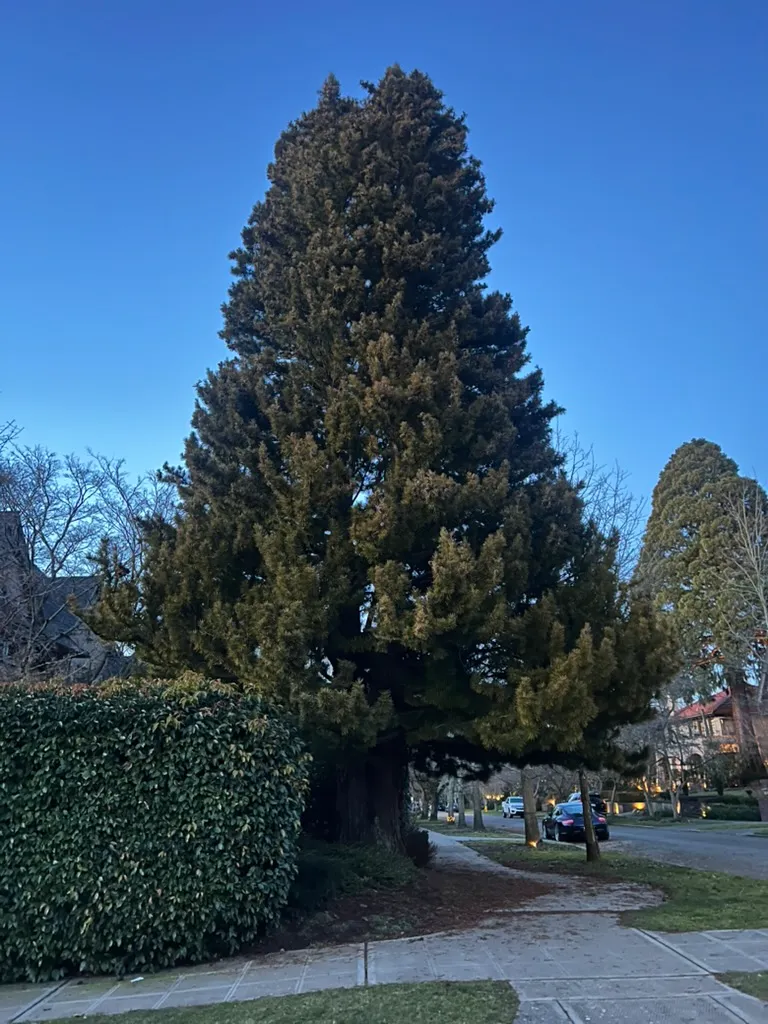
Sciadopitys verticillata is Japanese umbrella pine, a slow-growing upright evergreen coniferous tree in the monotypic family Sciadopityaceae growing 25-40 feet (7.6-12 m) tall and 15-20 feet (4.6-6 m) wide in cultivation over 30-50 years to reach mature stature. The species is the sole living member of the family Sciadopityaceae — a paleobotanical living-fossil lineage with fossil representatives documented from the Triassic period approximately 230 million years ago, and the species' genus and family have no close living relatives in the modern conifer lineage. The generic name Sciadopitys is from Greek skias (shadow or canopy parasol) and pitys (pine), recording the umbrella-like whorled canopy architecture. The specific epithet verticillata is from Latin verticillus (a whorl) and records the same whorled cladode arrangement. The species' most identifying feature is the foliage architecture: what appear to be unusually long flat needles are not botanically needles at all, but cladodes — flattened photosynthetic stem structures that have taken over the light-capturing function of true leaves, 3-5 inches (7-13 cm) long, thick, leathery, grooved on the underside, dark glossy green above and paler below, arranged in whorls of 20-30 cladodes at the tips of the woody stems like the spokes of an umbrella. The true leaves of the species are reduced to small brown scales at the base of each cladode whorl and are not photosynthetically active — the cladode-for-leaf substitution is an identifying diagnostic not shared by any other living conifer species. Limitation: the species is not drought-tolerant despite the evergreen coniferous habit, and calls for consistent year-round moisture on a well-drained acidic site (pH 5.0-6.5) with protection from drying winds — the cultural requirement for sustained moisture restricts siting to shaded or east-facing positions in the hotter and drier parts of the zone 5-9 range, and excludes the species from xeric and hot-exposure gardens that suit most other conifers. Growth is extremely slow at 6-12 inches (15-30 cm) per year on productive sites, and landscape specimens take 30-50 years to reach mature architectural stature — the long time-to-maturity is a practical limitation for short-occupancy plantings but also protects the species from requiring corrective pruning over a typical garden lifespan. The species has no significant pest or disease concerns in cultivation. Non-toxic. Deer-resistant.
Native Range
Native to central Honshu, Japan, in montane forests at 600-4,900 feet (180-1,500 m) elevation on well-drained acidic mountain slopes with consistent year-round moisture. The species is the sole living member of the monotypic family Sciadopityaceae — a paleobotanical living-fossil lineage with fossil representatives documented from the Triassic period approximately 230 million years ago. The generic name Sciadopitys is from Greek skias (shadow or canopy parasol) and pitys (pine), and the specific epithet verticillata is from Latin verticillus (a whorl).Suggested Uses
Used as a specimen tree in protected sites with consistent moisture, in high-visibility positions in arboreta and botanical garden conifer collections, in feature plantings in Japanese-style gardens, and in paired architectural plantings at entries or gateway positions where the whorled cladode architecture serves as a visual focus at 15-20 foot (4.6-6 m) spacing between plants in USDA zones 5 through 9. The whorled cladode foliage architecture not shared by any other living conifer, the slow growth that preserves the compact architectural silhouette for decades without the outgrowth of most cultivated conifers, the species' standing as the sole living representative of a 230-million-year-old paleobotanical lineage, and the freedom from significant pest and disease concerns combine to make Sciadopitys verticillata a foundation specimen conifer for high-value garden positions in moist acidic-soil sites. Dry-site positions, xeric gardens, hot-afternoon-exposure sites without supplemental irrigation, and short-occupancy plantings where mature stature is needed within a few years are unsuitable because of the species' cultural moisture requirements and the extremely slow growth rate. Container cultivation at landscape dimensions is unsuitable because of the species' mature tree stature.How to Identify
Appearance
Size & Dimensions
Height25' - 40'
Width/Spread15' - 20'
Reproduction
Yellow-green male pollen cones (strobili) are carried in clusters at the tips of the cladode whorls in March through April across a 2-3 week wind-pollinated release period. Small green female seed cones at the branch tips mature over two growing seasons into ovoid brown seed cones 2-4 inches (5-10 cm) long that release winged seeds at maturity. Cone production begins at 15-25 years and is modest relative to the cone displays of the pine and spruce genera.
Detailed Descriptions
Foliage Description
dark glossy green above and pale yellow-green below, carried as cladodes (flattened photosynthetic stem structures, botanically not true needles) 3-5 inches (7-13 cm) long, thick, leathery, with a central longitudinal groove on the underside, arranged in whorls of 20-30 cladodes at the tips of the woody stems — the whorled arrangement resembles the spokes of an umbrella and is the source of both the common name umbrella pine and the specific epithet verticillata (Latin for whorled); the true leaves of the species are small brown scales at the base of each cladode whorl and are vestigial rather than photosynthetic; the cladode whorl architecture is an identifying diagnostic not shared by any other living conifer; evergreen year-round with individual cladodes retained 2-3 years before sheddingGrowing Conditions
Sun Requirements
Requires 4-10 hours of direct sunlight daily
• Full Sun: 6+ hours of direct sunlight
• Partial Shade: 3-6 hours of direct sunlight
• Full Shade: Less than 3 hours of direct sunlight