Image 1 of 2
1 / 2
© Amanda Slater from Coventry, West Midlands, UK, some rights reserved (CC-BY-SA) · Wikimedia Commons
Schlumbergera, Genus, spp., Multiple species,
- Genus
- Multiple species
christmas cacti
Southeastern Brazil (coastal mountains)
Overview
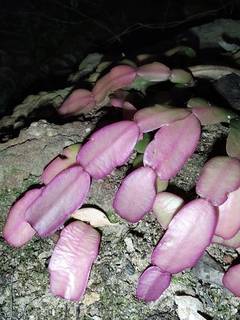
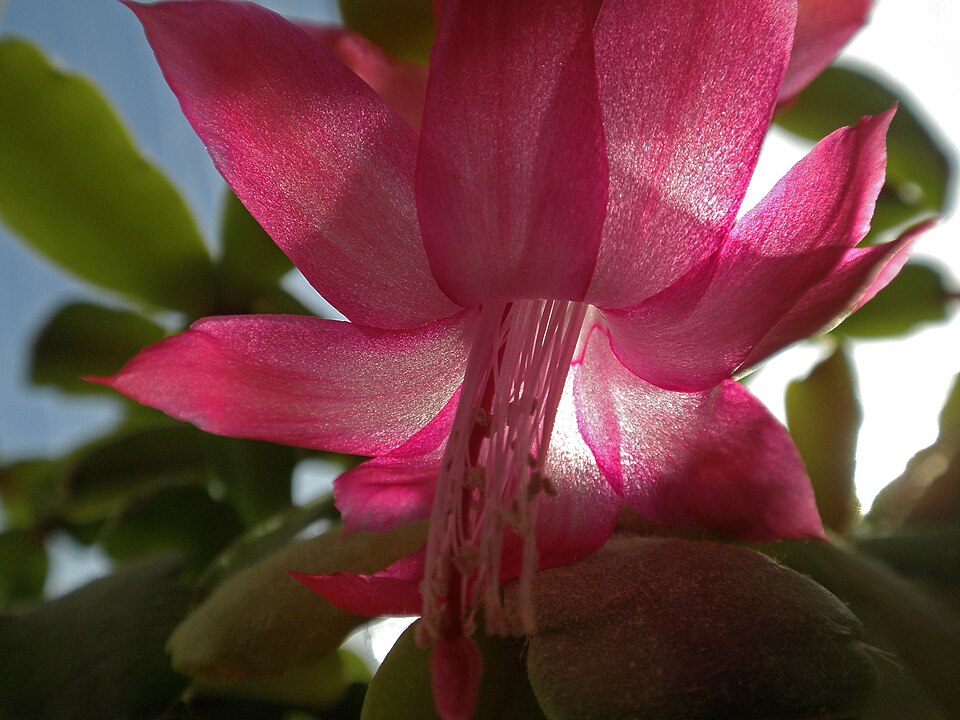
Schlumbergera is a small genus of six to nine species of epiphytic cacti in the family Cactaceae, native to the coastal mountains of southeastern Brazil. Unlike desert cacti, they grow on tree branches and shaded rocks in humid forest, with arching, trailing stems 12-24 in (30-60 cm) long made up of flattened, jointed green segments. The segments act as the photosynthetic organs; true leaves are absent and the plants are spineless, bearing only small bristles at the joints. Tubular, asymmetric flowers 2-3 in (5-8 cm) long open from the segment tips in autumn and winter, in magenta, pink, red, orange, or white, and are shaped for pollination by hummingbirds in the wild. Flowering is triggered by long nights and cool temperatures. After bloom, small berry-like fruits may form. The genus is restricted to a small area of the Serra do Mar and nearby ranges, where it grows in cool, shaded, humid conditions. Many cultivated plants are hybrids, and the wild species are limited in range and pressured by habitat loss. Stems are brittle and snap at the joints if handled roughly.
Native Range
The genus is endemic to a small region of the coastal mountains of southeastern Brazil, chiefly the Serra dos Orgaos and Serra do Mar. Plants grow as epiphytes on trees and as lithophytes on shaded rock in humid Atlantic forest at 3,000-6,500 ft (900-2,000 m).Suggested Uses
Grown as a long-lived flowering houseplant for autumn and winter bloom, and in hanging containers where the trailing stems spill over the rim. In frost-free, humid climates plants are grown outdoors in shade on walls, rocks, or trees.How to Identify
Appearance
Size & Dimensions
Height6" - 2'
Width/Spread1' - 2'
Bloom Information
Flowering comes in autumn and early winter for most plants, set off by lengthening nights and cooler temperatures, which gives rise to the common names Thanksgiving and Christmas cactus. Buds form over several weeks, and an established plant can carry dozens of blooms at once. Sudden changes in light, temperature, or watering during budding cause buds to drop.
Detailed Descriptions
Flower Description
magenta, pink, red, orange, or whiteFoliage Description
greenGrowing Conditions
Sun Requirements
Needs bright indirect light. Keep it out of direct sun, which can scorch the leaves.
• Bright indirect light: a bright spot near a window, with no direct sun on the leaves
Care & Maintenance
Care Guide
Plants grow in bright, indirect light and a free-draining, organic potting mix, reflecting their epiphytic origins rather than desert conditions. Watering is regular while growing and flowering but reduced between cycles, as soggy mix rots the stems. Cool nights of 50-60F (10-16C) and uninterrupted darkness in autumn set the flower buds. Direct midday sun scorches the segments, and dry indoor heat shortens flowering. Light feeding supports growth from spring through summer. Plants tolerate being slightly potbound and flower more freely when roots are confined.Pruning
Stem segments are removed by twisting at a joint after flowering to shape the plant and encourage branching. The detached segments root easily in moist mix, providing new plants.Pruning Schedule
Prune: February
winter
Container Growing
Suitable for container growing
Minimum container size: 1 gallons