Schizophragma, Genus, hydrangeoides, Species,
- Genus & species
Japanese climbing hydrangea
Japan and Korea (moist montane forests; self-clinging by aerial rootlets; single-bract lacecap; exfoliating bark; slow to establish 3-5 yr; z5)
Overview
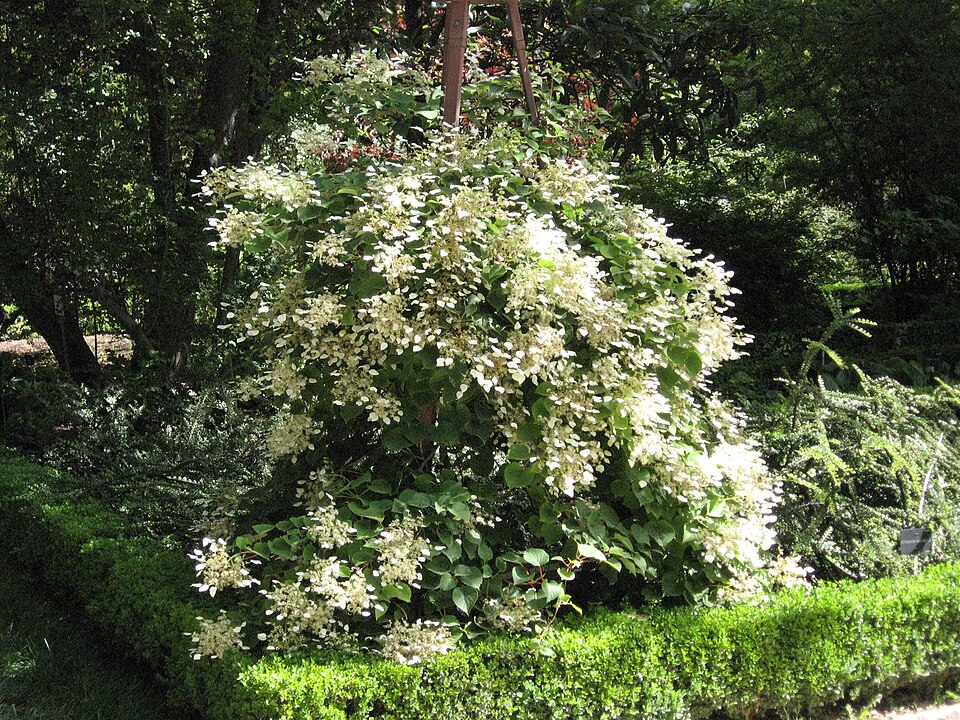
Schizophragma hydrangeoides is a deciduous, self-clinging, woody vine reaching 30-40 feet (9-12 m) and climbing by aerial rootlets. Native to Japan and Korea, it produces rounded to heart-shaped, dark green, coarsely toothed leaves 3-5 inches (8-13 cm) long. Flat-topped lacecap inflorescences 8-10 inches (20-25 cm) across appear in July, with tiny fertile flowers in the center surrounded by large, single, ovate, creamy-white bracts (sepals)—each bract is a single petal-like structure, distinguishing this from Hydrangea anomala ssp. petiolaris which has 4-petaled sterile florets. The bracts persist and age to tan-parchment. Reddish-brown exfoliating bark on mature stems. Growth rate is slow to establish, then moderate. Hardy to zone 5. Slow to begin climbing—may take 3-5 years to attach and ascend. The single-bract sterile florets create a more refined lacecap than climbing hydrangea.
Native Range
Schizophragma hydrangeoides is native to Japan and Korea—in moist montane forests, climbing forest trees and rocky outcrops.Suggested Uses
Trained on masonry walls, large trees, fences, or as a groundcover on slopes. Self-clinging. Refined lacecap blooms Jul. Shade tolerant—one of few flowering vines for shade. Exfoliating reddish bark. Slow to establish (3-5 years). Heavy at maturity—needs strong support. Aerial rootlets may damage soft surfaces. Not suitable for flimsy structures or where slow establishment is unacceptable.How to Identify
Appearance
Size & Dimensions
Height30' - 40'
Width/Spread6' - 10'
Bloom Information
Flat-topped lacecap inflorescences 8-10 inches (20-25 cm) with tiny central fertile flowers and large single creamy-white bracts, July. Bracts persist and age to tan-parchment. Bloom duration 4-6 weeks including aging bracts.
Detailed Descriptions
Flower Description
Creamy-white single bracts; flat lacecap 8-10 inches; tiny fertile center; Jul; age to tan-parchmentFoliage Description
Dark green; rounded to heart-shaped coarsely toothed 3-5 inches; deciduousGrowing Conditions
Sun Requirements
Requires 2-6 hours of direct sunlight daily
• Full Sun: 6+ hours of direct sunlight
• Partial Shade: 3-6 hours of direct sunlight
• Full Shade: Less than 3 hours of direct sunlight
Care & Maintenance
Care Guide
Plant in partial shade to full shade in moist, humus-rich, well-drained soil (pH 5.5-7.0). Hardy to zone 5. Self-clinging by aerial rootlets—needs no trellis on masonry or rough-barked trees. Slow to establish (3-5 years before climbing). Shade tolerant. Provide supplemental water during establishment.Pruning
Prune after flowering if needed to control spread. Minimal pruning required. Remove any stems growing away from the support surface. Can be kept smaller with annual pruning after bloom. The exfoliating bark is visible on mature stems in winter.Pruning Schedule
Prune: August
summer