Schisandra, Genus, chinensis, Species,
- Genus & species
five-flavor berry
NE Asia (Manchuria, Korea, Japan, Russian Far East; mixed forests, streambanks; five-flavor berry wǔ wèi zi; twining vine; dioecious; scarlet berry clusters; z4)
Overview
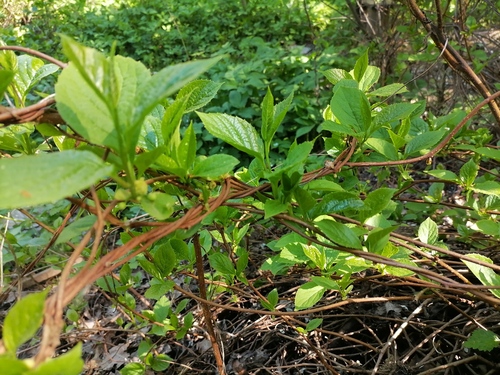
Schisandra chinensis is a deciduous, twining, woody vine reaching 15-25 feet (4.5-7.5 m) with a spread dependent on support structure and a climbing habit that twines clockwise around supports. Native to northeastern Asia, it produces simple, ovate to elliptic, glossy, dark green leaves 2-4 inches (5-10 cm) long with finely toothed margins on reddish petioles. Small, fragrant, creamy-white to pale pink flowers 0.5-0.75 inch (1-2 cm) appear in pendulous clusters in May-June. Dioecious (usually—some plants monoecious)—female plants produce hanging clusters of bright scarlet berries 3-6 inches (8-15 cm) long in September-October, resembling elongated grape clusters. The berries possess all five basic flavors simultaneously (sweet, sour, salty, bitter, pungent)—hence wǔ wèi zi (five-flavor berry) in Chinese medicine. Growth rate is moderate. Hardy to zone 4.
Native Range
Schisandra chinensis is native to northeastern Asia—northeastern China (Manchuria), Korea, Japan, and the Russian Far East—in mixed deciduous and coniferous forests, forest margins, and streambanks.Suggested Uses
Trained on trellises, arbors, or fences. Five-flavor medicinal/culinary berries. Glossy deciduous foliage. Pendulous scarlet berry clusters Sep-Oct. NE Asian. Needs male and female plants for fruit. Needs sturdy support—15-25 feet. Moderate vigor. May be slow to establish. Not suitable for hot dry sites or without adequate support structure.How to Identify
Appearance
Size & Dimensions
Height15' - 25'
Width/Spread3' - 6'
Bloom Information
Small fragrant creamy-white to pale pink flowers 0.5-0.75 inch (1-2 cm) in pendulous clusters, May-June. Dioecious (male and female plants needed for fruit). Female plants produce hanging clusters of bright scarlet berries 3-6 inches (8-15 cm), September-October.
Detailed Descriptions
Flower Description
Creamy-white to pale pink; small fragrant 0.5-0.75 inch; pendulous clusters; May-Jun; bright scarlet berries Sep-OctFoliage Description
Glossy dark green; ovate to elliptic 2-4 inches; finely toothed; reddish petioles; deciduousGrowing Conditions
Sun Requirements
Requires 4-8 hours of direct sunlight daily
• Full Sun: 6+ hours of direct sunlight
• Partial Shade: 3-6 hours of direct sunlight
• Full Shade: Less than 3 hours of direct sunlight
Care & Maintenance
Care Guide
Plant in partial shade to full sun in moist, humus-rich, well-drained, acidic soil (pH 5.0-6.5). Hardy to zone 4. Needs a sturdy support—twines 15-25 feet. Plant both male and female vines within 30 feet (9 m) for berry production. Mulch roots. Afternoon shade in hot climates.Pruning
Prune in late winter to thin congested growth. Train to a trellis, arbor, or pergola. Remove dead or crossing stems. Can be cut back hard for renewal. Berries form on previous year's wood—avoid removing all old wood.Pruning Schedule
Prune: February–March
early spring