Saruma, Genus, henryi, Species,
- Genus & species
upright wild ginger
Central China — Hubei, Sichuan, and Guizhou provinces; moist mountain forest understory at middle elevations
Overview
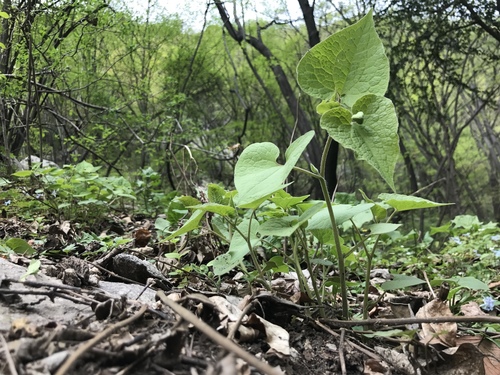
Saruma henryi is an upright clumping deciduous perennial in the family Aristolochiaceae growing 18–24 inches (45–60 cm) tall and 18–24 inches (45–60 cm) wide from a slowly expanding crown. The species is the sole member of its genus — Saruma is a monotypic genus containing S. henryi alone — and the genus name is an anagram of the related genus Asarum (the true wild gingers), which carries the same broadly heart-shaped velvety foliage but has hidden ground-level flowers rather than the visible axillary flowers of Saruma. This difference in flower display is the main reason for the distinction between the two genera: Saruma carries upright flowering stems with pale yellow 3-petaled flowers held at the leaf axils well above the ground where pollinators can see and reach them, while Asarum species carry flowers hidden under the foliage at ground level where pollination is typically carried out by ground-dwelling insects rather than flying bees. Broadly heart-shaped velvety-hairy medium green leaves 3–5 inches (7–13 cm) across are carried on long petioles along the upright stems, and the crushed foliage carries a light ginger-like scent that is the source of the common name upright wild ginger. Pale soft yellow 3-petaled flowers 0.5–0.75 inch (1.3–2 cm) across open singly at the leaf axils from May through August across a 14-week bloom period — the 14-week bloom span makes Saruma a long-flowering shade perennial that continues through the summer when most other shade perennials have finished blooming. The species is named in honor of Augustine Henry (1857–1930), an Irish plantsman and physician who collected extensively in Hubei Province, China, during the late 19th century and who first brought the species to western botanical attention. Native to central China (Hubei, Sichuan, and Guizhou provinces), growing in moist mountain forest understory at middle elevations under a mixed deciduous and evergreen canopy. Limitation: the species is not drought-tolerant and calls for consistently moist humus-rich woodland soil through the growing season, and the plant takes 2–3 years from planting to reach the full clump size and flower production. Deer browse the velvety foliage in positions without physical protection. The species is uncommon in the nursery trade and is typically available only from specialist shade perennial and woodland plant nurseries. Non-toxic.
Native Range
Native to central China, specifically Hubei, Sichuan, and Guizhou provinces, growing in the moist understory of mountain forest habitats at middle elevations under a mixed deciduous and evergreen canopy. The species was first collected by Augustine Henry (1857–1930) in Hubei Province during the late 19th century, and the specific epithet henryi commemorates his collection work in central China that brought many new plant species to western botanical gardens during that period.Suggested Uses
Used in woodland gardens, shade borders, and foundation plantings under deciduous trees in USDA zones 5 through 9 at 18–24 inch (45–60 cm) spacing between plants. The 14-week pale yellow bloom period, the velvety ginger-scented foliage, and the upright habit that holds the flowers at eye level along a woodland path combine to make the species a specialty shade perennial for mixed plantings with Hosta, Asarum, Epimedium, and woodland ferns. The species is uncommon in the general nursery trade and is typically sourced from specialist shade perennial and woodland plant nurseries rather than from big-box garden centers. Dry sun-exposed positions, heavy deer-browse positions without protection, and gardens without consistent summer moisture are unsuitable because of the moisture requirement, the deer palatability, and the shade dependence of the species.How to Identify
Appearance
Size & Dimensions
Height1'6" - 2'
Width/Spread1'6" - 2'
Bloom Information
Pale soft yellow 3-petaled flowers 0.5–0.75 inch (1.3–2 cm) across open singly at the leaf axils along the upright flowering stems from May through August across a 14-week bloom period. The 14-week bloom span covers the full late-spring through late-summer period and carries the species through the summer when most other shade perennials have finished flowering, which makes Saruma a long-flowering shade specimen in woodland garden design. Native bees and small flies work the flowers for nectar during the bloom period.
Detailed Descriptions
Flower Description
pale soft yellow 3-petaled flowers 0.5-0.75 inch (1.3-2 cm) across, nodding, carried singly at the leaf axils along the upright flowering stems; flowers are held above the foliage rather than hidden at ground level as in the related genus AsarumFoliage Description
medium green; broadly heart-shaped velvety-hairy leaves 3-5 inches (7-13 cm) across, carried on long petioles; the crushed foliage carries a light ginger-like scentGrowing Conditions
Sun Requirements
Requires 1-4 hours of direct sunlight daily
• Full Sun: 6+ hours of direct sunlight
• Partial Shade: 3-6 hours of direct sunlight
• Full Shade: Less than 3 hours of direct sunlight
Care & Maintenance
Care Guide
Site in partial shade to full shade with 1–4 hours of direct sun per day, typically under the deciduous or mixed canopy of a woodland garden or shade border where the summer shade holds soil moisture through the warm months. Humus-rich well-drained soil with a pH of 5.5–7.0 holds the crown through the full growing season, and the species calls for consistently moist soil because it is not drought-tolerant and declines during extended summer dry periods on positions without supplemental irrigation. The plant takes 2–3 years from planting to reach the full clump size and the full 14-week bloom production, and young plants should be protected from deer browse on the velvety foliage during the establishment period. Dead foliage is cleared in late fall or early spring as the crown is prepared for the new growing season. Non-toxic. Hardy in USDA zones 5–9.Pruning
Dead foliage is cut to the ground in late fall (November) after the first frost has killed the leaves, or in early spring (March) before new growth emerges from the crown. The cut material is removed to the compost pile and the crown is left clean for the spring emergence. No other pruning is needed through the growing season because the upright flowering stems carry both the flowers and the foliage in a self-maintaining arrangement that does not call for shaping cuts or deadheading.Pruning Schedule
Prune: March & November
fallearly spring