Sarcobatus, Genus, spp., Multiple species,
- Genus
- Multiple species
greasewood
Overview
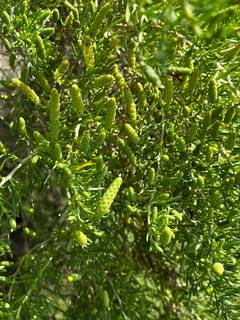
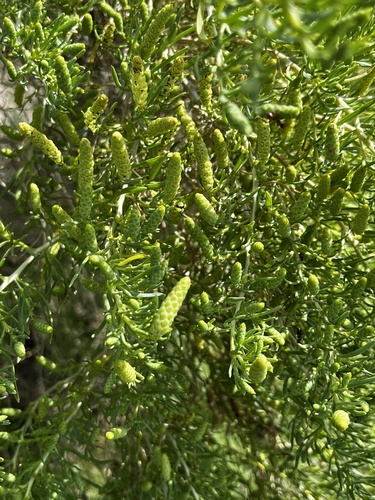
Sarcobatus is a small genus of one or two species of deciduous, spiny shrubs in the family Sarcobataceae, native to arid western North America. The species S. vermiculatus, or greasewood, forms rounded, much-branched shrubs 2-10 ft (0.6-3 m) tall with stiff, spine-tipped twigs and pale, almost white, smooth bark. The narrow, fleshy, bright green leaves are 0.4-1.5 in (1-4 cm) long and somewhat succulent, an adaptation to salty, dry ground. Plants are largely monoecious, with male flowers in small terminal cone-like spikes and inconspicuous female flowers lower on the stems; the female flowers develop a wing-like structure as the seed matures. Greasewood is a halophyte of alkaline and saline flats, playas, and basin floors, where it tolerates salt, drought, and periodic flooding and indicates a high water table. The foliage contains soluble oxalates and can poison livestock that eat large amounts. It often forms extensive low stands across western basins.
Native Range
Sarcobatus is native to western North America, from the interior of Canada through the western United States into northern Mexico. Plants grow on saline and alkaline flats, basin floors, playa margins, and other arid sites with a high water table.Suggested Uses
Grown mainly in restoration and revegetation of saline and alkaline basins, where it stabilises soil and shelters wildlife. It is used in arid habitat plantings and as rangeland browse in measured amounts.How to Identify
Appearance
Size & Dimensions
Height2' - 10'
Width/Spread3' - 10'
Bloom Information
Flowering occurs in late spring and summer, roughly May to July. The small male flowers form short cone-like spikes at the shoot tips, while the female flowers are inconspicuous; as seeds ripen, each female flower develops a papery wing that aids wind dispersal.
Detailed Descriptions
Foliage Description
bright greenGrowing Conditions
Sun Requirements
Requires 6-12 hours of direct sunlight daily
• Full Sun: 6+ hours of direct sunlight
• Partial Shade: 3-6 hours of direct sunlight
• Full Shade: Less than 3 hours of direct sunlight
Care & Maintenance
Care Guide
Sarcobatus grows in full sun on saline, alkaline, and seasonally wet basin soils, tolerating salt, drought, and a fluctuating water table that few other shrubs withstand. A soil pH from neutral to strongly alkaline, roughly 7.0-9.0, suits it. The fleshy leaves store water against drought, and the deep roots reach moisture far below the surface. The foliage contains soluble oxalates that can poison sheep and cattle when eaten in quantity. Outside its specialised saline habitat the genus is rarely cultivated.Pruning
Little pruning is needed in its natural setting beyond removing dead or broken branches. Plants resprout from the base after damage or browsing, so growth is renewed from below rather than by shaping.Pruning Schedule
Prune: March
early spring