Santalum, Genus, acuminatum, Species,
- Genus & species
desert quandong
Overview
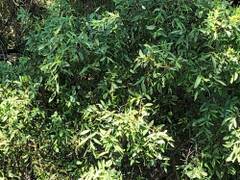
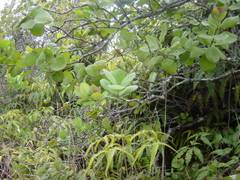
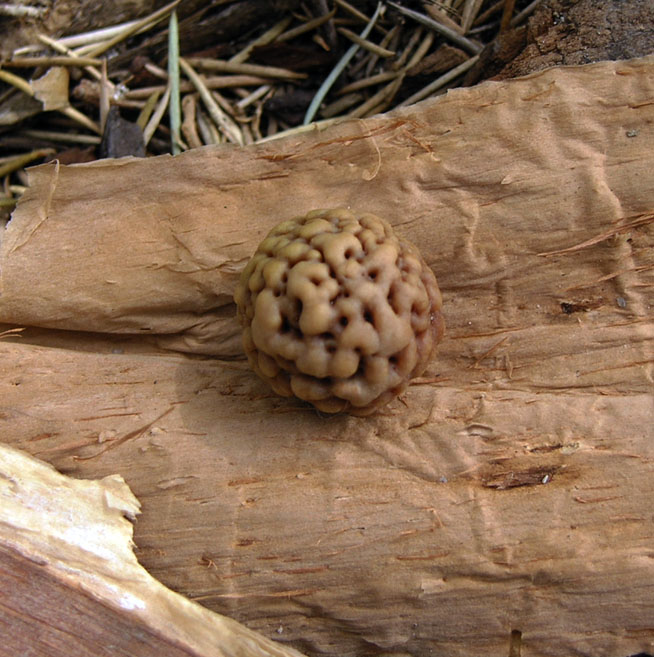
Santalum acuminatum is a hemiparasitic shrub or small tree reaching 10-13 feet (3-4 m) tall and 8-13 feet (2.5-4 m) wide. The root system forms haustoria that attach to the roots of neighbouring host plants to draw water and nutrients. Leaves are opposite, leathery, and grey-green, lance-shaped, 2-3.5 inches (5-9 cm) long and 0.2-0.4 inch (5-10 mm) wide, often hanging downward. Small cream to greenish flowers, each about 0.1-0.2 inch (3-5 mm) across, are borne in branched clusters at the branch tips. Flowers are followed by a round drupe 0.8-1 inch (20-25 mm) in diameter, ripening from green to glossy red and containing a hard, deeply pitted stone surrounded by a thin tart layer of edible flesh. The plant grows slowly and depends on a compatible host throughout its life; seedlings without a host fail to establish. It tolerates extended drought and saline soils once attached to a host, while frost during flowering reduces fruit set. Plants are slow to reach fruiting size, typically taking 4-6 years from establishment.
Native Range
Native to the arid and semi-arid regions of southern Australia, including parts of Western Australia, South Australia, Victoria, New South Wales, and southern Queensland. Grows in open woodland, mallee, and shrubland on sandy or loamy soils, generally at 300-1,600 feet (90-490 m) elevation.Suggested Uses
Grown in arid-zone bushfood plantings and revegetation projects on sandy soils, spaced 10-13 feet (3-4 m) apart alongside compatible host shrubs such as acacias. The edible red drupes are harvested for jams, preserves, and dried fruit. Not suited to long-term container growing because of its dependence on a living root host.How to Identify
Appearance
Size & Dimensions
Height10' - 13'
Width/Spread8' - 13'
Colors
Bloom Information
Flowers mainly from October to February in its native range, with timing shifting according to rainfall. Individual clusters last 2-4 weeks, and flowering across a plant extends over 6-10 weeks. Dry seasons delay or reduce flowering, and frost during the flowering period lowers fruit set.
Detailed Descriptions
Flower Description
cream to greenishFoliage Description
grey-greenGrowing Conditions
Sun Requirements
Requires 6-10 hours of direct sunlight daily
• Full Sun: 6+ hours of direct sunlight
• Partial Shade: 3-6 hours of direct sunlight
• Full Shade: Less than 3 hours of direct sunlight
Care & Maintenance
Care Guide
Establishment requires a compatible host plant growing within 3-6 feet (1-2 m), because seedlings draw water and nutrients through root haustoria. Young plants need supplemental water through the first two dry seasons until the haustorial connection forms, after which they tolerate 4-8 weeks without rain. The species grows in sandy or loamy soils with sharp drainage and tolerates mild salinity. Birds and fruit fly take ripening drupes, reducing the harvestable crop. Root disturbance around the host breaks the haustorial connection and can kill the plant. Plants grow slowly, reaching fruiting size in 4-6 years.Pruning
Little pruning is undertaken. Dead or damaged stems can be removed in late winter before new growth begins. Light tip pruning after fruiting builds a denser canopy, while heavy cutting is poorly tolerated and slows recovery given the plant's reliance on its host.Pruning Schedule
Prune: August
winter