Sansevieria, Genus, spp., Multiple species,
- Genus
- Multiple species
mother-in-law's tongues
Africa, Madagascar, and southern Asia
Overview
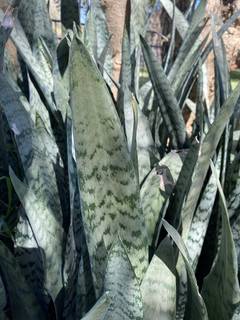
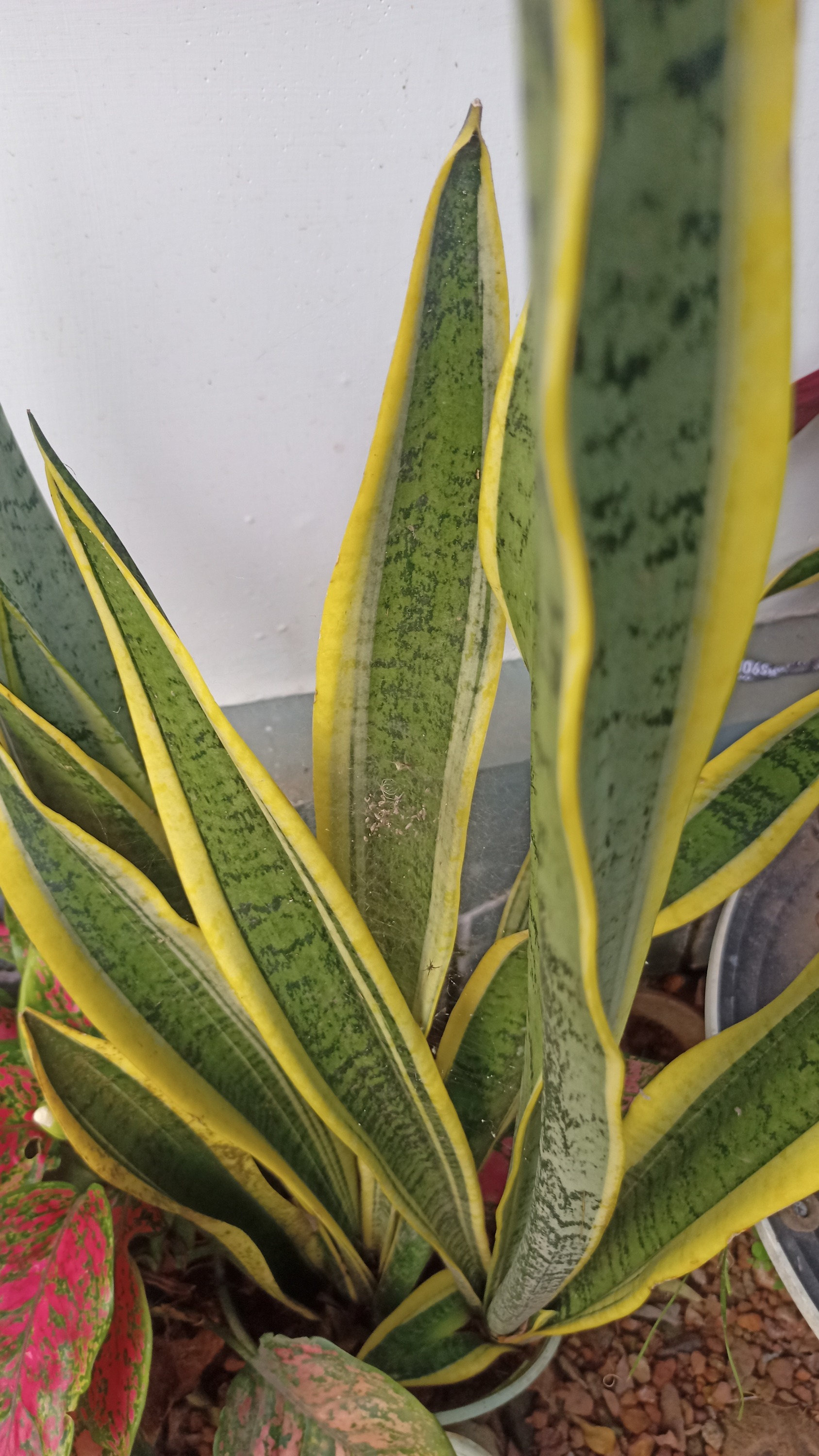
Sansevieria is a genus of about 70 species of evergreen, rhizome-forming succulents in the family Asparagaceae, native to the dry tropics of Africa, Madagascar, southern Asia, and Arabia, and now placed by many botanists within Dracaena. The plants grow from creeping underground rhizomes into clumps of stiff, upright or rosette-forming leaves 6 inches to 4 feet (15 to 120 cm) tall. The thick, often sword-shaped leaves are banded, mottled, or edged in grey, silver, cream, or yellow, and store water that lets the plants withstand long dry spells. Spikes of small, tubular, greenish-white flowers appear at intervals and release a sweet scent at night, though indoor plants flower only occasionally. The plants tolerate low light, irregular watering, and neglect, which has made them common houseplants under the names snake plant and mother-in-law's tongue. The leaves and rhizomes contain saponins that are poisonous to cats and dogs if chewed, and overwatering in cold soil causes root and rhizome rot.
Native Range
Sansevieria is native to the seasonally dry regions of tropical and southern Africa, Madagascar, the Arabian Peninsula, and southern Asia, where the plants grow in rocky, sandy ground and open scrub. None are native to North America, though they are grown worldwide as houseplants and, in frost-free regions, as outdoor groundcover.Suggested Uses
Sansevierias are grown as low-care houseplants and office plants for their upright evergreen foliage, and in frost-free climates as groundcover and container plants. The vertical, sword-leaved species are used as floor plants and room dividers, while the low rosette forms suit desks and shelves. Outdoors in warm regions they are massed on dry banks where little else grows.How to Identify
Appearance
Size & Dimensions
Height6" - 4'
Width/Spread6" - 2'
Bloom Information
Flowering is irregular and tied to mature, somewhat root-bound plants rather than a fixed season, appearing most often in spring and summer. A slender spike carries many small greenish-white tubular flowers that open and scent the air at night. Sticky nectar droplets often form along the flower spike.
Detailed Descriptions
Flower Description
greenish-white to creamFoliage Description
green, often banded or edged with grey, silver, or yellowGrowing Conditions
Sun Requirements
Requires 2-6 hours of direct sunlight daily
• Full Sun: 6+ hours of direct sunlight
• Partial Shade: 3-6 hours of direct sunlight
• Full Shade: Less than 3 hours of direct sunlight
Care & Maintenance
Care Guide
Most Sansevieria grow in bright indirect light but tolerate everything from full sun to deep shade, with leaf color and markings strongest in brighter light. Plant them in free-draining gritty or cactus soil at pH 5.5 to 7.5, and water only when the soil has dried well down, since wet, cold roots rot quickly. The plants are hardy only in USDA zones 10 and 11 and are grown as houseplants elsewhere, holding up to dry indoor air and infrequent care. Feeding once or twice in summer is enough. Divide crowded clumps or root leaf cuttings to make new plants, though variegated forms revert to plain green from leaf cuttings. Mealybugs, spider mites, and root rot are the main problems.Pruning
Cut damaged or overlong Sansevieria leaves off at the base with a clean blade, since a trimmed leaf tip will not regrow a point. Remove any soft, yellowing leaves promptly to stop rot spreading. Divide overcrowded clumps in spring rather than trimming the roots.Container Growing
Suitable for container growing
Minimum container size: 1 gallons