Rubia, Genus, peregrina, Species,
- Genus & species
wild madder
Western and southern Europe, North Africa, and the Mediterranean
Overview
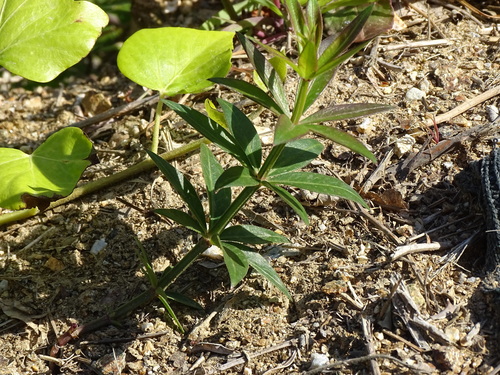
Rubia peregrina is an evergreen scrambling perennial with wiry, four-angled stems 24-60 inches (60-150 cm) long that clamber over shrubs and hedges using tiny hooked prickles. The leathery, glossy dark-green leaves are held in whorls of four to six, their margins and underside midribs lined with backward-hooked bristles that catch on clothing and other plants. Small yellow-green flowers about 0.2 inch (5 mm) across, each with five pointed lobes, open in loose clusters from June to August. They ripen into round black berries about 0.2-0.25 inch (5-6 mm) wide. It grows in coastal scrub, hedgerows, cliff tops, and woodland edges, mostly near the sea on well-drained, often lime-rich soils. The hooked stems and leaves can scramble densely over and through neighbouring plants.
Native Range
Native to western and southern Europe, North Africa, and the Mediterranean, with a strongly Atlantic and coastal distribution. In Britain it grows near the south and west coasts on well-drained, often calcareous ground.Suggested Uses
Grown in coastal and wildlife gardens, on banks, and scrambling through hedges and shrubs near the sea. The black berries and evergreen cover give food and shelter to birds and insects. Its roots have a long history as a source of red dye, like those of the related madder, Rubia tinctorum.How to Identify
Appearance
Size & Dimensions
Height2' - 5'
Width/Spread3' - 6'
Bloom Information
Small yellow-green flowers open from June to August in loose, branched clusters. They are visited by small flies and other insects, and ripen into round black berries that persist into autumn and winter.
Detailed Descriptions
Foliage Description
Glossy dark greenGrowing Conditions
Sun Requirements
Requires 6-12 hours of direct sunlight daily
• Full Sun: 6+ hours of direct sunlight
• Partial Shade: 3-6 hours of direct sunlight
• Full Shade: Less than 3 hours of direct sunlight