Delonix, Genus, regia, Species,
- Genus & species
royal poinciana
Overview
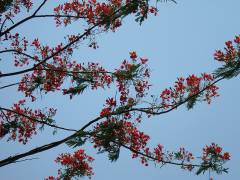
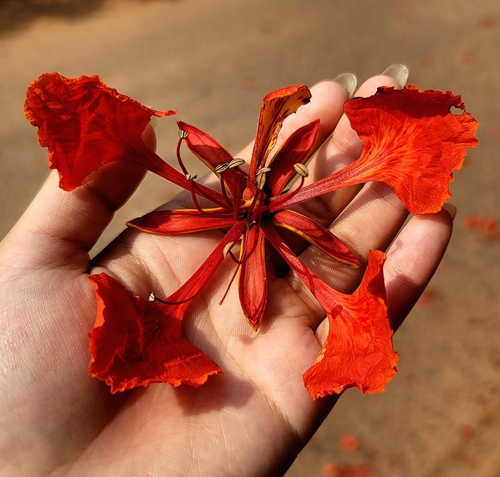
Delonix regia is the royal poinciana (flame tree), growing 240-480 inches (600-1,200 cm) tall and 360-600 inches (900-1,500 cm) wide — the canopy spread often exceeds the height, creating a broad umbrella shape. Scarlet to orange-red flowers 3-4 inches (7-10 cm) with five petals, one of which is streaked with yellow and white (the 'standard' petal), in clusters across the canopy in late spring to summer. The flower mass covers the canopy in red-orange, creating the 'flame tree' common name. Bright green bipinnately compound fern-like leaves 12-24 inches (30-60 cm) with very small leaflets 0.25 inch (6 mm). Large flat woody seed pods 12-24 inches (30-60 cm) long and 2 inches (5 cm) wide persist on the tree into winter — the pods are heavy and hard, falling with force. In the legume family (Fabaceae). Native to the dry deciduous forests of western Madagascar — classified as endangered in the wild despite being a widely planted tropical ornamental tree globally. Aggressive surface roots damage sidewalks, driveways, and foundations. Shallow root system — susceptible to toppling in hurricanes and strong wind. Brittle wood. Full sun (8+ hours). Drought-tolerant once established. Frost-tender: killed at 28°F (-2°C). Non-toxic. Zones 10-11. Growth rate is fast — 36-60 inches (90-150 cm) per year.
Native Range
Native to the dry deciduous forests of western Madagascar. Endangered in the wild. A widely planted tropical ornamental tree globally.Suggested Uses
Grown as a shade and specimen tree in zones 10-11 with space for the 360-600 inch (900-1,500 cm) canopy. Full sun. Planted away from foundations, sidewalks, and driveways (aggressive surface roots). The scarlet flower mass is the display feature. Non-toxic.How to Identify
Appearance
Size & Dimensions
Height20' - 40'
Width/Spread30' - 50'
Bloom Information
Detailed Descriptions
Flower Description
Scarlet to orange-red with one yellow-streaked petalFoliage Description
Bright green, bipinnately compound, fern-likeGrowing Conditions
Sun Requirements
Requires 8-10 hours of direct sunlight daily
• Full Sun: 6+ hours of direct sunlight
• Partial Shade: 3-6 hours of direct sunlight
• Full Shade: Less than 3 hours of direct sunlight