Image 1 of 14
1 / 14
Plant Reference
Romneya, Genus, coulteri, Species,
- Genus & species
Matilija poppy
Southern California (Los Angeles, San Diego, Riverside counties) and Baja California, Mexico — dry chaparral, rocky canyon slopes, and disturbed roadsides
Overview
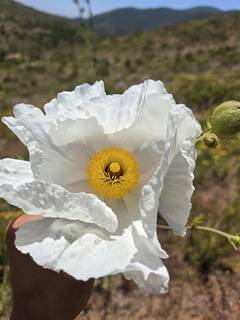
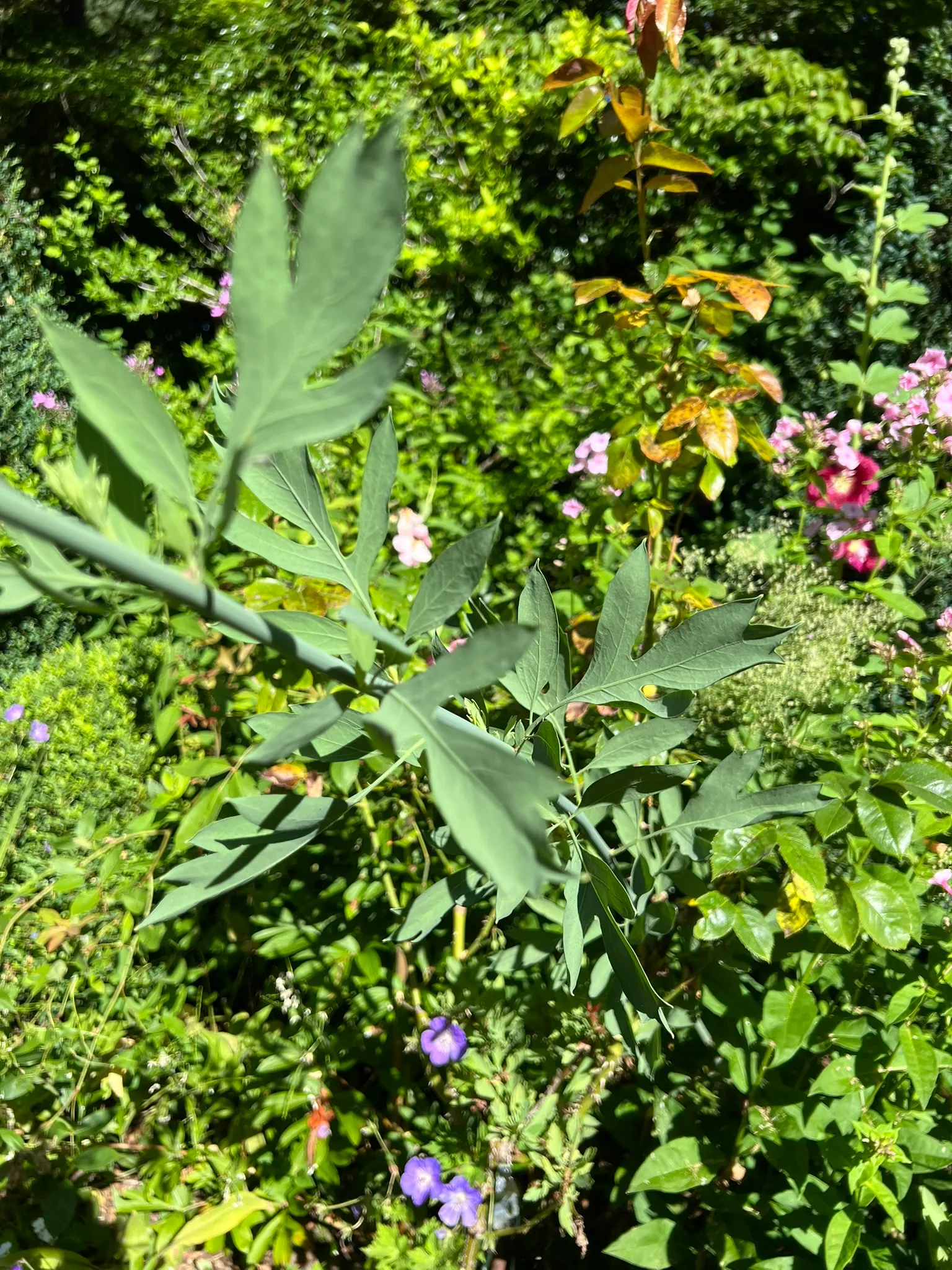
Romneya coulteri is a large spreading semi-woody perennial subshrub in the family Papaveraceae, reaching 4–8 feet (1.2–2.4 m) tall and 6–10 feet (1.8–3 m) wide at maturity. Plants establish slowly from the root during the first 2–3 growing seasons but eventually form extensive spreading colonies via deep wide-spreading rhizomes — the rhizomatous network extends 3–6 feet (90–180 cm) per year under favorable conditions and colonizes an area well beyond the original planting footprint within 5–8 years. Leaves are deeply pinnately lobed, blue-gray to glaucous, 3–6 inches (8–15 cm) long, carrying a sculptural textured appearance throughout the growing season that reads as a foliage element in its own right independent of the flowering display. From late May through July, the plant produces the largest flowers of any native perennial in North America: bowl-shaped blooms 4–9 inches (10–23 cm) across with six to nine crinkled papery white petals surrounding a prominent boss of golden-yellow stamens 1–1.5 inches (2.5–4 cm) across, resembling a fried egg — the source of the common name 'fried egg plant.' Flowers carry a light pleasant fragrance perceptible at close range. The species is fiercely drought-tolerant once established but resents disturbance profoundly: it virtually cannot be transplanted after establishment, and the spreading rhizomes are very difficult to contain or remove without repeated digging over 2–3 seasons. Plant parts including foliage and sap contain alkaloids and are toxic to humans if ingested.
Native Range
Romneya coulteri is native to dry chaparral, rocky canyon slopes, and disturbed roadsides of southern California (Los Angeles, San Diego, and Riverside counties) and Baja California, Mexico, growing in well-drained often poor rocky or sandy soils in full sun at low to moderate elevations.Suggested Uses
Used as a specimen plant or in massed plantings in large-scale dry gardens, California native plantings, or naturalized hillside plantings at 5–6 foot (1.5–1.8 m) spacing — the mature footprint requires full allocation at planting rather than underspacing and thinning later. The large papery white flowers and the blue-gray deeply lobed foliage create a substantial summer structural element against low ground-covering chaparral companions. Pairing with other drought-adapted California natives such as Ceanothus 'Concha', Salvia clevelandii, or Artemisia californica extends the California native plant palette across the same dry-garden setting. The species does not suit small residential gardens, containerized planting, mixed perennial beds with irrigation, or any position where rhizome spread cannot be managed by root barriers or annual runner pruning. Erosion-control plantings on dry hillside slopes are one of the practical applications of the species's aggressive rhizomatous spreading habit.How to Identify
Appearance
Size & Dimensions
Height4' - 8'
Width/Spread6' - 10'
Bloom Information
Bowl-shaped flowers 4–9 inches (10–23 cm) across with six to nine crinkled papery white petals surrounding a golden-yellow stamen boss appear from late May through July over a 6–8 week window, with individual flowers lasting 2–4 days and new buds opening in succession. Flower production is heaviest on established colonies in their third growing season and beyond. In the Pacific Northwest, plants that receive summer heat bloom reliably in June–July. The flowers carry a light pleasant fragrance.
Detailed Descriptions
Flower Description
Pure white crinkled papery petals (6-9 per flower) surrounding a prominent golden-yellow stamen boss 1-1.5 inches across; bowl-shaped 4-9 inches across with light pleasant fragrance perceptible at close rangeFoliage Description
Blue-gray to glaucous; deeply pinnately lobed, 3-6 inches long; sculptural textured appearance through the growing seasonGrowing Conditions
Sun Requirements
Requires 6-8 hours of direct sunlight daily
• Full Sun: 6+ hours of direct sunlight
• Partial Shade: 3-6 hours of direct sunlight
• Full Shade: Less than 3 hours of direct sunlight
Care & Maintenance
Care Guide
Grow in full sun with 6 or more hours of direct light in lean sharply drained sandy or rocky neutral to slightly alkaline soil at pH 6.5–8.0. Once established after the second growing season, the species is extremely drought-tolerant and summer watering runs minimal to none in dry-summer climates — routine summer irrigation promotes root rot and reduces plant vigor substantially. Amending the planting hole with compost or fertilizer is avoided; lean infertile soils match the plant's native chaparral conditions and produce stronger establishment than rich amended soils. Root disturbance is the principal failure mode — small container-grown plants are purchased rather than bare-root specimens, and the root ball is disturbed as little as possible at planting. Once established, the species is nearly impossible to move or eradicate, so initial placement planning accounts for 5–8 years of spread. The spreading rhizomes are aggressive; installing a deep root barrier 18–24 inches (45–60 cm) below grade at planting contains the colony when spread must be limited. Hardy to USDA zone 7 (0°F / –18°C) with good drainage.Pruning
Cut all stems back to 6–12 inches (15–30 cm) above ground in late winter (February–March) before new growth begins — this annual hard cutback is the principal maintenance task and stimulates the strongest new growth and flowering. Fall cutback is avoided because the winter stems provide a degree of frost protection to the crown. Spreading rhizomes at the colony perimeter are cut back each spring with a sharp spade driven vertically through the soil to sever the runners where they cross the intended planting boundary; runners cut once extend more slowly in subsequent seasons.Pruning Schedule
Prune: February–March
early spring