Rhytidosporum, Genus, procumbens, Species,
- Genus & species
white marianth
Overview
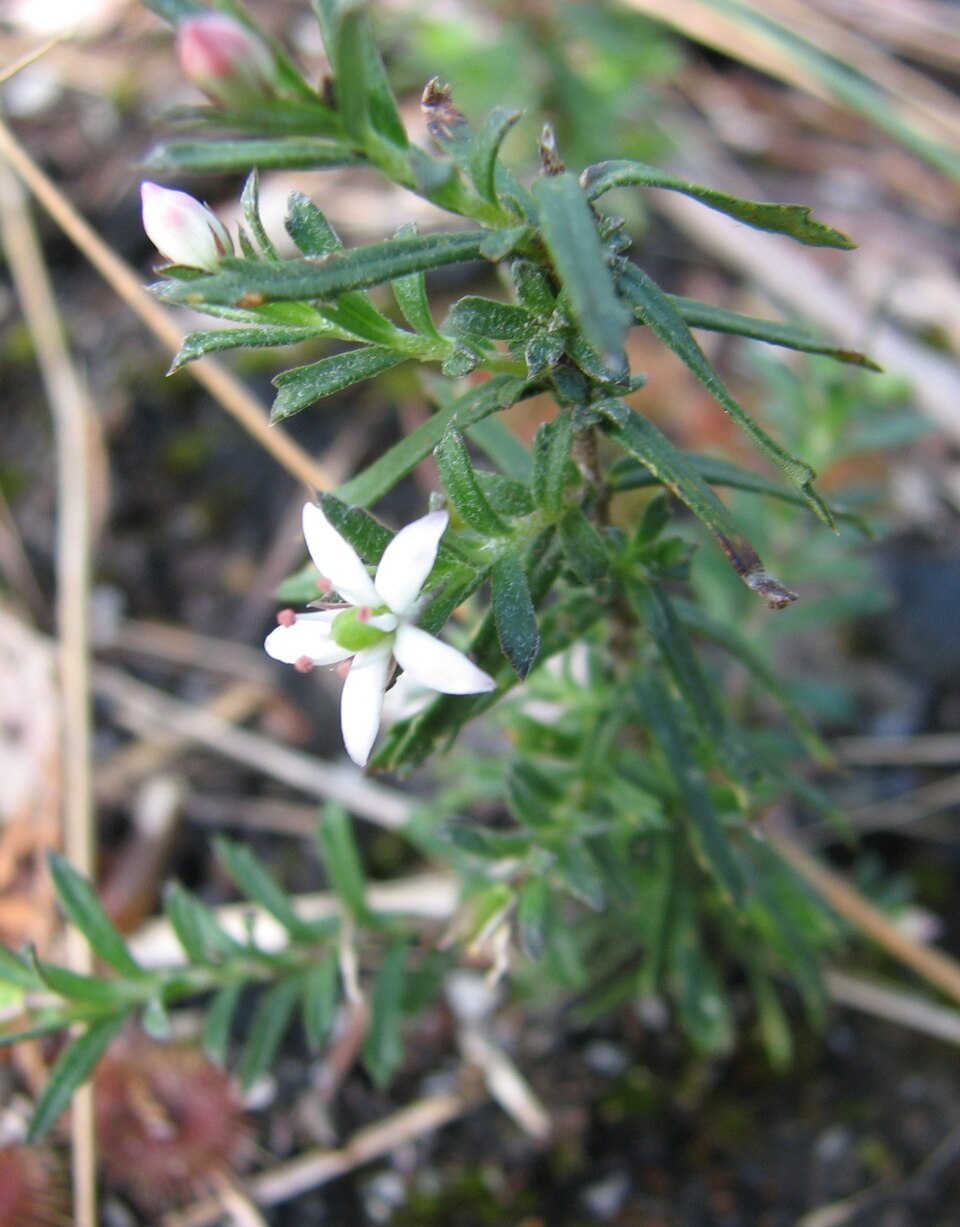
Rhytidosporum procumbens is a low, spreading subshrub growing 4-16 inches (10-40 cm) tall and 12-32 inches (30-80 cm) wide, with slender, trailing to procumbent stems that root where they contact the soil. The branches are wiry and carry scattered, narrow leaves 0.2-0.8 inch (5-20 mm) long with smooth or slightly toothed margins, sometimes clustered toward the stem tips. Small white star-shaped flowers about 0.3-0.5 inch (8-12 mm) across, with five spreading petals, open singly or in small clusters along the stems in spring. The fruit is a leathery two-valved capsule containing several seeds. Growth is low and mounding to prostrate, forming a loose mat over rock and soil rather than an upright bush. Plants are slow-growing and stay compact. The species is uncommon in cultivation, and the procumbent form limits its use to ground-level positions.
Native Range
Native to south-eastern Australia, occurring in New South Wales, Victoria, Tasmania, and South Australia. Grows in dry sclerophyll forest, woodland, and heath on sandy or rocky soils, often on slopes and ridges.Suggested Uses
Grown as a low groundcover in rock gardens, native plant beds, and on dry banks at 16-24 inch (40-60 cm) spacing. Suited to sloping or raised positions with sharp drainage. Slow growth and low height limit it to foreground and edging positions.How to Identify
Appearance
Size & Dimensions
Height4" - 1'4"
Width/Spread1' - 2'8"
Bloom Information
Flowers from September to December, with peak bloom in October and November. Flowers open over a period of several weeks. Bloom is heavier in open, sunny positions than in shade.
Detailed Descriptions
Foliage Description
greenGrowing Conditions
Sun Requirements
Requires 5-9 hours of direct sunlight daily
• Full Sun: 6+ hours of direct sunlight
• Partial Shade: 3-6 hours of direct sunlight
• Full Shade: Less than 3 hours of direct sunlight
Care & Maintenance
Care Guide
Grows in well-drained sandy or rocky soils in full sun to light shade. Established plants tolerate dry periods but grow slowly and stay compact. Supplemental water during extended dry spells in the first season supports root establishment. The species is seldom offered in nurseries and is grown mainly in native plant and rock-garden collections. Root rot develops in soils that stay wet, so drainage matters more than fertility. No serious pest or disease problems are recorded.Pruning
Light trimming after flowering keeps the mat dense and removes spent stems. Hard pruning into bare wood is slow to regrow. Stems that have rooted along the ground can be separated to propagate new plants.Container Growing
Suitable for container growing
Minimum container size: 2 gallons