Rhytidiadelphus, Genus, squarrosus, Species,
- Genus & species
square gooseneck moss
Europe, temperate Asia, northern North America (circumboreal)
SunFull Sun – Part Shade – Full Shade
WaterHigh
Overview
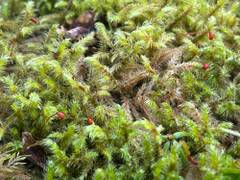
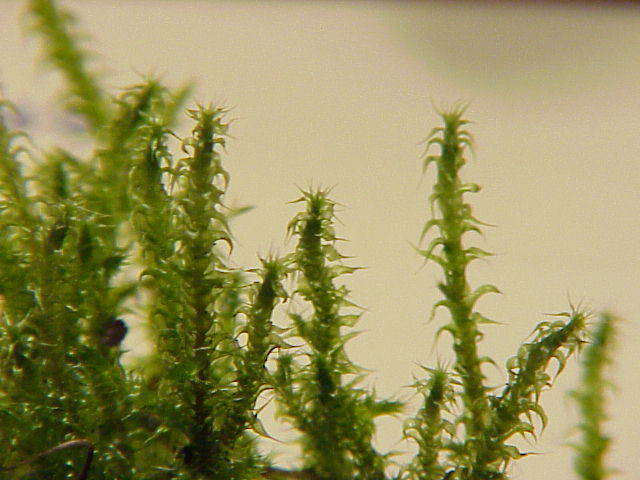
Rhytidiadelphus squarrosus is a pleurocarpous moss of the family Hylocomiaceae that forms springy, loose tufts and wefts in lawns, grassland, and dune turf. Its reddish stems are sparsely and irregularly branched and carry leaves that spread out almost at right angles, giving each shoot a spiky, star-like profile. Individual leaves are broadly heart-shaped at the base and narrow abruptly to a long, channelled, backward-curving point; the foliage is mid to yellowish green while the stems remain distinctly red. Shoots are commonly 1-4 inches (2-10 cm) long and mound into a resilient, cushiony layer underfoot. As a moss it has no roots, flowers, or seeds, anchoring by rhizoids and spreading chiefly by fragmentation, since spore capsules form only rarely. It colonizes damp, compacted, poorly drained ground, especially on acid soils, and is a frequent component of cool-climate lawns. In dry, open positions the mats brown and contract, reviving after rain. Heavy infestation in turf signals compaction, low fertility, shade, or impeded drainage, and the moss returns wherever those conditions persist.
Native Range
Native throughout Europe and across temperate Asia, with a circumboreal distribution that extends into northern and western North America. It grows in grassland, heath, dune slacks, and lawns in cool, moist climates with regular rainfall.Suggested Uses
Used in moss gardens, shaded and woodland plantings, and naturalistic green roofs where a springy, low green carpet is wanted on acid ground. It establishes on compacted, damp soil that challenges turf grasses and other groundcovers. In wildlife plantings the dense mats shelter small invertebrates and retain surface moisture.How to Identify
Growing Conditions
Sun Requirements
Requires 2-6 hours of direct sunlight daily
• Full Sun: 6+ hours of direct sunlight
• Partial Shade: 3-6 hours of direct sunlight
• Full Shade: Less than 3 hours of direct sunlight
Water & Climate
Water Needs
Care & Maintenance
Care Guide
Growth is strongest in damp, shaded to open ground on compacted, acid, low-fertility soils, including worn or poorly drained lawns. The moss takes up water and nutrients across its shoots rather than through roots and depends on a moist surface and humid conditions. During dry weather the mats brown and shrink, then green up again once rain returns. In turf it increases where grass is weak, so improved drainage, raising soil fertility, reducing shade, and relieving compaction all favour grass over the moss. Raking or scarifying lifts the loose mats but does not remove the underlying causes. No feeding or winter protection is needed for the moss itself, which stays active through cold, wet periods.Container Growing
Suitable for container growing
Minimum container size: 1 gallons