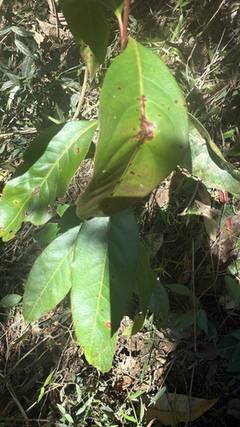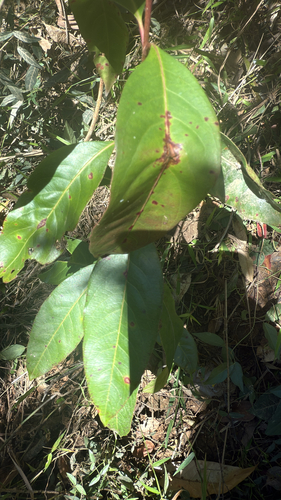
Rhodomyrtus, Genus, spp., Multiple species,
- Genus
- Multiple species
Southern and Southeast Asia and Australia
Overview
Rhodomyrtus is a genus of about 18 evergreen shrubs and small trees in the family Myrtaceae, native to southern and Southeast Asia and Australia, with Rhodomyrtus tomentosa the most familiar and widely naturalized. Plants form bushy shrubs 3-12 feet (0.9-3.7 m) tall, with opposite, leathery leaves 1-3 inches (2.5-8 cm) long that carry three main veins and are densely gray-downy beneath. Pink to rose flowers 0.8-1.2 inch (2-3 cm) across have five rounded petals and a central tuft of many stamens, opening singly or in small groups in spring and summer. Rounded berries follow, ripening from green through red to deep purple and 0.4-0.6 inch (10-15 mm) wide, soft, sweet, and many-seeded. Growth is moderate to fast in warm, moist conditions, and plants resprout strongly from the base. Rhodomyrtus tomentosa has naturalized and become invasive in parts of Florida, Hawaii, and other warm regions, where it forms dense thickets that crowd out native plants. Frost damages the foliage, limiting the genus to mild climates.
Native Range
Rhodomyrtus is native to southern China, India, Southeast Asia, the Malay Archipelago, and parts of Australia, growing in open forest, heath, coastal scrub, and disturbed ground on sandy or acidic soils. Rhodomyrtus tomentosa ranges widely across tropical and subtropical Asia and tolerates poor, sandy ground.Suggested Uses
Grown in tropical and subtropical gardens as a flowering and fruiting shrub, informal hedge, and coastal screen, spaced 4-8 feet (1.2-2.4 m) apart, and the berries are used in jams and drinks in parts of Asia. Its invasive behavior rules out planting in Florida, Hawaii, and other areas where it is regulated. Elsewhere the dense growth suits hedging and bird plantings.How to Identify
Appearance
Size & Dimensions
Height3' - 12'
Width/Spread4' - 10'
Bloom Information
Flowers in spring and summer, with timing varying by region, and through much of the year in warm tropical climates. Pink flowers open over several weeks, followed by berries that ripen across summer and autumn. In its naturalized range bloom and fruiting can continue over a long season.
Detailed Descriptions
Flower Description
pink to roseFoliage Description
green, gray beneathGrowing Conditions
Sun Requirements
Requires 5-10 hours of direct sunlight daily
• Full Sun: 6+ hours of direct sunlight
• Partial Shade: 3-6 hours of direct sunlight
• Full Shade: Less than 3 hours of direct sunlight