Rabelera, Genus, spp., Multiple species,
- Genus
- Multiple species
Overview
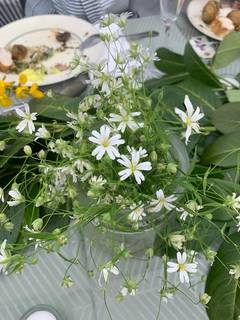
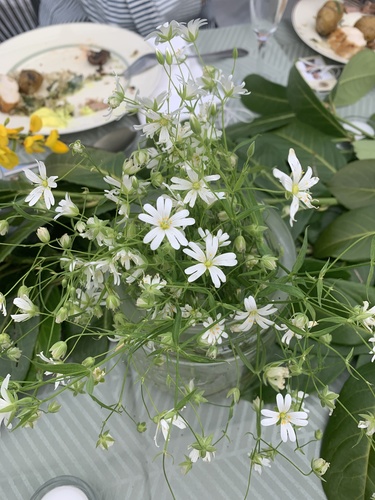
Rabelera is a monotypic genus in the family Caryophyllaceae, containing only Rabelera holostea, long known as Stellaria holostea. It is a herbaceous perennial that forms loose, sprawling clumps 8-24 inches (20-60 cm) tall, with weak, four-angled stems that are rough along the angles and often lean on surrounding vegetation. The leaves are stalkless, lance-shaped to narrowly tapering, 1.5-3 inches (4-8 cm) long, rigid, rough-edged, and arranged in opposite pairs. White flowers 0.6-1.2 inch (15-30 mm) across appear in loose branched clusters, each with five petals split to about halfway, giving the look of ten narrow lobes, backed by green sepals shorter than the petals. Flowering runs from mid-spring into early summer, followed by rounded capsules that split to release several seeds. Growth is moderate; plants spread by slender rhizomes and self-seeding to form drifts over a few seasons. Stems are brittle and the clumps flop after flowering, and foliage often dies back by late summer in dry sites.
Native Range
Rabelera holostea is native to Europe and western Asia, from the British Isles and Scandinavia south to the Mediterranean and east into the Caucasus and Iran. It grows in deciduous woodland, hedge banks, scrub, and shaded roadside verges, usually on moist, moderately fertile soils.Suggested Uses
Grown in woodland gardens, shaded borders, hedge banks, and wildflower or native plantings, spaced 12-18 inches (30-45 cm) apart. The lax stems suit informal and naturalistic settings where they can lean on other plants, and are less suited to formal beds. Self-seeds into surrounding ground in favorable moist conditions.How to Identify
Appearance
Size & Dimensions
Height8" - 2'
Width/Spread1' - 2'
Bloom Information
Flowers from April to June across most of its range, with peak bloom in May. Flowering may begin in March in mild coastal areas and extend into early July at higher latitudes or elevations. Individual clusters bloom over several weeks, and plants set seed by midsummer.
Detailed Descriptions
Foliage Description
greenGrowing Conditions
Sun Requirements
Requires 3-6 hours of direct sunlight daily
• Full Sun: 6+ hours of direct sunlight
• Partial Shade: 3-6 hours of direct sunlight
• Full Shade: Less than 3 hours of direct sunlight
Care & Maintenance
Care Guide
Plants establish in moist, humus-rich soil in dappled shade to part sun and tolerate a range of soil types where moisture is adequate. Water during dry spells in the first season; established plants withstand short dry periods but foliage browns and dies back early in drought. The sprawling stems lean on neighboring plants for support and can look untidy after flowering. Self-seeding and slow rhizome spread produce colonies over time, which can be reduced by removing seed heads. Slugs may graze young shoots in spring. Serious pests and diseases are uncommon.Pruning
Cut back faded stems after flowering to limit self-seeding and tidy the clump. Foliage that yellows in late summer can be removed without harm to the plant. No routine pruning is needed for plant health.Pruning Schedule
Prune: June–July
summer