Pyrrosia, Genus, spp., Multiple species,
- Genus
- Multiple species
felt ferns
Tropical and warm-temperate Asia, Africa, and Oceania
Overview
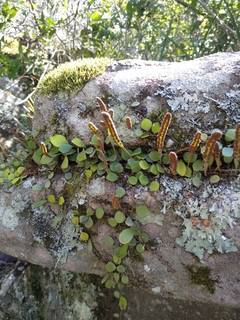
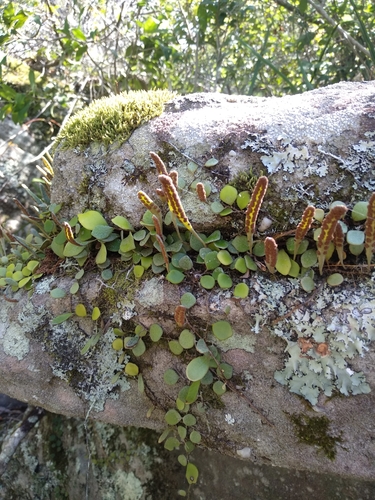
Pyrrosia is a genus of about 50 to 100 epiphytic and rock-dwelling ferns in the family Polypodiaceae, distributed through tropical and warm-temperate Asia, Africa, and Oceania. The fronds are thick and leathery, simple and strap-shaped or shallowly lobed, 4-24 in (10-60 cm) long, and arise at intervals from a creeping, scaly rhizome that grips bark or rock. A dense covering of branched, star-shaped hairs coats the frond surfaces, giving a felted texture and the common name felt ferns; this layer is grey to rust-brown and most visible on the undersides. The plants use a water-storing, drought-resistant physiology that lets them survive on exposed branches and cliff faces, with fronds curling during dry spells and reviving when moisture returns. Spore-bearing sori form dense patches or lines on the frond undersides, often partly hidden by the hairs. P. lingua, the tongue fern, is grown as an ornamental, including crested and variegated forms. The genus ranges from frost-tender tropical species to hardier temperate ones such as P. lingua and P. sheareri.
Native Range
Pyrrosia is native to tropical and warm-temperate Asia, Africa, and Oceania, with the greatest diversity in eastern and southeastern Asia. Plants grow as epiphytes on tree trunks and branches or as lithophytes on rocks and cliffs.Suggested Uses
Pyrrosia species are grown as mounted or potted ferns in shade houses, conservatories, and terrariums, and as epiphytes on trees and rocks in frost-free gardens. The felted, leathery fronds suit shaded foliage plantings. P. lingua and its crested forms are grown by fern collectors.How to Identify
Appearance
Size & Dimensions
Height4" - 2'
Width/Spread1' - 3'
Bloom Information
As a fern, Pyrrosia produces no flowers and reproduces by spores. Sori ripen on the undersides of fertile fronds, mainly in the warm months. Spores are released and carried by wind and water.
Detailed Descriptions
Foliage Description
greenGrowing Conditions
Sun Requirements
Requires 2-5 hours of direct sunlight daily
• Full Sun: 6+ hours of direct sunlight
• Partial Shade: 3-6 hours of direct sunlight
• Full Shade: Less than 3 hours of direct sunlight
Water & Climate
Water Needs
Drought Tolerance
Drought tolerant when established
Care & Maintenance
Care Guide
Pyrrosia species grow in part shade to filtered light in coarse, free-draining, organic media or mounted on bark, with a slightly acidic pH near 5.5 to 6.5. As epiphytes they need air around the roots and are damaged by dense, waterlogged soil. Established plants tolerate dry spells, with the fronds curling and reviving once watered. Hardiness varies across the genus, spanning roughly USDA zones 7 to 11, with P. lingua among the cold-tolerant species. Moderate humidity and steady air movement support even growth. Plants spread slowly along their creeping rhizomes to form colonies.Pruning
Damaged, dead, or faded fronds are trimmed at the rhizome in any season to keep the plant tidy. No shaping is required, as the fern grows slowly from creeping rhizomes. Old hair-covered fronds can be left, since they shelter the rhizome.Container Growing
Suitable for container growing
Minimum container size: 2 gallons