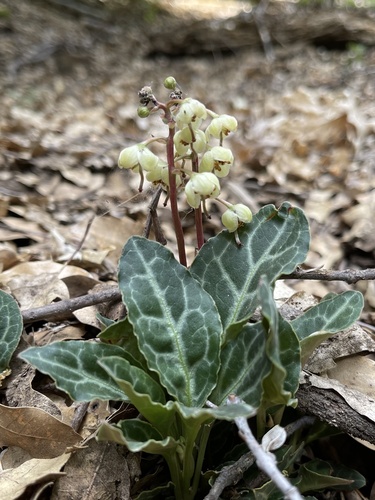
Pyrola, Genus, picta, Species,
- Genus & species
white-veined wintergreen
Overview
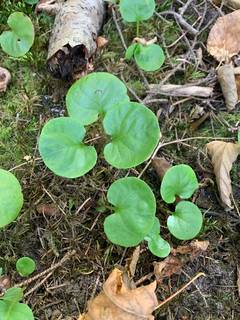
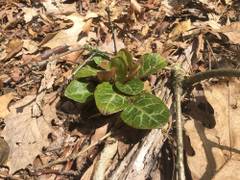
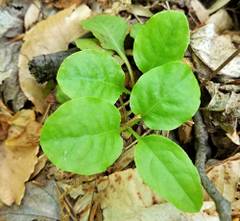
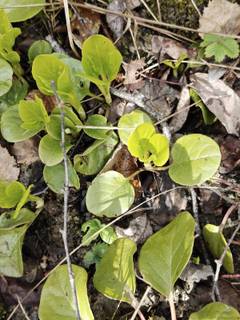
Pyrola picta is a low evergreen perennial of dry conifer forests in western North America, forming a basal rosette of leathery leaves and a single flowering stalk 4-10 inches (10-25 cm) tall. The oval to elliptic leaves are 1-2.5 inches (2.5-6 cm) long, dark green and mottled with white or pale veins on the upper surface and often purplish beneath, a marking that gives the white-veined wintergreen its name. In summer the leafless stalk carries a loose spike of 5-20 nodding flowers, each about 0.4 inch (10 mm) across, with five waxy greenish-white to cream petals and a long curved style that projects beyond them. P. picta draws part of its nutrition from soil fungi linked to nearby trees, so it grows in the deep shade and undisturbed duff of pine and fir forests and is hard to transplant or cultivate. It spreads slowly by thin rhizomes and forms scattered colonies. Because it relies on specific soil fungi, it rarely survives being moved to garden soil, which limits it to existing woodland settings. The leaves persist through winter, holding their mottled pattern when little else is green.
Native Range
Pyrola picta is native to western North America, from British Columbia south through the mountains of the western United States to California and east to the northern Rockies. It grows in dry to moist coniferous forests, in deep shade over accumulated needle duff.Suggested Uses
P. picta is encountered mainly as a native woodland wildflower in existing conifer forest rather than as a planted subject, given its dependence on forest soil fungi. In intact shaded woodland gardens over conifer duff it persists where conditions already suit it. Its difficulty in cultivation makes it a plant to conserve in place rather than introduce.How to Identify
Appearance
Size & Dimensions
Height4" - 10"
Width/Spread4" - 8"
Bloom Information
P. picta flowers in summer, roughly June through August, sending up a single spike of nodding waxy flowers from the evergreen rosette. The greenish-white to cream blooms open from the base of the spike upward over two to three weeks and draw bees. Dry rounded seed capsules follow and release dust-like seed by autumn.
Detailed Descriptions
Flower Description
Greenish-white to creamFoliage Description
Dark green with white veinsGrowing Conditions
Sun Requirements
Tolerates up to 4 hours of direct sunlight daily
• Full Sun: 6+ hours of direct sunlight
• Partial Shade: 3-6 hours of direct sunlight
• Full Shade: Less than 3 hours of direct sunlight