Pulmonaria hybrids, lungwort
1 / 3
Perennials

Pulmonaria hybrids

lungwort

BoraginaceaeEurope, Asia

At a Glance

TypePerennial
HabitClumping
FoliageDeciduous
Height9–18 inches (23–45 cm)
Width18–24 inches (45–60 cm)
Maturity2 years

Growing Zones

USDA Hardiness Zones

3 - 8
Zone 3
Zone 4
Zone 5
Zone 6
Zone 7
Zone 8
These zones indicate the coldest temperatures this plant can typically survive.
Frost Tolerancehardy

Key Features

Attracts Pollinators
Deer Resistant
Maintenancelow

Overview

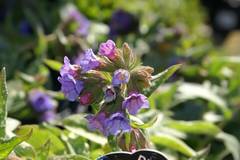
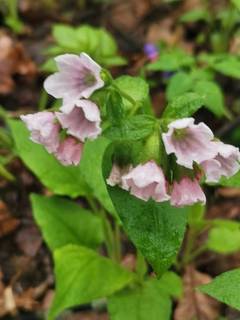
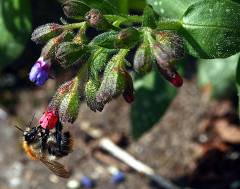
Pulmonaria is a genus of approximately 14 species of rhizomatous herbaceous perennials in the family Boraginaceae, native to woodland floors, hedgerows, and shaded margins across temperate Europe and western Asia, with several species extending to the Caucasus and central Asia. Lungworts are among the most valuable and versatile spring-flowering shade perennials for Pacific Northwest gardens, offering both early nectar-rich flowers and distinctive long-season foliage. The most characteristic feature of the genus is the spotted or silver-marbled leaf surface — caused by air pockets between the leaf layers — which historically prompted the common name lungwort and medicinal use under the Doctrine of Signatures. In early spring, clusters of funnel-shaped, five-lobed flowers open pink or red, then change to violet-blue as the individual flowers mature due to pH changes in the petal pigments — the simultaneous display of pink and blue flowers on a single plant is one of the genus's signature ornamental features. After flowering, many species and cultivars develop increasingly silver or heavily marked foliage through summer, providing long-season foliage interest into autumn. Key species and cultivars in Pacific Northwest cultivation include P. saccharina (silver-spotted lungwort), P. officinalis (common lungwort), P. angustifolia (blue lungwort), and numerous hybrids including Trevi Fountain, Sissinghurst White, Majeste, Silver Shimmers, and Raspberry Splash.

Native Range

The genus Pulmonaria is native to temperate Europe (from the British Isles east through central Europe to western Russia) and western Asia (Caucasus, Turkey), with some species extending to central Asia. Different species have different native ranges: P. officinalis is native to central Europe; P. saccharina to central and eastern Europe; P. angustifolia to central and eastern Europe. Not native to North America.

Suggested Uses

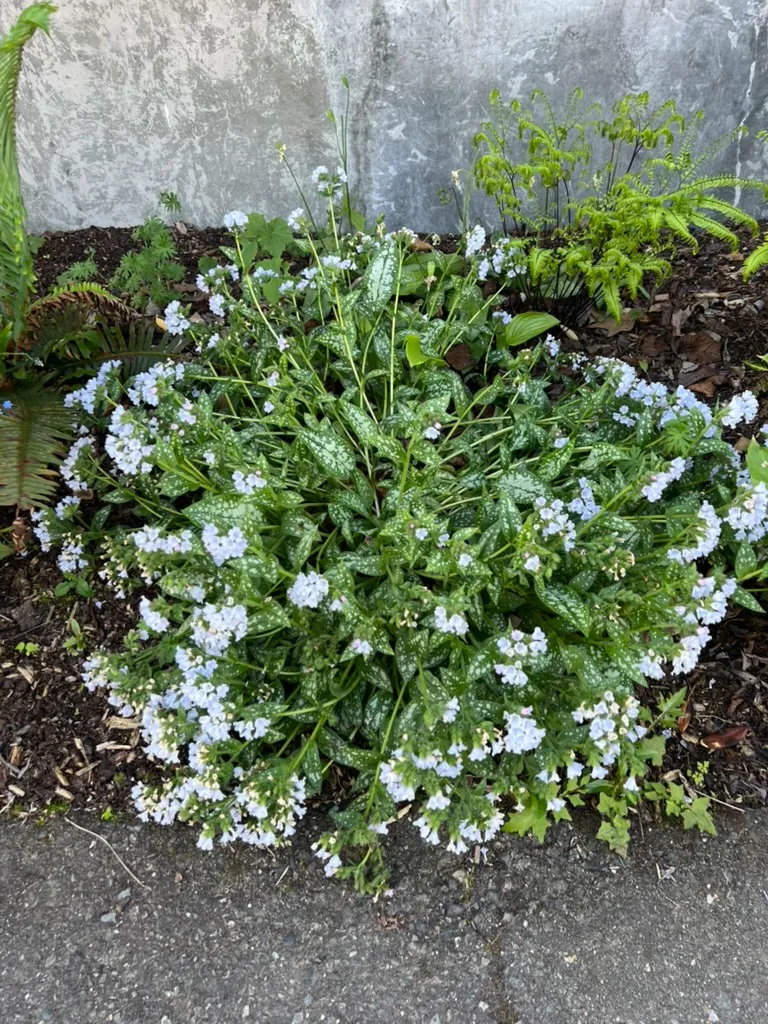
Lungworts are indispensable early-spring and long-season foliage perennials for Pacific Northwest shade gardens, offering some of the earliest nectar for emerging pollinators and outstanding silver-marked foliage that improves from spring through autumn. Effective as groundcover beneath deciduous trees, at shaded border fronts, and in woodland gardens. Plant in bold sweeps of three to seven plants for maximum foliage and flower impact. Combines naturally with Helleborus, Epimedium, Brunnera, Vinca minor, and spring bulbs that share similar shade, moisture, and timing requirements. Select cultivars for the degree of silver — Majeste and Silver Shimmers are among the most completely silvered; Raspberry Splash and Trevi Fountain provide strong flower color. Outstanding for long-season interest with the mid-summer cut-back technique.

How to Identify

Lungworts are identified by their roughly hairy, basal rosettes of oval to lance-shaped leaves, typically 4–12 inches (10–30 cm) long, most often prominently spotted or marbled with silver-white patches — the extent of silvering varies greatly among species and cultivars, from lightly spotted in some species to almost entirely silver in cultivars like Majeste. In early spring, arching, hairy, scorpioid cymes bear funnel-shaped flowers 0.5–0.75 inch (1.2–2 cm) across that open pink-red and change to violet-blue as they age — the presence of both pink and blue flowers simultaneously on the same stem is diagnostic for the genus.

Appearance

Size & Dimensions

Height9" - 1'6"
Width/Spread1'6" - 2'

Reaches mature size in approximately 2 years

Colors

Flower Colors

pink
purple
blue

Foliage Colors

green
white

Fall Foliage Colors

no change

Bloom Information

Bloom Period

~6 weeks
J
F
M
A
M
J
J
A
S
O
N
D
Spring
Lungworts bloom in early spring, among the first woodland perennials to flower, typically February through April in Pacific Northwest gardens. The characteristic color-change flowers — opening pink-red and maturing to violet-blue — are displayed simultaneously for four to six weeks. After flowering, the foliage increases in size and often in silver content through the growing season, providing long-season foliage interest into autumn when the leaves are at their best.

Detailed Descriptions

Flower Description

Open pink-red, mature to violet-blue; funnel-shaped, five-lobed; both colors displayed simultaneously on same stem

Foliage Description

Oval to lance-shaped, roughly hairy, mid-green; typically prominently spotted or marbled silver-white; silver content increases through season

Growing Conditions

Sun Requirements

Partial Shade
Full Shade
Tolerates up to 3 hours of direct sunlight daily
• Full Sun: 6+ hours of direct sunlight
• Partial Shade: 3-6 hours of direct sunlight
• Full Shade: Less than 3 hours of direct sunlight

Soil Requirements

pH Range5.5 - 7.0(Neutral)
357912
Soil Types
loampeat
Drainage
well drained

Water & Climate

Water Needs

Medium

Frost Tolerance

hardy

Time to Maturity

1–2 years

Care & Maintenance

Care Guide

Plant in partial to full shade in consistently moist, humus-rich, well-drained to average soil, slightly acidic to neutral. Lungworts thrive in the cool, moist conditions of Pacific Northwest woodland gardens. Incorporate generous leaf mold at planting. Keep consistently moist — plants decline in hot, dry conditions and may defoliate in summer drought. In Pacific Northwest gardens a key mid-season maintenance task is cutting the entire plant back to the ground in late June or July after the foliage becomes tatty or affected by powdery mildew — this prompts a flush of fresh, attractively silvered new foliage for late summer and autumn. Divide every three to five years in early autumn to maintain vigor.

Pruning

After flowering in spring, allow the foliage to develop fully through early summer. In late June or early July, cut the entire plant back hard to ground level — this is the single most important maintenance task for lungworts, removing mildew-prone old leaves and prompting a fresh flush of clean, typically more silver-marked foliage for late summer and autumn. New leaves appear within two to three weeks of cutting back. Divide the crown every three to five years in early autumn.

Pruning Schedule

J
F
M
A
M
J
J
A
S
O
N
D
summer

Maintenance Level

low

⚠️ Toxicity Warning

Non-toxic
Pulmonaria (lungwort) - Identification & Care Guide | PlantRef