Ptilimnium, Genus, capillaceum, Species,
- Genus & species
herbwilliam
SunFull Sun – Part Shade
WaterHigh
Overview
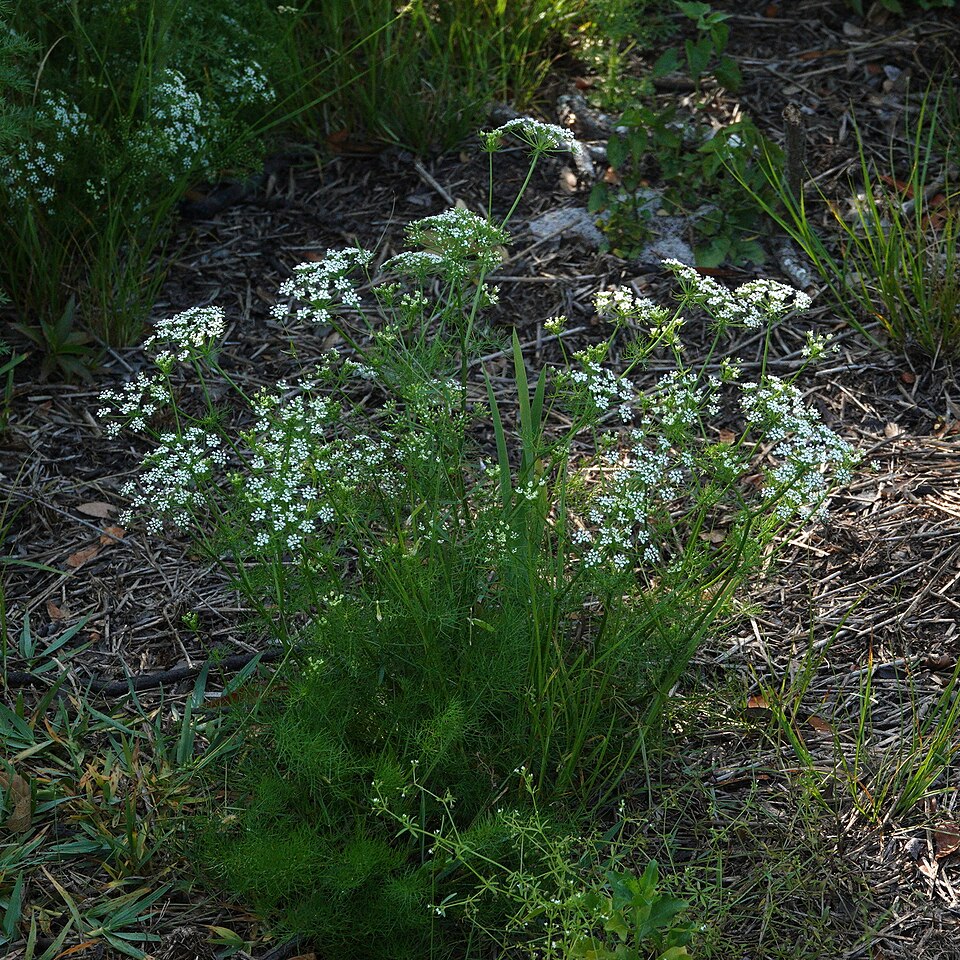
Ptilimnium capillaceum is an annual of wet ground reaching 6 inches to 3 feet (15-90 cm) tall, with slender, branching, hollow stems. The leaves are finely divided into thread-like segments, giving a feathery look, 1-4 inches (2.5-10 cm) long. Small white flowers are borne in flat-topped compound umbels 0.5-2 inches (1.3-5 cm) across from late spring through summer, each umbel set above thread-like bracts. The fruit is a tiny ribbed schizocarp about 0.1 inch (2-3 mm) long that splits into two seeds. P. capillaceum grows in marshes, ditches, pond margins, wet meadows, and brackish shores across the eastern and southern United States. The thread-like foliage resembles that of unrelated wetland members of the carrot family, including toxic water-hemlocks, which are separated by flower and fruit details. As an annual, it completes its life cycle in one season and regrows from self-sown seed. Growth is thin on dry ground and in heavy shade.
Native Range
Ptilimnium capillaceum is native to the eastern and southern United States, along the Atlantic and Gulf coastal plains and inland to the lower Midwest. It grows in marshes, wet meadows, ditches, pond edges, and brackish shorelines.Suggested Uses
Ptilimnium capillaceum is grown in rain gardens, pond and bog margins, and constructed wetlands, spaced 6-10 inches (15-25 cm) apart. Its airy white umbels add a soft texture to waterside plantings. The flowers draw small bees, flies, and other pollinators.How to Identify
Appearance
Size & Dimensions
Height6" - 3'
Width/Spread6" - 1'
Bloom Information
Detailed Descriptions
Foliage Description
GreenGrowing Conditions
Sun Requirements
Requires 4-10 hours of direct sunlight daily
• Full Sun: 6+ hours of direct sunlight
• Partial Shade: 3-6 hours of direct sunlight
• Full Shade: Less than 3 hours of direct sunlight
Water & Climate
Water Needs
Care & Maintenance
Care Guide
Ptilimnium capillaceum grows in full sun to part shade in wet to saturated soil with a pH from 6.0 to 7.5. It grows in mucky, silty, and sandy soils at pond and marsh edges and tolerates brackish water. As an annual, it germinates in spring, flowers, sets seed, and dies within one season. Stands renew from self-sown seed on bare, moist ground each year. Growth is sparse on soil that dries out and in deep shade. It needs no fertilizer in its natural wetland setting.Pruning
No routine pruning is needed for this wetland annual. Spent plants can be cleared after seed drop at the end of the season. Leaving some seed heads in place maintains the stand for the following year.Pruning Schedule
Prune: October
fall
Container Growing
Suitable for container growing
Minimum container size: 2 gallons
Toxicity: Not assessed
UnknownPlanting Guide
Planting Methods & Timing
Planting Method
direct sow
Direct Sow Timing
Early spring
Plant Spacing
8 inches