Pterocaulon, Genus, spp., Multiple species,
- Genus
- Multiple species
blackroot
Overview
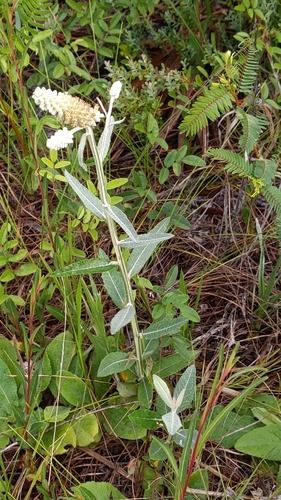
Pterocaulon is a genus of about 25 to 30 herbs and subshrubs in the daisy family (Asteraceae), found in warm regions of the Americas, Asia, Africa, and Australia. The genus name refers to the winged stems, formed where the leaf bases run down (decurrent) onto the stem as narrow flanges. Plants typically grow 8-40 inches (20-100 cm) tall, with upright stems and lance-shaped leaves that are green above and densely white-woolly beneath. The small flower heads are packed into dense, cylindrical, spike-like clusters at the stem tips, usually creamy white to pale pink. Some species, such as the Australian P. sphacelatum, have aromatic foliage with a scent likened to apples. P. pycnostachyum, blackroot, of the southeastern United States, has a thickened blackish rootstock and grows in dry sandy pinelands. Most species are adapted to open, sunny, seasonally dry habitats and tolerate poor soils. The genus is grown mainly in native, wildflower, and habitat plantings.
Native Range
Pterocaulon occurs in warm-temperate and tropical regions of North and South America, eastern and southern Asia, Africa, and Australia. P. pycnostachyum is native to the southeastern United States, while several species are native to Australia. Habitats include sandy pinelands, grasslands, open woodland, and seasonally wet flats.Suggested Uses
Grown in native, wildflower, and habitat restoration plantings, and in sunny, low-water gardens. The woolly foliage and spike-like flower clusters suit naturalistic and meadow-style schemes. Species are also used in grassland and pineland restoration.How to Identify
Appearance
Size & Dimensions
Height8" - 3'4"
Width/Spread8" - 2'
Bloom Information
Flowering generally occurs from late spring through summer, with timing varying by region and rainfall. The dense terminal spikes of small cream to pinkish flower heads open over several weeks. Fluffy, wind-borne seeds follow.
Detailed Descriptions
Flower Description
cream-white to pale pinkFoliage Description
green above, white-woolly beneathGrowing Conditions
Sun Requirements
Requires 6-10 hours of direct sunlight daily
• Full Sun: 6+ hours of direct sunlight
• Partial Shade: 3-6 hours of direct sunlight
• Full Shade: Less than 3 hours of direct sunlight
Water & Climate
Water Needs
Drought Tolerance
Drought tolerant when established
Care & Maintenance
Care Guide
Grow Pterocaulon in full sun in light, sandy, or sharply drained soil similar to its native open habitats. The genus tolerates poor, dry soils and seasonal drought, and most species dislike rich, heavy, or waterlogged ground. Water young plants to establish, then sparingly, as established plants are drought-adapted. Little or no feeding is needed. Many species are short-lived perennials that maintain themselves by self-seeding. Frost tolerance varies, with subtropical species tender and some temperate species hardier.Pruning
Pterocaulon needs little pruning. Spent flowering stems can be cut back after seeding to tidy the plant or to limit self-sowing. Old or frost-damaged growth is removed in spring as new shoots appear.Pruning Schedule
Prune: March
early spring
Container Growing
Suitable for container growing
Minimum container size: 3 gallons
