Image 1 of 2
1 / 2
© harum.koh from Kobe city, Japan, some rights reserved (CC-BY-SA) · Wikimedia Commons
Pteris, Genus, spp., Multiple species,
- Genus
- Multiple species
brakes
Pantropical and subtropical (Asia, Africa, Australia, the Americas, southern Europe)
Overview
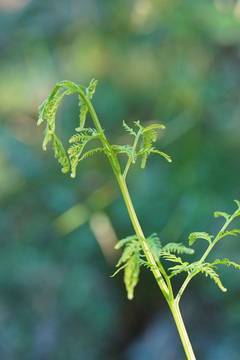
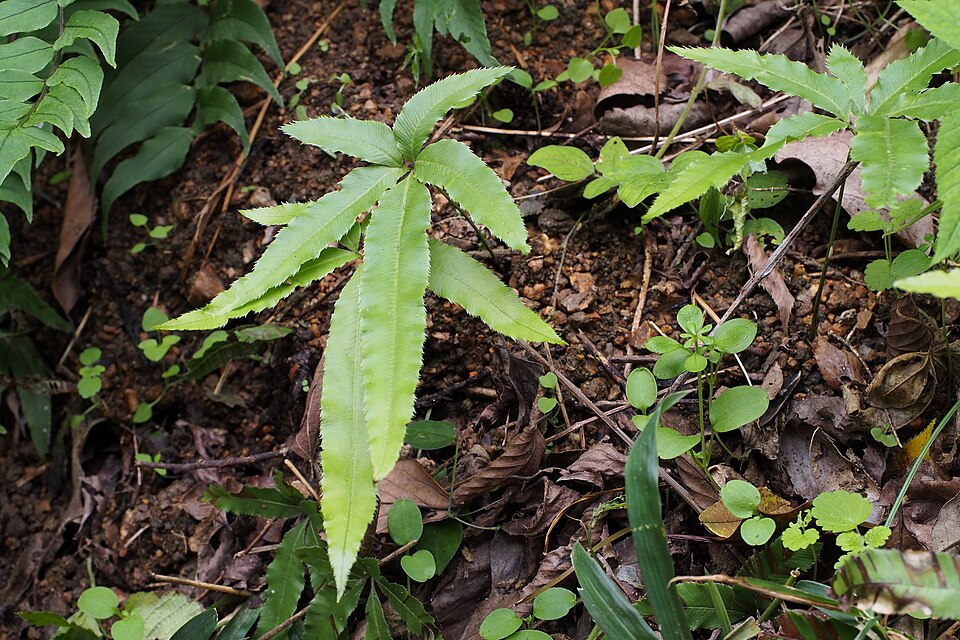
Pteris is a genus of about 300 terrestrial ferns in the family Pteridaceae, distributed across tropical and subtropical regions worldwide and extending into warm temperate zones. Plants form clumps of fronds 1 to 4 ft (30 to 120 cm) tall, rising from short creeping rhizomes. The fronds are pinnate to bipinnate, with strap-shaped to deeply divided segments, and several species carry a pale band along the center of each segment. New fronds unfurl from coiled croziers at the base of the clump. Reproduction is by spores rather than flowers: linear sori run along the rolled-under frond margins, protected by a false indusium formed from the leaf edge. Many species, including P. cretica and P. ensiformis, are grown indoors and in shaded gardens as table ferns. Foliage color ranges from medium green to dark green, with variegated forms showing silver-white central zones. Across the genus, frost hardiness varies widely: tropical species are injured by light frost, while P. cretica survives outdoors in mild-winter regions. Other limitations include sensitivity to dry air, which browns the frond tips, and slow recovery after the rhizome is disturbed.
Native Range
Pteris occurs throughout the tropics and subtropics of Asia, Africa, Australia, the Americas, and southern Europe, with the greatest concentration of species in tropical Asia. Several species have naturalized well beyond their native ranges in disturbed and urban habitats. Plants typically grow on shaded forest floors, on stream banks, and in rock crevices.Suggested Uses
Pteris species are grown as houseplants, in terrariums, and in shaded borders and woodland gardens in frost-free and mild-winter regions. Their clumping habit suits underplanting beneath larger foliage plants and edging along shaded paths. Compact species are kept in containers indoors.How to Identify
Appearance
Size & Dimensions
Height1' - 4'
Width/Spread1' - 3'
Bloom Information
Pteris is a fern and does not flower. Reproduction occurs through spores released from the linear sori on the undersides of fertile fronds. Spore release in cultivated plants follows frond maturity through the warm months.
Detailed Descriptions
Foliage Description
medium to dark green, some with pale central bandsGrowing Conditions
Sun Requirements
Needs bright indirect light. Keep it out of direct sun, which can scorch the leaves.
• Bright indirect light: a bright spot near a window, with no direct sun on the leaves
Water & Climate
Water Needs
Care & Maintenance
Care Guide
Most Pteris species grow in partial to full shade, in consistently moist, humus-rich soil that drains freely. They prefer a soil pH from about 5.5 to 7.0 and steady moisture; the fronds brown at the tips in dry air or after the soil dries out. Indoor plants keep dense fronds in bright indirect light with humidity above 40 percent. Tropical species are damaged by frost, while temperate species such as P. cretica tolerate winters in zones 8 and warmer. Feeding is light, as excess fertilizer scorches the frond margins. Old or browned fronds are removed at the base to keep the clump open.Pruning
Pteris needs little cutting beyond removal of spent or damaged fronds at the rhizome. Browned tips can be trimmed without harming the plant. Cutting the whole clump to the base in late winter lets fresh fronds emerge cleanly in spring.Container Growing
Suitable for container growing