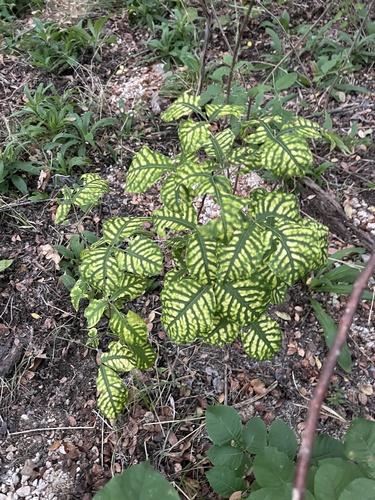
Ptelea, Genus, trifoliata, Species,
- Genus & species
common hoptree
Overview
Ptelea trifoliata is a small deciduous tree or large shrub in the citrus family, growing 10-20 feet (3-6 m) tall and 10-15 feet (3-4.6 m) wide with a rounded, often low-branched crown. The leaves are divided into three leaflets, each 2-5 inches (5-13 cm) long, glossy dark green above, and dotted with tiny oil glands that release a citrus-like scent when crushed. In late spring, branched clusters of small greenish-white flowers open; they carry a scent that some find unpleasant. The flowers give way to flat, round, papery winged fruits about 1 inch (2.5 cm) wide, called samaras, that hang in clusters and turn tan as they ripen, persisting into winter. The species grows as an understory plant along woodland edges, rocky slopes, and stream banks across much of eastern and central North America. It tolerates shade, drought, and a range of soils. The foliage is a larval food source for giant swallowtail and tiger swallowtail butterflies. Limitations include the strong flower odor, a suckering tendency that can form thickets, and a modest mature size relative to canopy trees. Fall foliage turns yellow before dropping.
Native Range
Ptelea trifoliata is native to eastern and central North America, from Ontario and the eastern United States west to the Great Plains and south into Mexico. It grows along woodland margins, on rocky slopes, and near streams, usually as an understory plant.Suggested Uses
Grown in native, woodland, and pollinator gardens and as a small understory tree along woodland edges. Used as a larval host planting for swallowtail butterflies. Suited to naturalized and shaded sites where a compact tree is wanted.How to Identify
Appearance
Size & Dimensions
Height10' - 20'
Width/Spread10' - 15'
Bloom Information
Greenish-white flowers open in late spring, generally May into June, in branched clusters at the branch tips. The flowers are small, about 0.3 inch (8 mm) across, and release a scent many find disagreeable. Winged wafer fruits develop over summer and ripen to tan, hanging on the tree into winter.
Detailed Descriptions
Foliage Description
Glossy dark green, yellow in fallGrowing Conditions
Sun Requirements
Requires 4-8 hours of direct sunlight daily
• Full Sun: 6+ hours of direct sunlight
• Partial Shade: 3-6 hours of direct sunlight
• Full Shade: Less than 3 hours of direct sunlight
Care & Maintenance
Care Guide
Grows in full sun to part shade, adapting to the open or the woodland understory, in well-drained loam, sandy, or rocky soil at a pH of 6.0-7.5. Established plants tolerate drought and a range of conditions, though steady moisture supports faster growth. Hardy in USDA zones 4-9, the species withstands cold winters and summer heat. It can produce root suckers that form a thicket over time. No fertilizer is needed in average soil. The plant transplants readily when young and tolerates urban conditions.Pruning
Prune in late winter to remove root suckers, dead wood, and crossing branches, and to shape a single-stemmed small tree if a tree form is wanted. Suckers can be cut to the ground as they appear. Little other pruning is needed.Pruning Schedule
Prune: February–March
winter