Psychotria, Genus, loniceroides, Species,
- Genus & species
hairy psychotria
Overview
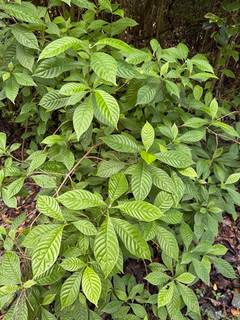
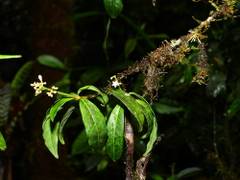
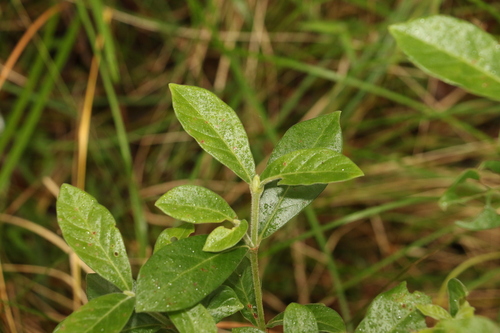
Psychotria loniceroides is an evergreen shrub reaching 3-10 feet (1-3 m) tall with an open habit and softly hairy young stems. Leaves are opposite, oval to elliptic, 1.5-5 inches (4-13 cm) long, with a soft, hairy surface and prominent veins. Small white to cream tubular flowers about 0.2 inch (5 mm) long are borne in branched terminal clusters, mainly in spring and summer. The fruit is a fleshy, ribbed drupe about 0.3 inch (8 mm) long, ripening from green to yellow or orange and containing two seeds. Growth is moderate in warm, sheltered conditions. The plant grows in rainforest and moist forest as an understory shrub. It tolerates shade but is sensitive to hard frost, drying winds, and prolonged drought.
Native Range
Native to eastern Australia, from Queensland through New South Wales. Grows as an understory shrub in rainforest, wet sclerophyll forest, and moist gullies at low to moderate elevations.Suggested Uses
Used as an understory and screening shrub in shaded, sheltered gardens and in rainforest plantings, spaced 3-5 feet (0.9-1.5 m) apart. The fruit draws birds and suits habitat plantings. Frost sensitivity and moisture needs limit its use in cold or dry, exposed sites.How to Identify
Appearance
Size & Dimensions
Height3' - 10'
Width/Spread3' - 6'
Bloom Information
Detailed Descriptions
Flower Description
white to creamFoliage Description
greenGrowing Conditions
Sun Requirements
Requires 3-6 hours of direct sunlight daily
• Full Sun: 6+ hours of direct sunlight
• Partial Shade: 3-6 hours of direct sunlight
• Full Shade: Less than 3 hours of direct sunlight
Care & Maintenance
Care Guide
Grows in dappled shade to part sun in moist, well-drained, humus-rich soils. Water regularly during establishment and in dry spells, as the plant is sensitive to drought. Mulch to keep the roots cool and moist. The plant is frost-sensitive and grows slowly in cold or exposed positions. Few pests affect it. Light feeding with a balanced fertilizer supports steady growth.Pruning
Tip pruning after flowering maintains a compact, bushy shape. The plant tolerates light pruning into leafy wood and reshoots readily. Remove dead or straggly stems to maintain form.Pruning Schedule
Prune: February–March
fall
Container Growing
Suitable for container growing
Minimum container size: 7 gallons