Pratia, Genus, pedunculata, Species,
- Genus & species
blue star creeper
Southeastern Australia (Queensland to South Australia) and New Zealand; moist grasslands, streambanks, and open woodland margins
Overview
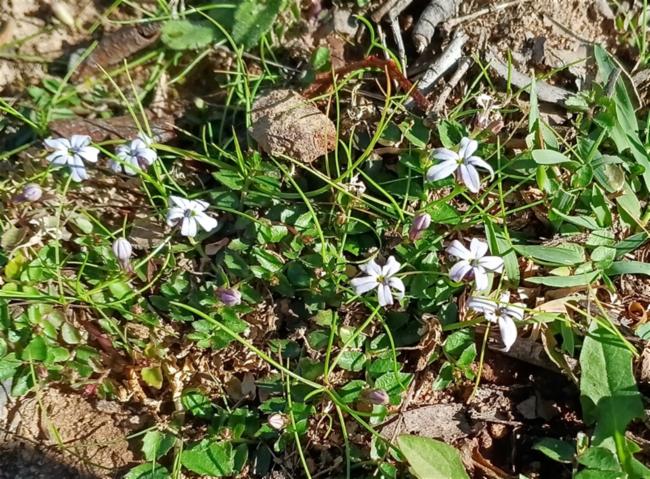
Pratia pedunculata is blue star creeper (matted pratia), a low spreading semi-evergreen perennial growing 1-2 inches (2.5-5 cm) tall and 18-24 inches (45-60 cm) wide. Pale blue to white 5-petaled star-shaped flowers 0.4 inch (10 mm) held just above the foliage from May through August (16 weeks). Bright green tiny oval leaves on creeping prostrate stems forming a dense mat. In Campanulaceae. Reclassified as Lobelia pedunculata by some taxonomic authorities. Pedunculata = with peduncles. Native to southeastern Australia and New Zealand. Tolerates light foot traffic — frequently used as a between-stepping-stone groundcover or lawn substitute in mild climates. Spreads by stoloniferous runners — can become invasive in lawns. Prefers consistent moisture; not drought-tolerant. This moisture requirement is the primary cultural limitation. Deer-resistant. Non-toxic. Zones 7-10. Part shade to full sun. Growth rate is fast.
Native Range
Native to southeastern Australia (Queensland to South Australia) and New Zealand. Found in moist grasslands, streambanks, and open woodland margins.Suggested Uses
Grown as a between-stepping-stone groundcover, lawn substitute, or in moist mixed plantings, and in containers of at least 1 gallon (3.8 L), spaced 12-18 inches (30-45 cm). Foot-traffic tolerant. Spreads by runners. Non-toxic. Zones 7-10.How to Identify
Appearance
Size & Dimensions
Height1" - 2"
Width/Spread1'6" - 2'
Bloom Information
Detailed Descriptions
Flower Description
Pale blue to white 5-petaled star-shaped flowers 0.4 inch (10 mm), held just above the foliage on short pedicels (peduncles — hence pedunculata); May-August (16 weeks)Foliage Description
Bright green, tiny oval leaves 0.2-0.4 inch (5-10 mm), densely arranged on creeping prostrate stems forming a dense mat 1-2 inches (2.5-5 cm) tallGrowing Conditions
Sun Requirements
Requires 2-10 hours of direct sunlight daily
• Full Sun: 6+ hours of direct sunlight
• Partial Shade: 3-6 hours of direct sunlight
• Full Shade: Less than 3 hours of direct sunlight
Care & Maintenance
Care Guide
Part shade to full sun (2-10 hours). Moist well-drained soil pH 5.5-7.0. Not drought-tolerant. Tolerates light foot traffic. Spreads by stoloniferous runners — can invade lawns. Deer-resistant. Non-toxic. Zones 7-10.Pruning
Minimal pruning needed. Mow lightly in early spring (March-April) to remove winter-damaged growth and tidy the mat. Remove unwanted runners to control spread.Pruning Schedule
Prune: March–April
early spring
Container Growing
Suitable for container growing
Minimum container size: 1 gallons