Poranthera, Genus, microphylla, Species,
- Genus & species
small poranthera
SunFull Sun – Part Shade
WaterLow
Overview
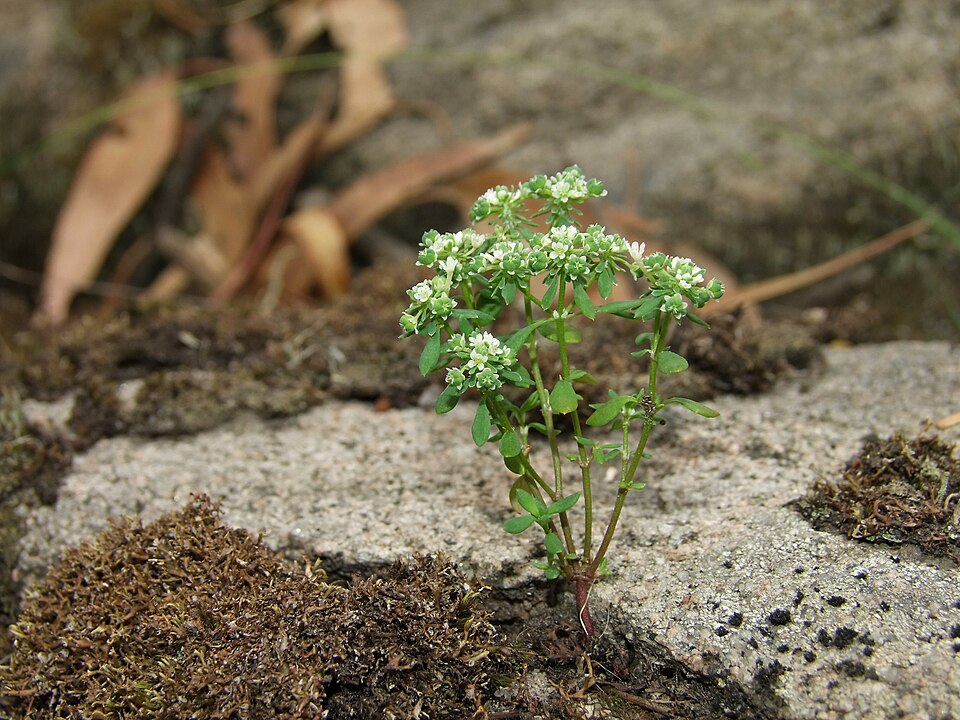
Poranthera microphylla is a small slender annual or short-lived herb 5-20 cm (2-8 in) tall, with slender, much-branched, often reddish stems forming a low tuft or sprawling patch. The tiny leaves are 2-8 mm (0.1-0.3 in) long, narrow to oval, alternate or scattered, grey-green to bright green and sometimes crowded toward the stem tips. From late winter through spring it carries many minute flowers about 2-3 mm (0.1 in) wide in small terminal clusters, each with five white to pale pink petals around a green centre, giving a light sprinkling of pale bloom over the foliage. The plant sets abundant tiny seed and dies after flowering in its annual form. It grows across much of Australia in a wide range of habitats, from open forest and grassland to disturbed roadsides and rocky ground, on many soil types. Being small and short-lived, it appears and fades quickly with the seasons and is more a feature of natural ground layers than a long-term garden plant.
Native Range
Native across much of Australia, occurring in all states, in open forest, woodland, grassland, heath, and disturbed ground on a wide range of soils. It is a widespread small native herb of the southern states.Suggested Uses
Suited to native grassland and meadow-style plantings, rockeries, and the ground layer of bush gardens, where it self-seeds among other low plants. Its brief life suits naturalistic plantings rather than formal beds.How to Identify
Appearance
Size & Dimensions
Height2" - 8"
Width/Spread2" - 6"
Bloom Information
Minute white to pale pink flowers open in small terminal clusters from late winter through spring, mainly August to November. Each flower is only 2-3 mm wide, but they appear in numbers over the foliage. Plants flower, set seed, and fade within a season.
Detailed Descriptions
Flower Description
White to pale pinkFoliage Description
Grey-green to bright greenGrowing Conditions
Sun Requirements
Requires 4-12 hours of direct sunlight daily
• Full Sun: 6+ hours of direct sunlight
• Partial Shade: 3-6 hours of direct sunlight
• Full Shade: Less than 3 hours of direct sunlight
Water & Climate
Water Needs
Care & Maintenance
Care Guide
As a small self-seeding annual it grows readily in full sun to part shade on most well-drained soils, including poor and sandy ground. It needs little attention and relies on seasonal rain, tolerating dry spells by completing its cycle quickly. In gardens it persists by self-sown seedlings rather than long-lived plants. It is sensitive to waterlogging and dense competition. No feeding is needed on average soils.Pruning
No pruning is required for this small annual herb. Plants can be left to set seed and die down naturally. Removing old plants once seed has shed tidies the area.Toxicity: Not assessed
UnknownPlanting Guide
Planting Methods & Timing
Planting Method
direct sow
Direct Sow Timing
Autumn to late winter for spring flowering