Polypremum, Genus, spp., Multiple species,
- Genus
- Multiple species
juniper leaf
Warm temperate and tropical Americas
SunFull Sun
Overview
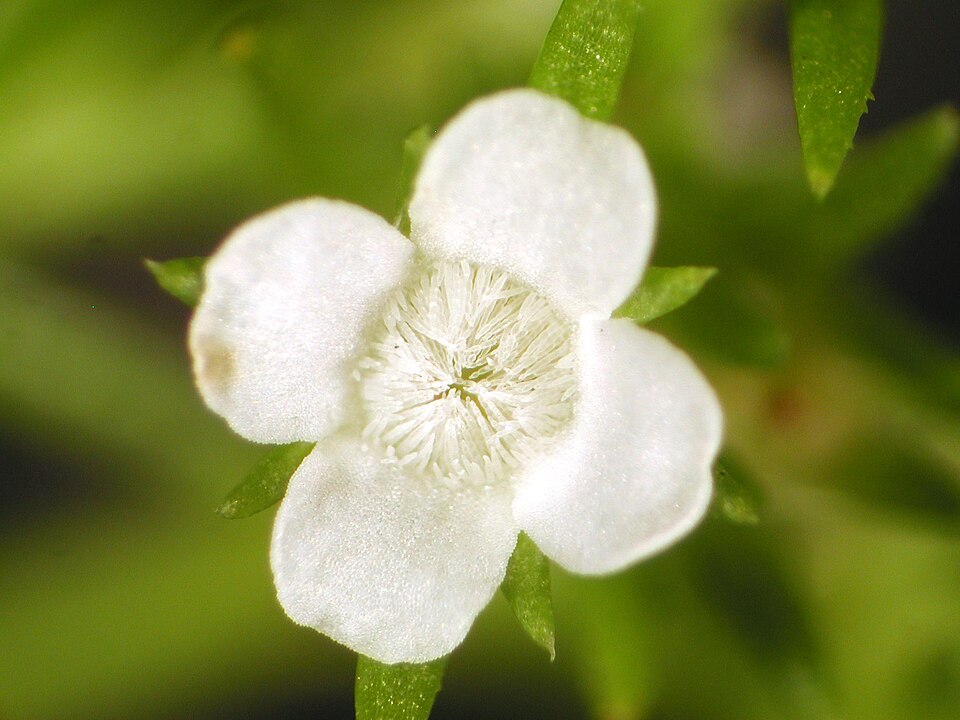
Polypremum is a single-species genus (Polypremum procumbens) in the family Tetrachondraceae, native to the warmer parts of the Americas. Known as juniper leaf or rustweed, it is a small, much-branched annual or short-lived perennial that forms flat, spreading rosettes and low mats 2-8 in (5-20 cm) high and somewhat wider. The slender stems fork repeatedly and carry pairs of narrow, stiff, needle-like leaves 1-2 cm long that suggest a small juniper, often turning rusty-bronze with age. Tiny white four-lobed flowers, only 1-2 mm across, sit singly in the leaf forks through much of the warm season and ripen into small two-parted capsules. The plant grows on open sandy and disturbed ground, in pine flatwoods, roadsides, fields, and the cracks of paving. It tolerates poor, dry soils and self-sows freely. One limitation is its weedy, inconspicuous character: the flowers are minute and the bronzed mats are grown or studied for botanical interest rather than for ornament.
Native Range
Polypremum procumbens is native to the southeastern and south-central United States and extends south through Mexico, Central America, the Caribbean, and into South America. It grows on open sandy soils in pine flatwoods, old fields, roadsides, shorelines, and other disturbed, sunny sites.Suggested Uses
Grown mainly in botanical and teaching collections, sand beds, and gravel plantings where small native ground-covering annuals are studied. The bronzed mats can knit over bare sandy ground. Plants are otherwise treated as a minor weed of open soil.How to Identify
Appearance
Size & Dimensions
Height2" - 8"
Width/Spread4" - 1'
Bloom Information
Flowering continues through much of the warm season, roughly May to October in the southern United States and nearly year-round in frost-free areas. The minute white flowers open a few at a time in the leaf forks. Seed sets quickly and the plant self-sows on bare ground.
Detailed Descriptions
Foliage Description
green to rusty-bronzeGrowing Conditions
Sun Requirements
Requires 6-12 hours of direct sunlight daily
• Full Sun: 6+ hours of direct sunlight
• Partial Shade: 3-6 hours of direct sunlight
• Full Shade: Less than 3 hours of direct sunlight
Water & Climate
Water Needs
Drought Tolerance
Drought tolerant when established
Care & Maintenance
Care Guide
Polypremum grows in full sun on light, sharply drained sandy soils across a wide pH range from about 5.0 to 7.5. It tolerates heat, drought, and nutrient-poor ground, needing no feeding and little or no watering once seedlings are up. Plants are raised by sowing seed on warm, open soil, after which they self-sow readily. Damp, rich, or shaded conditions are tolerated poorly. The genus is frost-tender at the northern edge of its range and behaves as a warm-season annual there. Crowding by taller plants gradually shades it out.Pruning
No pruning is needed. Plants are pulled or hoed where they spread into paving or beds beyond their place. Clearing the mats before the capsules ripen reduces self-seeding.Toxicity
Non-toxicPlanting Guide
Planting Methods & Timing
Planting Method
direct sow
Direct Sow Timing
spring to early summer on warm soil
Days to Maturity
50–80 days
Plant Spacing
6 inches