Overview
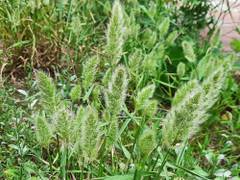
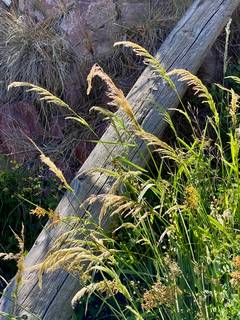
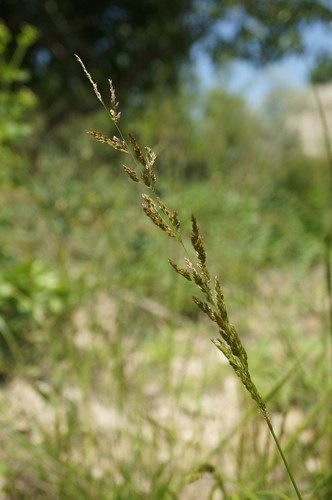
Polypogon viridis is a low, tufted to sprawling grass in the Poaceae, often behaving as a short-lived perennial or annual on damp ground. Its smooth stems are 6-24 inches (15-60 cm) long, frequently bending at the base and rooting at the lower joints before turning upward. The flat leaf blades are soft, green, and 1-5 inches (3-12 cm) long, with a membranous ligule at the base. From May to September it produces a compact, lobed, greenish panicle 1-4 inches (3-10 cm) long, made up of crowded clusters of tiny awnless spikelets on short branches. The lack of long silky awns gives the head a denser, beardless look than the related annual beard-grasses. The grass grows on wet mud, damp paths, ditch and pond margins, and trodden ground, often where water has stood, in full sun. It spreads by seed and by rooting stems to form patches on bare, moist ground. It is short-lived and is shaded out where taller, denser vegetation closes over.
Native Range
Native to the Mediterranean region, southern Europe, and south-western Asia, and naturalised more widely, including parts of Britain and North America. In Britain it occurs mainly as an introduced plant of damp, disturbed urban and lowland ground.Suggested Uses
Found on damp paths, pond and ditch margins, and wet waste ground rather than in planted schemes. It quickly covers bare, moist soil where water has stood. The grass features in informal wetland-edge and disturbed-ground vegetation.How to Identify
Appearance
Size & Dimensions
Height6" - 2'
Width/Spread6" - 1'6"
Bloom Information
The greenish flower heads form from May to September on the upturned stem tips. As a wind-pollinated grass it bears no petals and supplies no nectar, shedding pollen in dry weather. Seed ripens through summer and into autumn over a long season.
Detailed Descriptions
Foliage Description
greenGrowing Conditions
Sun Requirements
Requires 6-10 hours of direct sunlight daily
• Full Sun: 6+ hours of direct sunlight
• Partial Shade: 3-6 hours of direct sunlight
• Full Shade: Less than 3 hours of direct sunlight