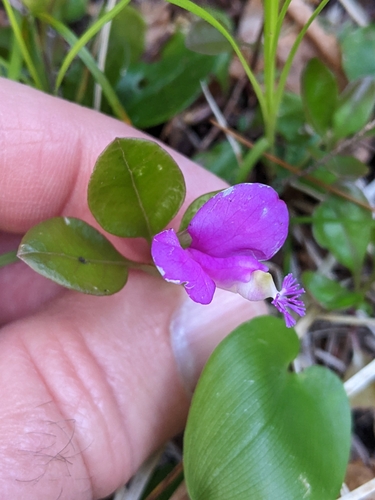
Polygaloides, Genus, spp., Multiple species,
- Genus
- Multiple species
milkwort
Overview
Polygaloides is a small genus of low, often evergreen subshrubs and creeping perennials in the milkwort family (Polygalaceae), segregated from Polygala. Its members grow in Europe and in eastern North America, on mountain slopes, in open woodland, and in acidic heath. Plants are dwarf, 4-10 in (10-25 cm) tall, spreading by creeping stems or rhizomes into low patches, with small, leathery or thin leaves. The flowers are the main feature: irregular and pea-like, built from coloured sepals and a fringed, tubular keel petal, in combinations of yellow, white, cream, rose-pink, and purple. Polygaloides chamaebuxus of the European Alps is an evergreen subshrub with cream-and-yellow flowers, while Polygaloides paucifolia of North American woods bears rose-purple flowers and is known as fringed polygala or gaywings. Bloom comes mainly in spring. The genus needs cool, moist but sharply drained, acidic ground and resents heat and lime; a limitation is its slow establishment and dislike of disturbance once settled.
Native Range
Polygaloides occurs in Europe, especially the Alps and other mountain ranges, and in eastern North America from Canada south through the Appalachians. Plants grow in coniferous and mixed woodland, on heath, and on stony mountain slopes in acidic soils.Suggested Uses
Grown in rock gardens, raised acidic beds, troughs, alpine houses, and shaded woodland borders. The low, flowering mats suit planting among dwarf conifers and ericaceous shrubs. The North American species is used in native woodland plantings.How to Identify
Appearance
Size & Dimensions
Height4" - 10"
Width/Spread8" - 1'4"
Bloom Information
Flowering is concentrated in spring, around April to June, with the European species sometimes opening a few flowers again in late summer. The fringed, two-lipped flowers last well and are carried near the stem tips. Bloom is heaviest after a cool, moist winter.
Detailed Descriptions
Flower Description
yellow, cream, pink, or purpleFoliage Description
greenGrowing Conditions
Sun Requirements
Requires 3-6 hours of direct sunlight daily
• Full Sun: 6+ hours of direct sunlight
• Partial Shade: 3-6 hours of direct sunlight
• Full Shade: Less than 3 hours of direct sunlight
Care & Maintenance
Care Guide
Polygaloides grows in part shade to full sun in cool, humus-rich, gritty soil that stays moist yet drains sharply, at an acidic pH of about 4.5 to 6.0. Lime, heat, and waterlogging all check the plants, so a north slope or woodland edge suits them. Watering is needed in dry spells, with rainwater used where the supply is hard. The hardier forms tolerate USDA zones 4 to 7. Plants spread slowly and are propagated by careful division, cuttings, or seed. They resent root disturbance and may take a season or two to settle after planting.Pruning
Little pruning is needed. A light trim of the evergreen species after the main flush keeps them compact, and untidy or frost-damaged shoots are removed in spring. The herbaceous species are simply cleared of dead growth as it dies back.Pruning Schedule
Prune: June
summer
Container Growing
Suitable for container growing
Minimum container size: 1 gallons
