Pleurozium, Genus, spp., Multiple species,
- Genus
- Multiple species
red-stemmed feathermoss
SunPart Shade – Full Shade
WaterMedium
Overview
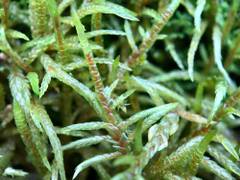
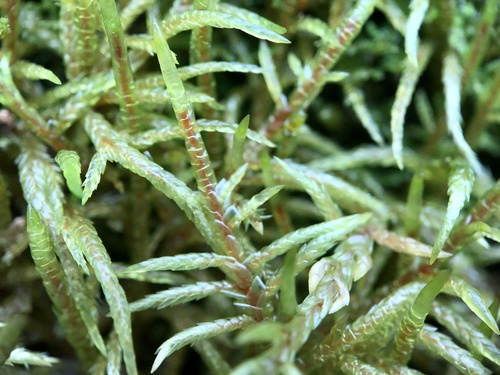
Pleurozium is a genus of pleurocarpous mosses in the family Hylocomiaceae, represented chiefly by the widespread Pleurozium schreberi. It forms loose to dense carpets across the floor of boreal and northern temperate forests, on heathland, and over peat, growing 5-15 cm (2-6 in) tall and spreading indefinitely into mats. The stiff, reddish stems are a reliable feature, branching in a regular pinnate pattern and bearing concave, oval leaves 2-3 mm long that overlap to give the shoots a plump, rounded outline. Foliage is yellow-green to golden-green and remains photosynthetic through the year. As a moss the genus has no roots, flowers, or seeds; water and nutrients are absorbed directly across the surface, and anchorage comes from thread-like rhizoids. Spore capsules are produced only occasionally, raised on short reddish stalks. Pleurozium is a major component of ground cover in spruce and pine forests across the circumboreal zone, where its mats insulate the soil and influence seedling establishment. One limitation in cultivation is its need for consistent humidity and cool, shaded conditions; the mats dry and brown in prolonged heat or direct sun, recovering only when moisture returns.
Native Range
Pleurozium has a circumboreal and circumtemperate distribution across the Northern Hemisphere, spanning North America, Europe, and northern Asia, and also occurs in parts of the Southern Hemisphere. It is common in boreal coniferous forests, on heaths, and in bogs.Suggested Uses
Grown as a ground cover and feature in shaded moss gardens, woodland borders, and Japanese-style plantings. Used to green over peat beds, log surfaces, and the floor of cool, damp courtyards. Also gathered traditionally as a liner and packing material.How to Identify
Appearance
Size & Dimensions
Height2" - 6"
Colors
Foliage Colors
Fall Foliage Colors
Bloom Information
As a moss, Pleurozium does not flower; it reproduces by spores and by fragmentation of its stems. Spore-bearing capsules form only sporadically, lifted on short red stalks in summer, and many colonies persist for years without producing them. Most spread in gardens and in the wild comes from vegetative growth of the mat.
Detailed Descriptions
Foliage Description
yellow-green to golden-green with red stemsGrowing Conditions
Sun Requirements
Requires 1-5 hours of direct sunlight daily
• Full Sun: 6+ hours of direct sunlight
• Partial Shade: 3-6 hours of direct sunlight
• Full Shade: Less than 3 hours of direct sunlight