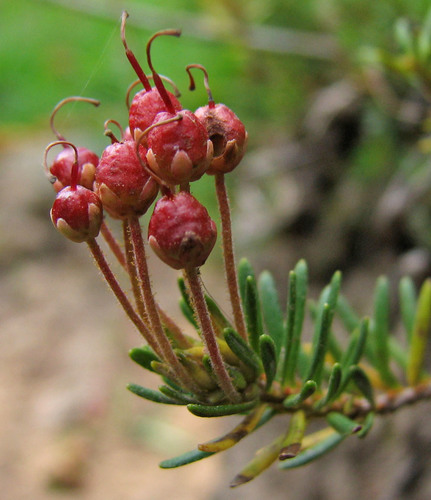
Phyllodoce, Genus, empetriformis, Species,
- Genus & species
pink mountainheath
Overview
Phyllodoce empetriformis is a low evergreen subshrub in the heath family, forming mats 4-16 inches (10-40 cm) tall and spreading 8-16 inches (20-40 cm) wide. The crowded, needle-like leaves are 0.25-0.5 inch (6-12 mm) long, dark green, and grooved beneath, resembling those of a true heath. In early to mid summer, clusters of nodding, bell- to urn-shaped flowers open at the stem tips, each about 0.25 inch (6-8 mm) long and pink to rose-purple on a slender reddish stalk. It grows in subalpine and alpine meadows, rocky slopes, and the edges of late-melting snowbanks from Alaska south through the western mountains to California and the Rockies. The plant requires cool, acidic, consistently moist but sharply drained soil and a long winter snow cover; at low elevations or in heat it is short-lived and difficult to maintain. Spread is slow, by creeping, rooting stems. It tolerates severe alpine cold but not summer heat, drought, or alkaline soil. Bumblebees are the main pollinators of the small flowers, which give way to dry capsules. In gardens it is limited to cool-climate rock gardens, troughs, and peat beds that match its native snowmelt conditions.
Native Range
Phyllodoce empetriformis is native to the mountains of western North America, from Alaska and British Columbia south through Washington, Oregon, and the Sierra Nevada to California and east to the northern Rocky Mountains. It grows at subalpine and alpine elevations near timberline.Suggested Uses
Phyllodoce empetriformis is used in alpine rock gardens, troughs, and peat beds in cool climates. It is planted 8-12 inches (20-30 cm) apart to knit into a low evergreen mat. It is not suited to hot-summer lowland gardens.How to Identify
Appearance
Size & Dimensions
Height4" - 1'4"
Width/Spread8" - 1'4"
Bloom Information
Flowering occurs from June to August, beginning soon after snowmelt and lasting about four weeks. At higher elevations bloom shifts later into the summer. The pink bell-shaped flowers are carried in small terminal clusters.
Detailed Descriptions
Flower Description
Pink to rose-purpleFoliage Description
Dark greenGrowing Conditions
Sun Requirements
Requires 6-10 hours of direct sunlight daily
• Full Sun: 6+ hours of direct sunlight
• Partial Shade: 3-6 hours of direct sunlight
• Full Shade: Less than 3 hours of direct sunlight
Care & Maintenance
Care Guide
Phyllodoce empetriformis grows in cool, acidic soil with a pH of 4.5-6.0 that stays moist yet drains sharply, in full sun to light shade. It suits cool-climate rock gardens, alpine troughs, and peat beds, but it is short-lived where summers are hot or soils are alkaline. Consistent moisture from snowmelt or careful watering is needed through the growing season, paired with sharp drainage to prevent root rot. A mulch of grit or coarse peat keeps the shallow roots cool. It needs no fertilizer in its lean native soils. Reliable winter snow cover or a protective mulch improves survival in zones 3-7.Pruning
Phyllodoce empetriformis needs little pruning. Spent flower clusters and any dead stems can be trimmed lightly after flowering. The mat can be left undisturbed for years, as it regrows slowly from creeping stems.Pruning Schedule
Prune: August
summer
Container Growing
Suitable for container growing
Minimum container size: 2 gallons