Phyla, Genus, spp., Multiple species,
- Genus
- Multiple species
frogfruits
Americas (warm temperate to tropical); P. nodiflora naturalised worldwide
Overview
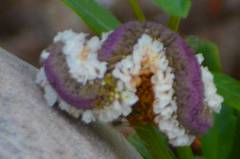
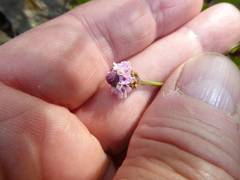
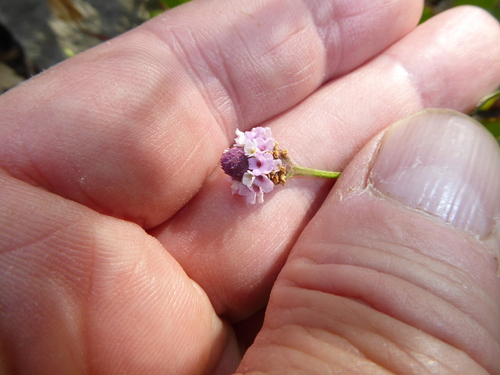
Phyla is a genus of about 10–15 low, mat-forming perennial herbs in the family Verbenaceae, distributed through warm-temperate and tropical regions of the Americas and naturalised widely elsewhere. Plants spread by creeping, rooting stems to form dense mats 2–4 in (5–10 cm) high and several feet across, with small, opposite, toothed leaves 0.4–1.5 in (1–4 cm) long that are spoon- to lance-shaped and slightly rough. From late spring through autumn, tiny tubular flowers are packed into dense, rounded to cylindrical heads 0.3–0.6 in (8–15 mm) wide on slender stalks held just above the foliage. The flowers open in a ring that advances up the head, shifting from white or pale pink to lavender or purple with a yellow throat. Small dry fruits follow, each splitting into two nutlets. Most species grow in damp, open ground — pond edges, ditches, lawns, salt marshes, and disturbed sandy sites — in full sun. The creeping habit lets Phyla root at the nodes and recover from foot traffic, and several species are grown as lawn substitutes and groundcovers in mild climates, though the spreading stems can move into adjacent beds.
Native Range
Phyla is centred in the warmer parts of the Americas, from the southern United States through Mexico, Central America, and South America, with P. nodiflora now naturalised across tropical and subtropical regions worldwide. The plants grow in moist, open habitats including stream banks, pond margins, coastal flats, and seasonally wet depressions.Suggested Uses
Phyla is planted as a groundcover and lawn substitute on banks, between pavers, and in pollinator gardens in warm regions. The salt-tolerant species suit coastal plantings and rain-garden edges. The flower heads support bees and serve as larval food for several butterflies, including the phaon crescent.How to Identify
Appearance
Size & Dimensions
Height2" - 4"
Width/Spread2' - 4'
Bloom Information
Flowering extends from late spring through autumn, and continues most of the year in frost-free climates. Each head opens its tiny flowers in a slowly rising ring over one to two weeks. The long season draws bees, small butterflies, and other insects.
Detailed Descriptions
Flower Description
white to pink and purple with a yellow throatFoliage Description
greenGrowing Conditions
Sun Requirements
Requires 6-12 hours of direct sunlight daily
• Full Sun: 6+ hours of direct sunlight
• Partial Shade: 3-6 hours of direct sunlight
• Full Shade: Less than 3 hours of direct sunlight
Care & Maintenance
Care Guide
Phyla grows in full sun to light shade and a wide range of soils, from sand to clay, tolerating both moist ground and periods of drought once established. The creeping stems root as they spread, knitting into a dense mat that suppresses many weeds. Plants accept occasional mowing and light foot traffic, suiting them to lawn-replacement use in zones 8–11. Growth slows and foliage dies back below about 25°F (−4°C), returning from the roots in spring in mild zones. Propagation is by division, rooted stem cuttings, or seed. The quick spread that fills bare ground can also push stems into borders and paths.Pruning
Maintenance is limited to mowing or shearing to keep the mat low and contain its spread. Stems that creep beyond the intended area are trimmed back during the growing season. Cutting in late winter clears old growth before spring regrowth.Pruning Schedule
Prune: February
winter
Container Growing
Suitable for container growing
Minimum container size: 1 gallons